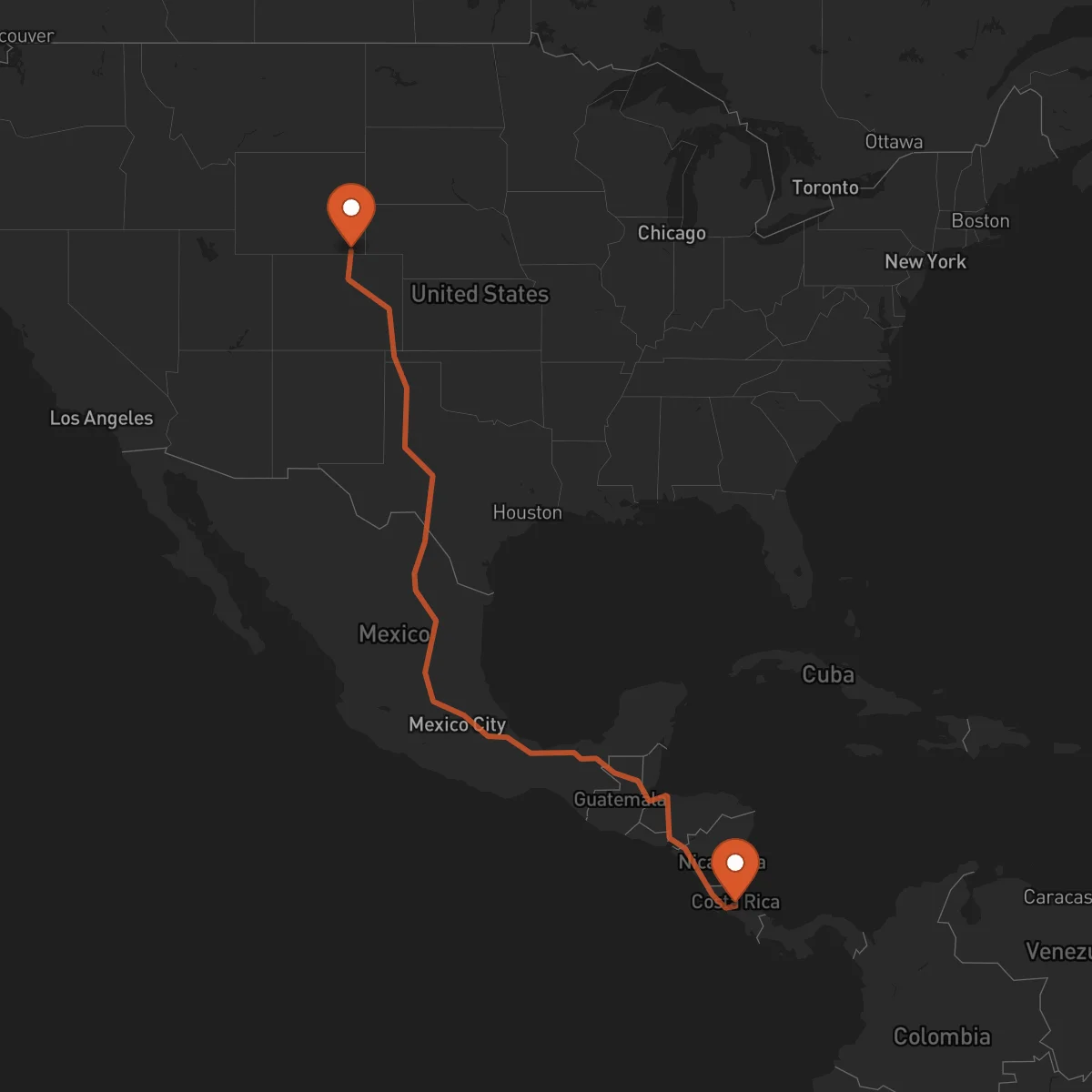
Cheyenne to Alajuela
Alajuela → CheyenneFTL freight transportation service between Cheyenne and Alajuela. Reliable logistics solutions for your business.
Route Description
Everything you need to know about the corridor Cheyenne - Alajuela
The Cheyenne, Wyoming to Alajuela, Costa Rica corridor is a critical north-south artery connecting the industrial heartland of the U.S. with the vibrant agricultural and manufacturing hubs of Central America. This cross-border route spans approximately 4,007 km, traversing the United States, Mexico, and Central America to facilitate essential trade flows. Its strategic importance lies in linking the agricultural and energy sectors of the Rocky Mountain region with Costa Rica's dynamic export economy, providing a direct land bridge for goods that would otherwise require complex multi-modal handling.
Economically, the corridor serves a diverse landscape. Originating in Cheyenne, a key hub for agriculture, manufacturing, and energy in the Mountain West, shipments often include grains, beef, machinery, and manufactured components. The route then moves through major U.S. interstate networks into Mexico, crossing busy border crossings before continuing through Central America. Alajuela, as a primary gateway to Costa Rica, is surrounded by the country's most fertile agricultural valleys and industrial parks, making it a sink for imports of raw materials, capital goods, and a source for high-value exports like medical devices, coffee, and tropical fruits.
Primary industries leveraging this corridor include agribusiness (perishable and dry goods), manufactured industrial components, medical equipment and pharmaceuticals, and consumer packaged goods. The transportation infrastructure relies on a sequence of major highways: I-25 and I-80 from Cheyenne to the U.S.-Mexico border, Mexican Federal Highways 45 and 190, the Pan-American Highway through Central America, and Costa Rica's National Route 1. Key border crossings, such as those at El Paso/Ciudad Juárez and the Guatemala-Costa Rica border at Paso Canoas, require meticulous customs coordination. Considerations include compliance with U.S., Mexican, and Central American regulations, security programs like C-TPAT and FAST, and documentation for multiple jurisdictions.
Control Terrestre facilitates seamless operations on this complex corridor through our robust alliance of experienced carriers. Our providers hold essential certifications including C-TPAT, FAST, and BASC, ensuring secure and compliant cross-border movements. We exclusively coordinate Full Truckload (FTL) solutions, matching your cargo with the appropriate equipment—from dry vans and reefers for perishables to flatbeds for oversized industrial goods. Our network manages the entire door-to-door sequence, handling the intricate customs brokerage coordination and transit planning required for a multi-country land route, providing you with a single, accountable point of contact for your end-to-end logistics.
Services for this Route
Available services for the corridor Cheyenne - Alajuela
 Origin
Cheyenne
Cheyenne, Wyoming, serves as a strategic logistics origin due to its central location in the U.S. Mountain West and its role as a major rail and highway hub. It sits at the crossroads of Interstate 25 (connecting north-south through the Rockies) and Interstate 80 (a transcontinental east-west corridor), providing direct access to markets from the Midwest to the West Coast. The city's economy is anchored by agriculture (cattle, hay, grains), energy extraction and support services, and light manufacturing. The presence of a major intermodal facility and its position within a day's drive of a significant portion of the U.S. population makes it an ideal launch point for long-haul freight destined for Mexico and beyond. Transportation infrastructure is robust, supporting high volumes of dry van, refrigerated, and flatbed traffic moving agricultural products, construction materials, and manufactured goods.
 Destination
Alajuela
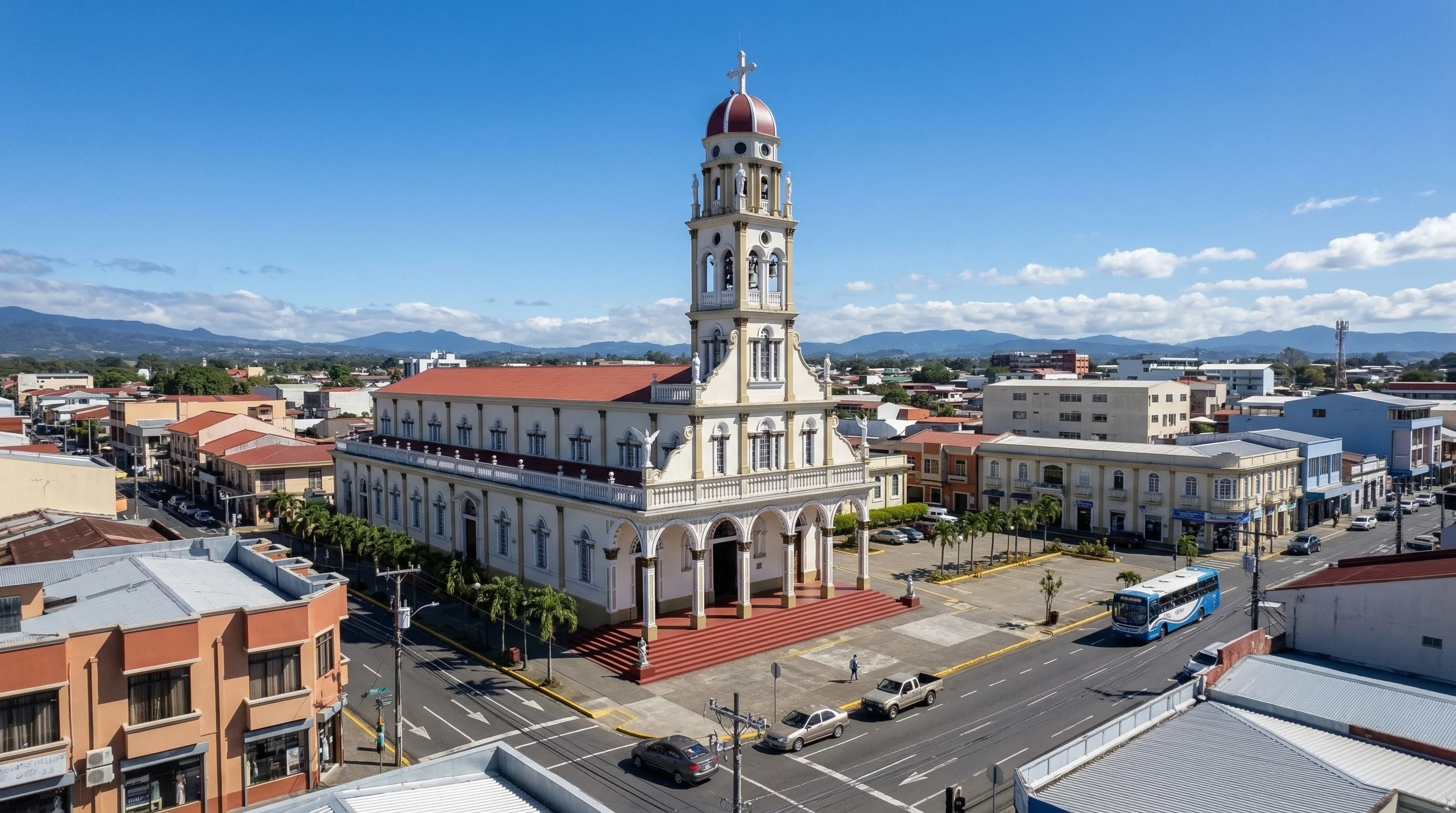
Alajuela, Costa Rica, is a pivotal logistics destination strategically located in the Central Valley, just minutes from the nation's primary international airport (Juan Santamaría) and the capital, San José. It functions as the industrial and agricultural heartland of Costa Rica, surrounded by the country's most productive coffee, sugar cane, and fruit-growing regions. The province hosts numerous free-trade zones and industrial parks, making it a hub for high-tech manufacturing, particularly medical devices and pharmaceuticals, which are top exports. Key infrastructure includes National Route 1 (the Pan-American Highway), which connects directly to the Caribbean port of Limón and the Nicaraguan border. The region's logistics demand heavily utilizes refrigerated (reefer) equipment for perishable exports like bananas and pineapples, dry vans for manufactured goods, and specialized equipment for moving industrial machinery and components.










