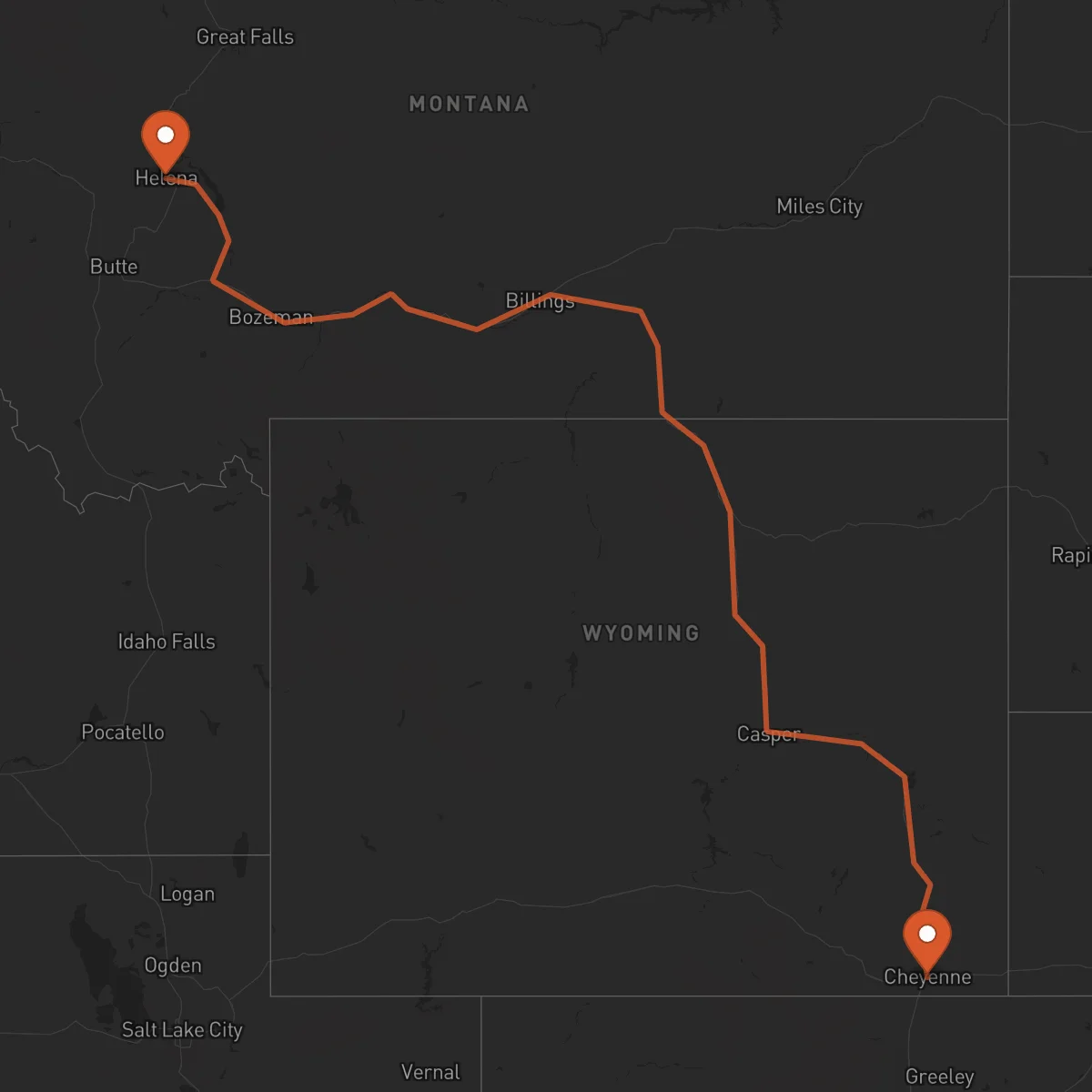
Cheyenne to Helena
Helena → CheyenneFTL freight transportation service between Cheyenne and Helena. Reliable logistics solutions for your business.
Route Description
Everything you need to know about the corridor Cheyenne - Helena
The freight transportation corridor between Cheyenne, Wyoming, and Helena, Montana, represents a vital link in the northern United States logistics network. This 838-kilometer route connects the High Plains region with the Rocky Mountain foothills, traversing diverse terrain and crossing multiple state lines. The corridor serves as a critical supply chain artery for businesses operating between these two important regional centers, facilitating the movement of goods essential to both local economies and national distribution networks.
The economic significance of this corridor extends beyond its immediate endpoints. Cheyenne, as Wyoming's capital and largest city, serves as a major administrative and commercial hub, while Helena functions as Montana's capital with strong government and service sector presence. The region between these cities encompasses agricultural lands, energy production facilities, and emerging technology sectors, creating diverse freight transportation needs. Manufacturing facilities, retail distribution centers, and construction projects along the route generate substantial freight volume, particularly for heavy equipment, building materials, and consumer goods.
This corridor primarily utilizes Interstate 25 North from Cheyenne to Buffalo, Wyoming, then transitions to Interstate 90 West through Montana. These major highways provide reliable, year-round access despite seasonal weather challenges common to northern states. The route passes through key waypoints including Casper and Billings, offering multiple service points and logistical support. Control Terrestre leverages this established infrastructure to provide consistent, professional freight transportation services, ensuring cargo moves efficiently between these strategic locations regardless of seasonal conditions or market fluctuations.
Services for this Route
Available services for the corridor Cheyenne - Helena
 Origin
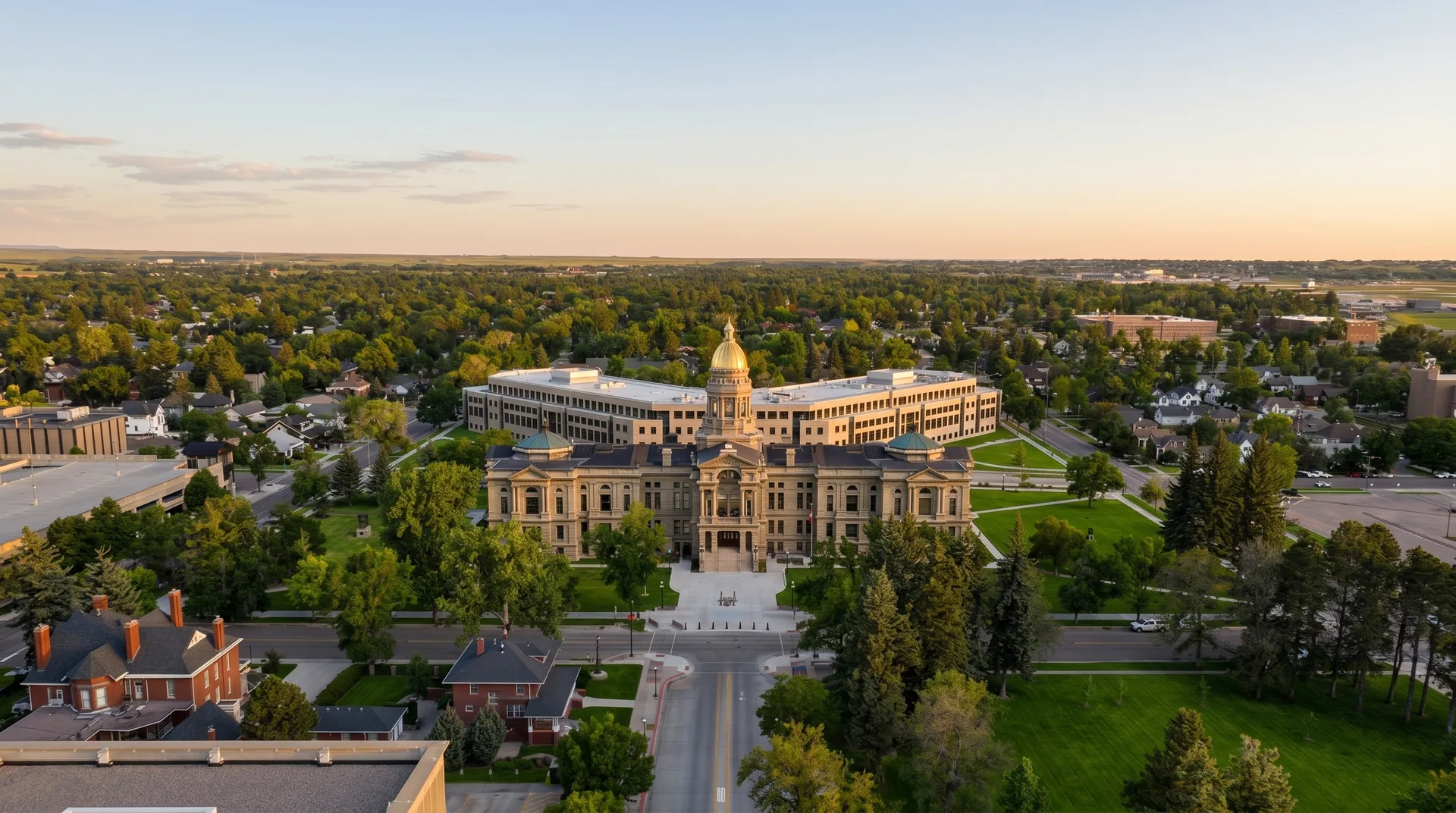
Cheyenne
Cheyenne, Wyoming, serves as a strategic logistics hub positioned at the intersection of major transportation routes in the western United States. Located at the crossroads of Interstate 25 and Interstate 80, the city provides excellent connectivity to regional and national freight networks. The city's elevation of 6,000 feet and proximity to the Colorado border make it an ideal distribution point for goods moving throughout the Mountain West region. Cheyenne's municipal airport and nearby Warren Air Force Base further enhance its transportation infrastructure, supporting both commercial and specialized freight movements.
The economic base of Cheyenne encompasses government operations as the state capital, energy production including oil, natural gas, and wind power, and significant military presence. The city hosts numerous manufacturing facilities, particularly in the energy sector, along with agricultural operations that require specialized freight services. Cheyenne's logistics sector benefits from Wyoming's business-friendly environment and the city's role as a regional service center for southeastern Wyoming and neighboring Colorado communities.
 Destination
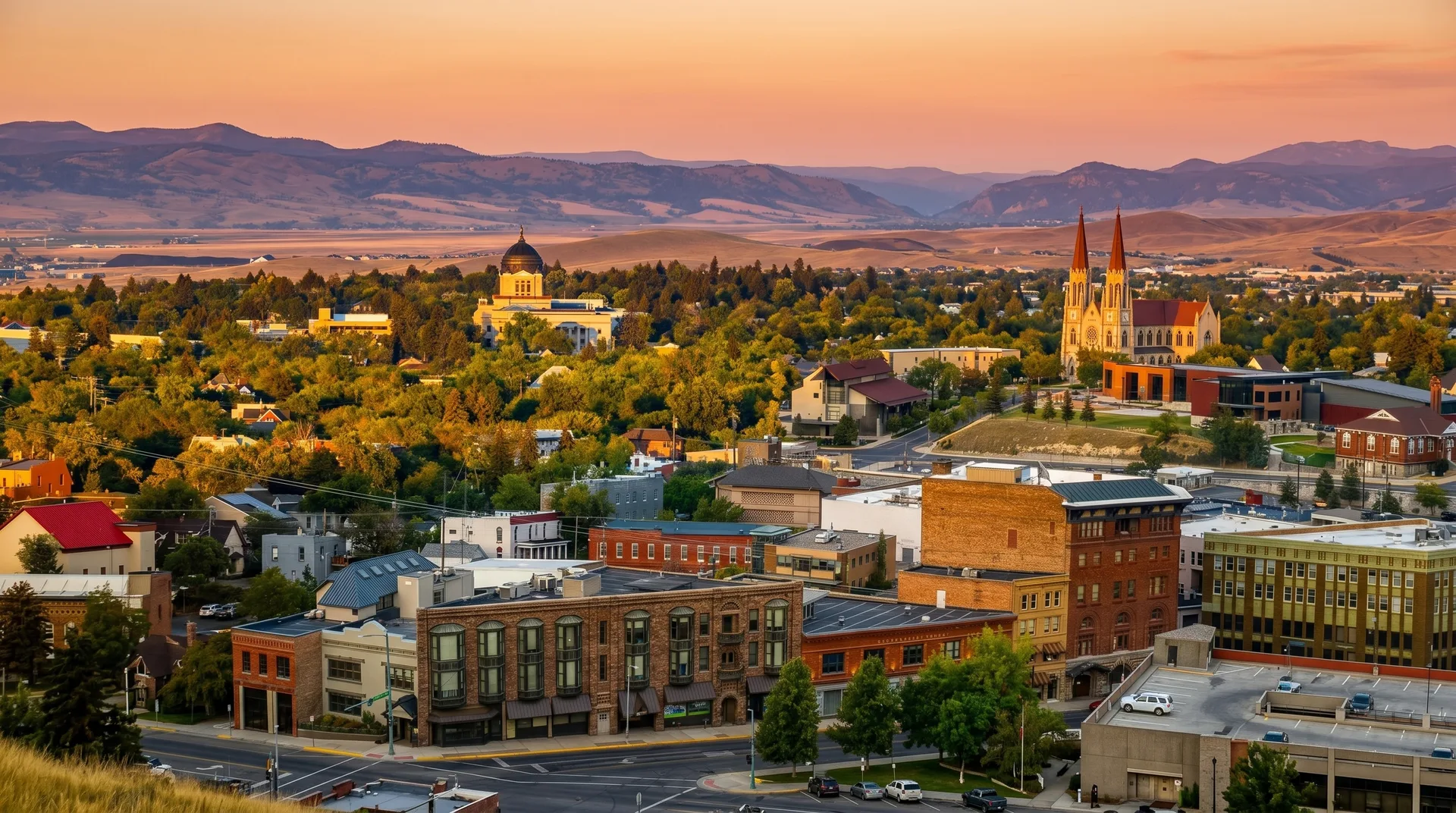
Helena
Helena, Montana, occupies a strategic position in the northern Rocky Mountains, serving as the state capital and a key logistics center for western Montana. The city's location along Interstate 15 provides direct connections to major markets including Calgary, Alberta, to the north and Salt Lake City to the south. Helena's transportation infrastructure includes the Helena Regional Airport and access to rail freight services via Montana Rail Link, creating multimodal shipping options for businesses operating in the region. The city's historic role as a gold rush center has evolved into a modern administrative and commercial hub.
The Helena economy centers on state government operations, healthcare services, and education, with growing technology and manufacturing sectors. The surrounding area features significant agricultural production, particularly in wheat and cattle, creating demand for specialized freight transportation. Helena's proximity to Helena National Forest and outdoor recreation opportunities also supports a logistics sector focused on equipment and supplies for tourism and recreation industries. The city's location makes it a natural distribution point for goods moving throughout western Montana and into neighboring Idaho and Wyoming.










