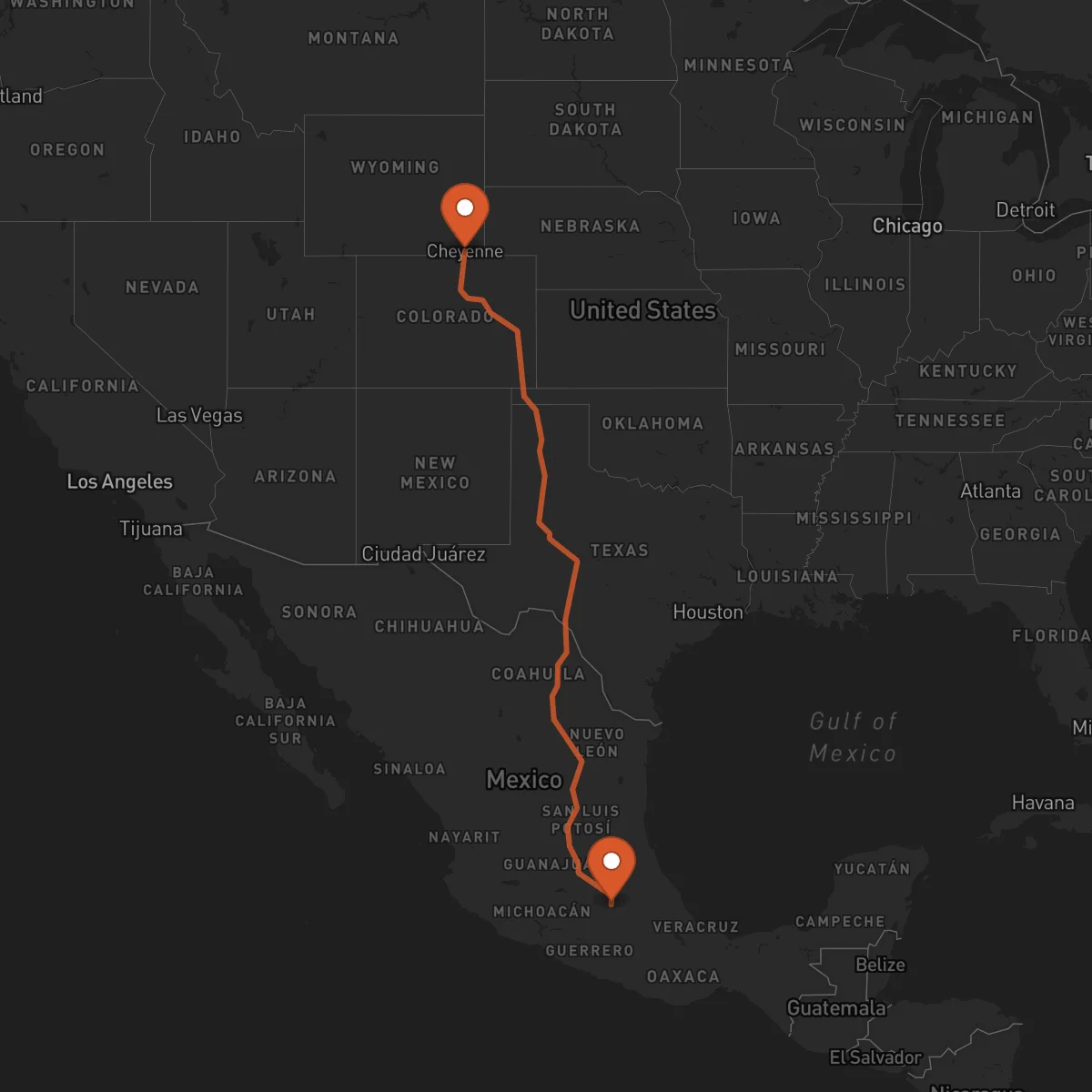
Cheyenne to Mexico City
Mexico City → CheyenneFTL freight transportation service between Cheyenne and Mexico City. Reliable logistics solutions for your business.
Route Description
Everything you need to know about the corridor Cheyenne - Mexico City
The logistics corridor connecting Cheyenne, Wyoming to Mexico City represents a vital cross-border freight transportation route spanning approximately 2,473 kilometers. This corridor traverses the central United States before crossing into Mexico through key border points, serving as a critical link between North American manufacturing and distribution networks. The route facilitates the movement of goods between the industrial heartland of the Rocky Mountain region and Mexico's capital, one of the largest metropolitan economies in the Americas.
The economic significance of this corridor extends across multiple sectors, with manufacturing, automotive components, agricultural products, and industrial machinery representing primary cargo categories. Wyoming's strategic position as a gateway to mountain states combines with Mexico City's role as a major consumer market and manufacturing hub, creating substantial freight demand. The corridor benefits from well-developed transportation infrastructure including major interstate highways such as I-25 and I-40 in the United States, connecting to Mexican Federal Highways 85 and 57.
Control Terrestre provides specialized cross-border FTL services along this corridor, managing the complexities of international freight movement. Our experienced team handles customs documentation, regulatory compliance, and border crossing procedures at major ports of entry such as Laredo or El Paso. We maintain strong relationships with certified carriers who understand the specific requirements for transporting goods between the United States and Mexico, ensuring reliable door-to-door service from origin to destination.
Services for this Route
Available services for the corridor Cheyenne - Mexico City
 Origin
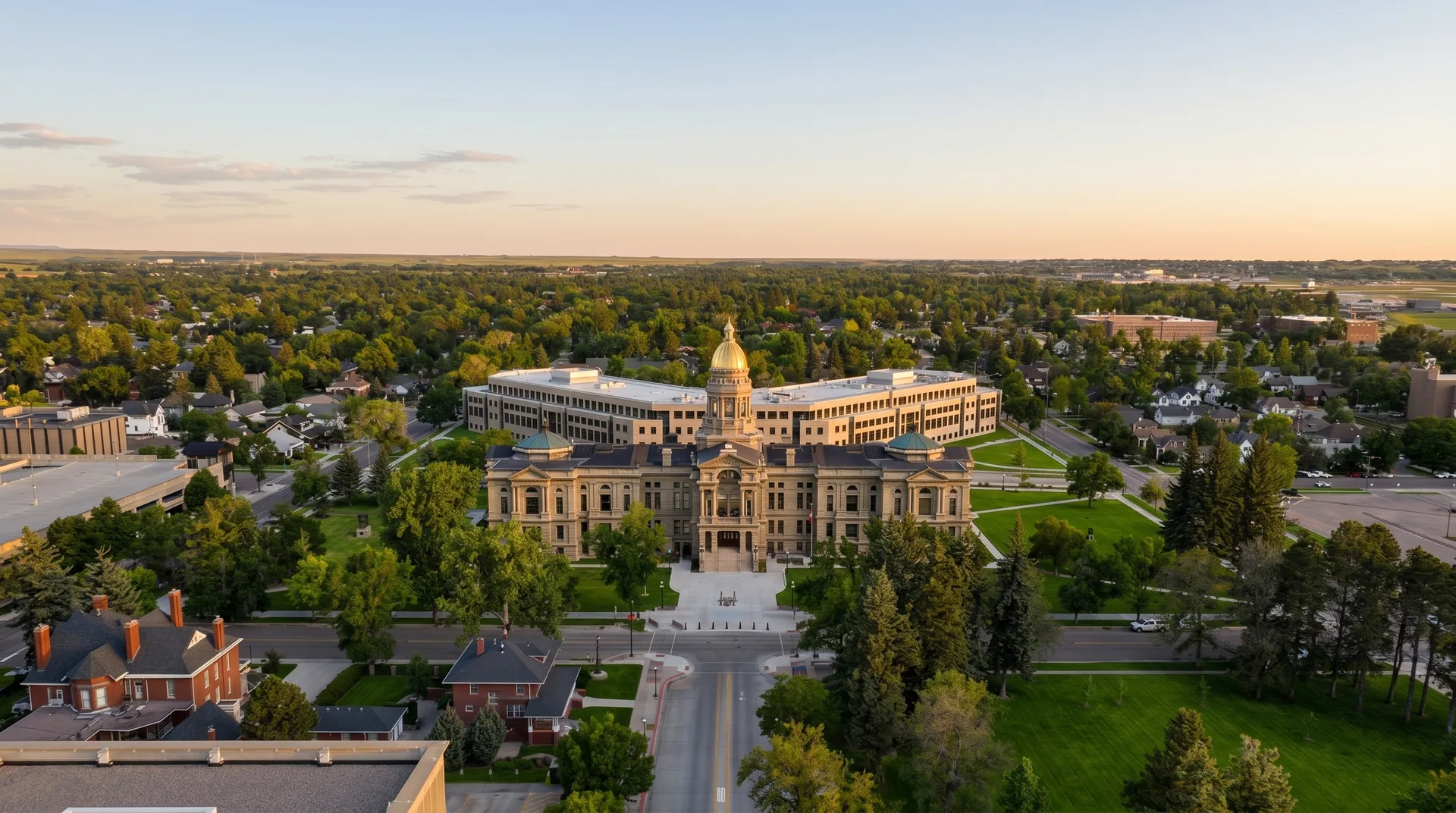
Cheyenne
Cheyenne, Wyoming serves as a strategic logistics hub in the Rocky Mountain region, offering excellent connectivity to major transportation networks. Located at the intersection of Interstate 25 and Interstate 80, Cheyenne provides direct access to both north-south and east-west freight corridors. The city's position near the Colorado border and its proximity to Denver create a natural logistics cluster, with warehousing and distribution facilities supporting regional commerce. Cheyenne's elevation and location make it an ideal transshipment point for goods moving between mountain states and points south.
The economic base of Cheyenne and surrounding Wyoming includes energy production, agriculture, manufacturing, and logistics services. The region's industrial sector encompasses everything from mining equipment to agricultural machinery, creating diverse freight opportunities. Wyoming's business-friendly environment and strategic location have attracted numerous distribution centers and logistics operations. The city's transportation infrastructure includes the Union Pacific rail line, multiple interstate highways, and access to major airports, providing multimodal freight options for businesses operating in the region.
 Destination
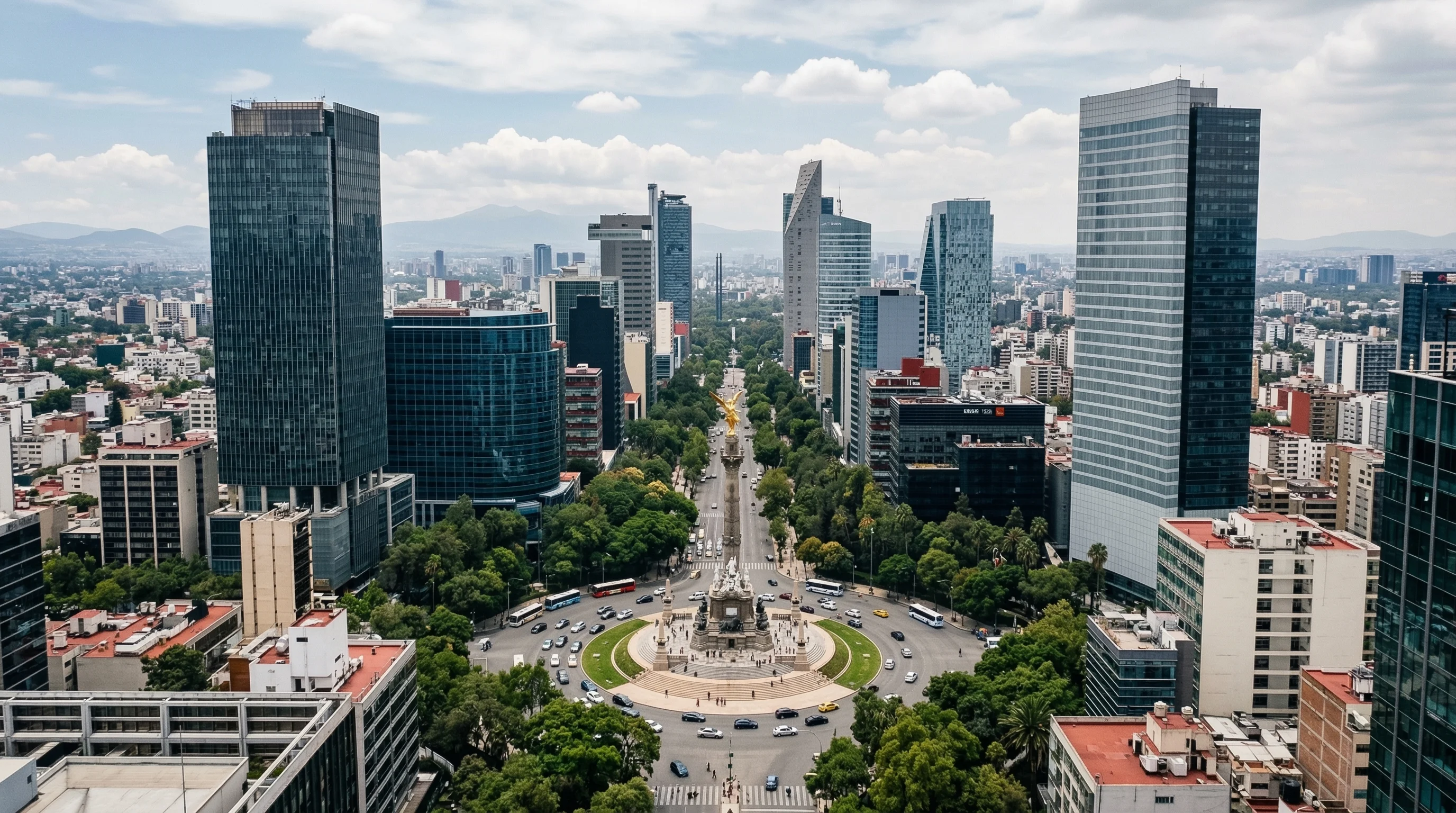
Mexico City
Mexico City stands as one of the most important logistics hubs in Latin America, serving as the economic and industrial center of Mexico. The metropolitan area's strategic location in the country's geographic center provides excellent connectivity to all regions of Mexico through an extensive network of highways and railroads. The city's sophisticated logistics infrastructure includes multiple freight terminals, warehousing districts, and modern distribution centers that support its role as a major consumption and manufacturing center. Mexico City's elevation and central position create unique transportation considerations that experienced logistics providers must understand.
The economic diversity of Mexico City encompasses manufacturing, services, technology, and consumer goods sectors. The city hosts numerous industrial parks, automotive assembly plants, and electronics manufacturing facilities that generate substantial freight demand. Mexico City's position as the political capital and largest consumer market in Mexico creates year-round logistics activity. The metropolitan area's transportation infrastructure includes the Mexico City International Airport, extensive highway connections, and rail links to ports and northern industrial centers, making it a critical node in North American supply chains.


Ready to ship your cargo?
Get a personalized quote for your freight.
Quote Now Cheyenne - Mexico City








