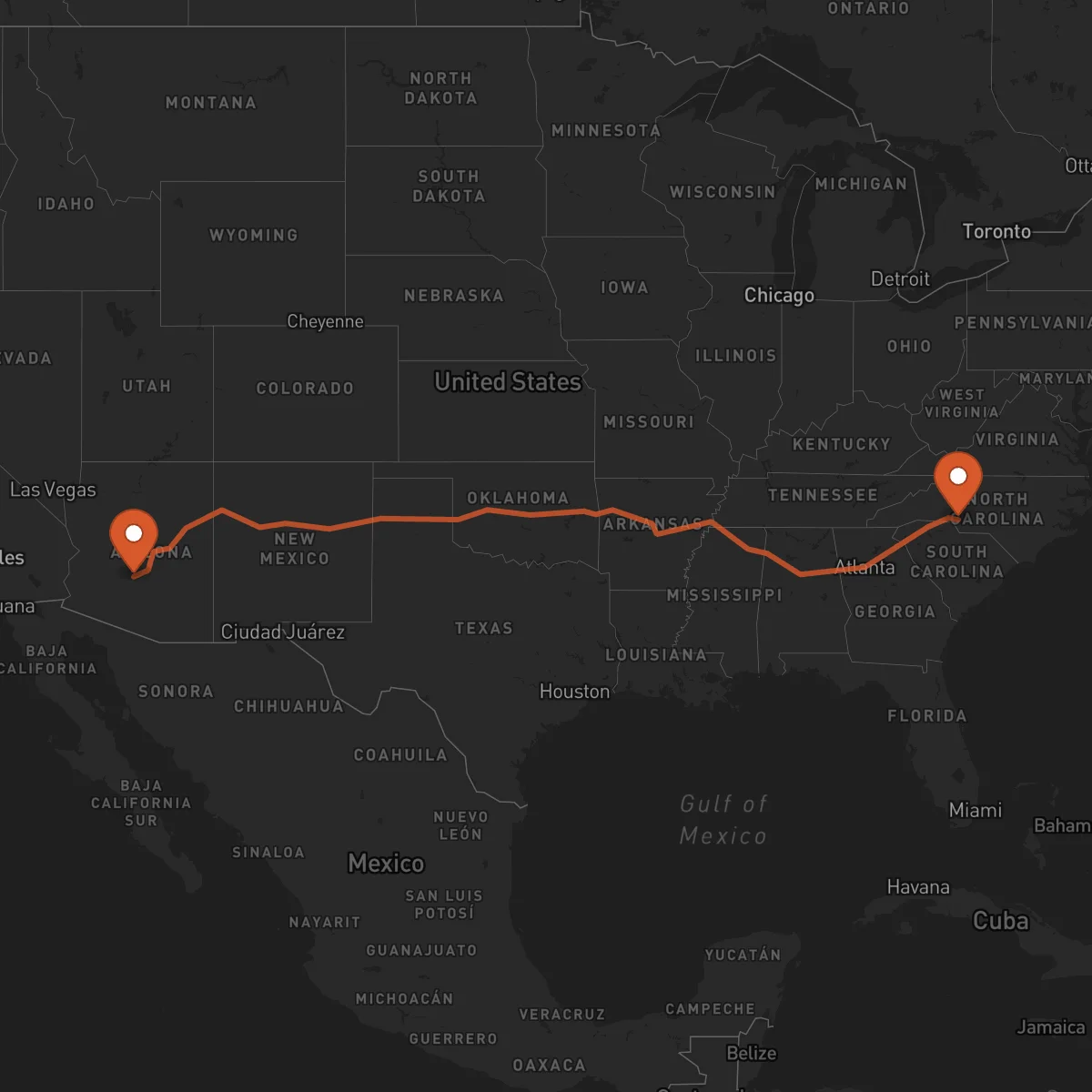
Charlotte to Phoenix
Phoenix → CharlotteFTL freight transportation service between Charlotte and Phoenix. Reliable logistics solutions for your business.
Route Description
Everything you need to know about the corridor Charlotte - Phoenix
The Charlotte to Phoenix corridor represents a vital logistics route connecting the industrial powerhouse of North Carolina with the growing economic center of Arizona. This 2,863 km domestic corridor traverses diverse terrain and crosses multiple states, making it a strategic link for companies moving freight between the East Coast and Southwest regions of the United States. The route facilitates the movement of goods through major transportation hubs, connecting manufacturing centers, distribution facilities, and retail markets across the country.
The economic significance of this corridor is substantial, supporting industries ranging from automotive and aerospace to technology and agriculture. Charlotte serves as a major financial and manufacturing hub, while Phoenix has emerged as a key player in semiconductor production, aerospace, and logistics. This complementary economic relationship creates consistent demand for full truckload transportation services, with manufacturers, distributors, and retailers relying on efficient freight movement to maintain their supply chains.
Control Terrestre leverages this corridor through our extensive network of certified transportation providers, offering reliable FTL services that ensure your cargo moves efficiently from origin to destination. Our strategic partnerships and experienced carriers understand the nuances of this route, from optimal scheduling to handling the varying terrain and weather conditions encountered along the way. We provide the expertise and resources needed to keep your supply chain moving smoothly across this critical domestic freight lane.
Services for this Route
Available services for the corridor Charlotte - Phoenix
 Origin
Charlotte
Charlotte, North Carolina stands as a major logistics and transportation hub in the southeastern United States. The city's strategic location offers excellent access to major interstate highways including I-85, I-77, and I-40, creating seamless connections to regional and national freight networks. Charlotte's infrastructure includes the Charlotte Douglas International Airport, one of the busiest airports in the country, and the Port of Wilmington, providing multimodal transportation options for businesses. The region's robust transportation network makes it an ideal origin point for full truckload shipments heading west to Phoenix and other destinations.
The Charlotte metropolitan area is home to diverse industries including banking and finance, automotive manufacturing, energy, and healthcare. Major companies like Bank of America, Duke Energy, and numerous Fortune 500 companies maintain headquarters or significant operations in the region. The area's strong manufacturing sector, particularly in automotive and industrial equipment, generates substantial freight volume, while the growing technology and healthcare industries continue to expand the region's economic footprint. This industrial diversity creates consistent demand for reliable FTL transportation services to move goods across the country.
 Destination
Phoenix
Phoenix, Arizona has established itself as a strategic logistics and distribution center in the southwestern United States. The city's location provides access to major transportation corridors including I-10, I-17, and Loop 101, connecting it to markets throughout the West and Southwest. Phoenix Sky Harbor International Airport serves as a major cargo hub, while the Union Pacific Railroad and extensive highway networks ensure efficient freight movement. The region's growing infrastructure and business-friendly environment have attracted numerous companies to establish distribution centers and manufacturing facilities in the area.
The Phoenix metropolitan area has seen significant growth in industries such as aerospace and defense, semiconductor manufacturing, renewable energy, and logistics. Major employers include Intel, Boeing, Honeywell, and numerous technology companies that have established operations in the region. The semiconductor industry, in particular, has experienced rapid expansion, with Phoenix becoming a key player in domestic chip production. This industrial growth, combined with the region's role as a distribution center for goods heading to California and the Pacific Northwest, creates consistent demand for full truckload transportation services from manufacturing centers in the eastern United States.










