Phoenix to Charlotte
Charlotte → PhoenixFTL freight transportation service between Phoenix and Charlotte. Reliable logistics solutions for your business.
Route Description
Everything you need to know about the corridor Phoenix - Charlotte
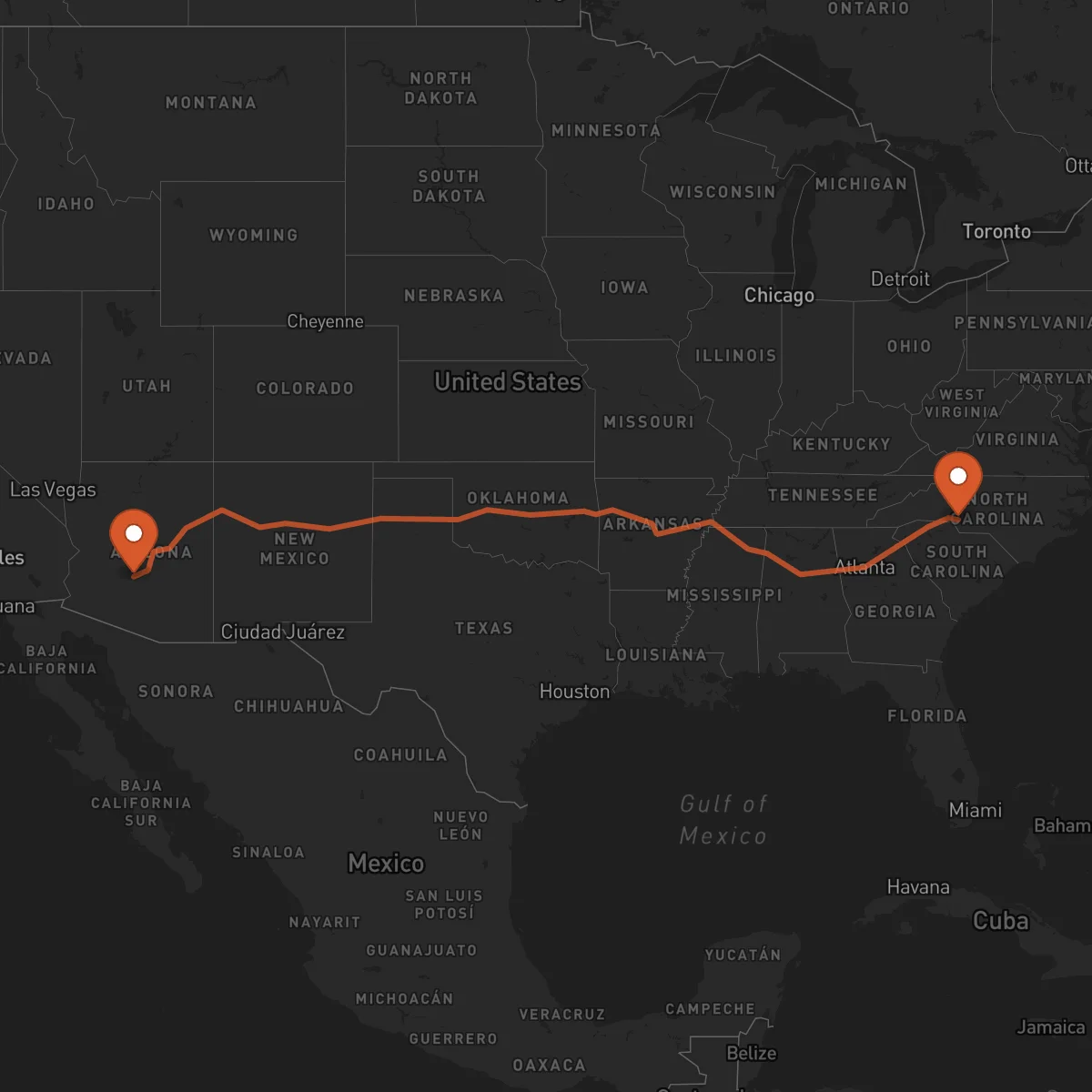
The logistics corridor connecting Phoenix, Arizona, to Charlotte, North Carolina, spans approximately 2,863 kilometers across the United States, representing a critical transportation link between the Southwest and Southeast regions. This east-west route traverses diverse geographic and economic landscapes, connecting major industrial centers and facilitating the movement of goods essential to both regional and national supply chains. The corridor's strategic importance lies in its ability to bridge the manufacturing and technology hubs of the Southwest with the growing logistics and financial centers of the Southeast.
This transportation route serves a diverse range of industries, with manufacturing, automotive, aerospace, electronics, and retail sectors being the primary users. Phoenix's proximity to Mexico and its role as a technology and aerospace manufacturing center complement Charlotte's position as a major financial hub and growing manufacturing center, particularly in automotive and advanced materials. The corridor also supports the movement of agricultural products, consumer goods, and industrial equipment between these economically vibrant regions.
The transportation infrastructure along this corridor includes major interstate highways such as I-10, I-20, and I-85, providing reliable and efficient freight movement. These well-maintained highways offer multiple routing options to optimize transit times and accommodate various freight types. Control Terrestre leverages this robust infrastructure through our extensive network of certified transportation providers, ensuring seamless full truckload (FTL) service with the reliability and security that modern supply chains demand.
Services for this Route
Available services for the corridor Phoenix - Charlotte
 Origin
Phoenix
Phoenix, Arizona, serves as a strategic logistics hub in the southwestern United States, offering exceptional connectivity and infrastructure for freight transportation. The city's location provides direct access to major interstate highways, including I-10, which runs east-west across the southern United States, and I-17, connecting to northern Arizona and beyond. Phoenix's Sky Harbor International Airport and the nearby Phoenix-Mesa Gateway Airport enhance its multimodal transportation capabilities, while the Union Pacific Railroad provides additional freight options. The city's flat terrain and year-round favorable weather conditions minimize weather-related delays, making it an ideal origin point for time-sensitive shipments.
The Phoenix metropolitan area is a powerhouse of economic activity, with key industries including aerospace and defense, semiconductor manufacturing, electronics, renewable energy, and advanced technology. Major employers such as Intel, Honeywell Aerospace, and Boeing have significant operations in the region, creating substantial freight movement. The city is also a growing center for automotive manufacturing and distribution, with companies like Nissan and Toyota maintaining significant presence. Additionally, Phoenix's proximity to the US-Mexico border facilitates cross-border trade, while its role as a distribution center for southwestern states makes it a critical node in national supply chains.
 Destination
Charlotte
Charlotte, North Carolina, stands as a major logistics and economic center in the southeastern United States, offering strategic advantages for freight distribution and supply chain operations. The city's location provides excellent access to major transportation corridors, including I-85, which connects to Atlanta and the Northeast, and I-77, linking to the Midwest. Charlotte Douglas International Airport is one of the busiest cargo airports in the country, while the Port of Charleston and Port of Wilmington provide ocean freight options within a few hours' drive. The region's extensive rail network, operated by Norfolk Southern and CSX, further enhances its multimodal transportation capabilities.
Charlotte's economy is diverse and dynamic, with financial services being the dominant sector, as the city hosts the East Coast operations of major banks like Bank of America and Wells Fargo. The region has also emerged as a significant manufacturing center, particularly in automotive, with plants operated by Daimler Trucks and electric vehicle manufacturers. Advanced manufacturing, biotechnology, and logistics services are growing sectors, supported by the presence of major distribution centers for companies like Amazon and Walmart. The city's central location in the Southeast makes it an ideal distribution point for reaching major markets along the East Coast and throughout the southeastern United States.










