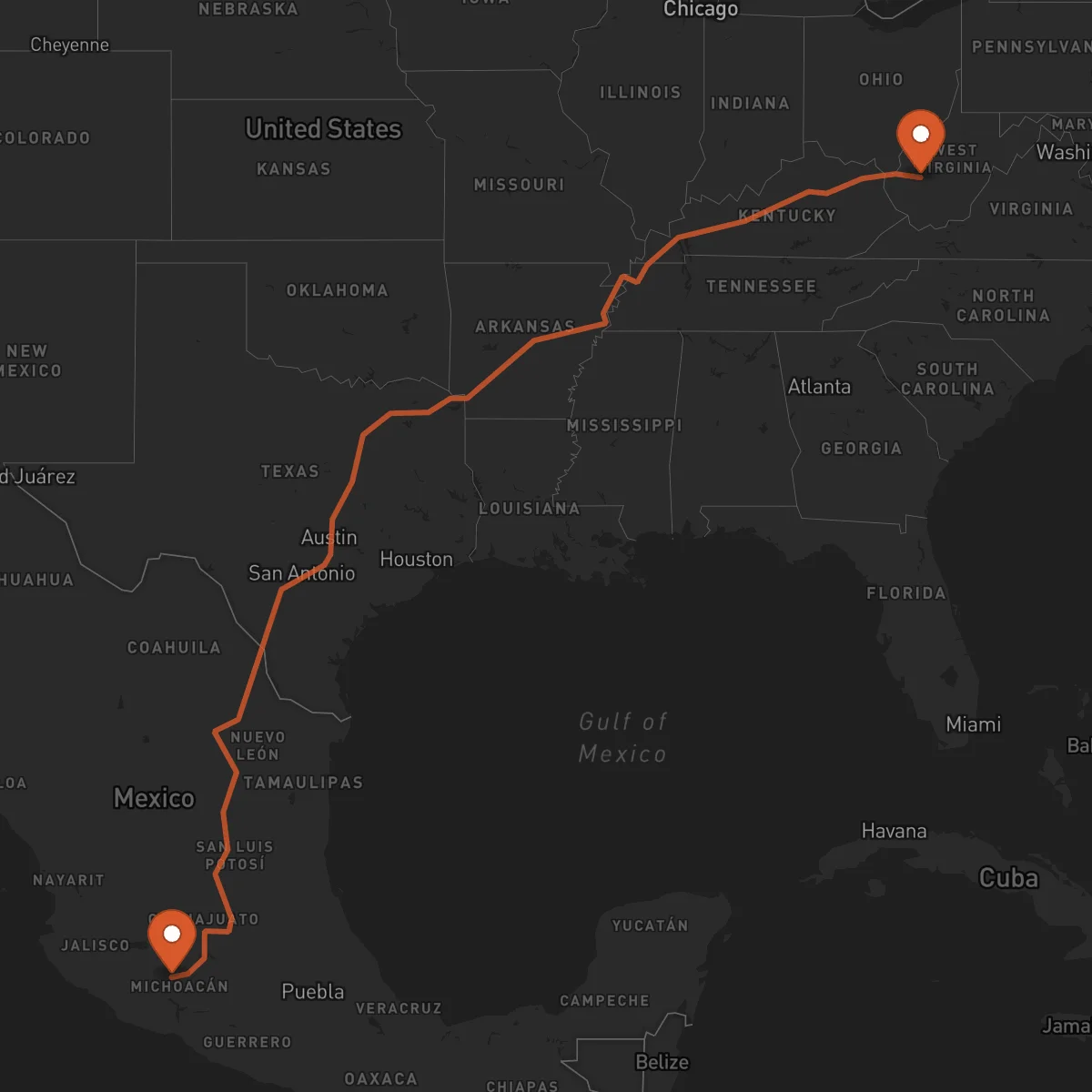
Charleston to Uruapan
Uruapan → CharlestonFTL freight transportation service between Charleston and Uruapan. Reliable logistics solutions for your business.
Route Description
Everything you need to know about the corridor Charleston - Uruapan
The logistics corridor connecting Charleston, West Virginia, to Uruapan, Michoacán, represents a vital trade link between the United States and Mexico. This cross-border route spans approximately 2,882 kilometers, traversing diverse landscapes and connecting key industrial hubs. The corridor serves as a critical pathway for the movement of goods between the American Midwest and the central-western regions of Mexico, facilitating trade in automotive components, agricultural products, and manufactured goods. Control Terrestre specializes in managing this complex cross-border operation, ensuring seamless freight transportation from origin to destination.
Services for this Route
Available services for the corridor Charleston - Uruapan
 Origin
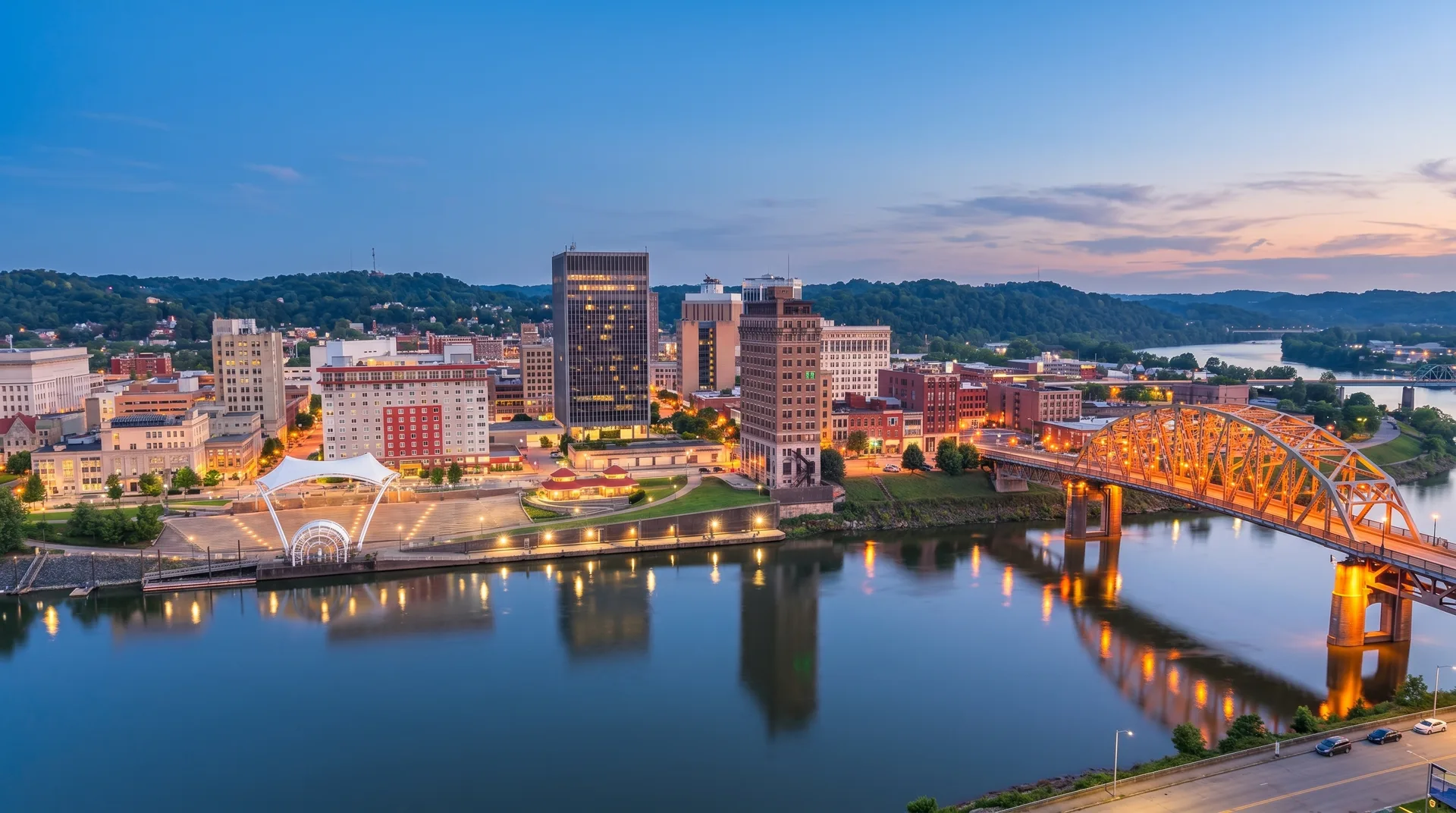
Charleston
Charleston, the capital of West Virginia, serves as a strategic logistics hub in the Appalachian region. The city's location provides access to major interstate highways, including I-64 and I-77, connecting it to national freight networks. Charleston's economy is anchored in healthcare, education, and energy sectors, with a growing presence in automotive and advanced manufacturing industries. The Yeager Airport and the Port of Huntington Tri-State offer additional transportation options, while the Kanawha River provides potential for multimodal logistics solutions.
 Destination
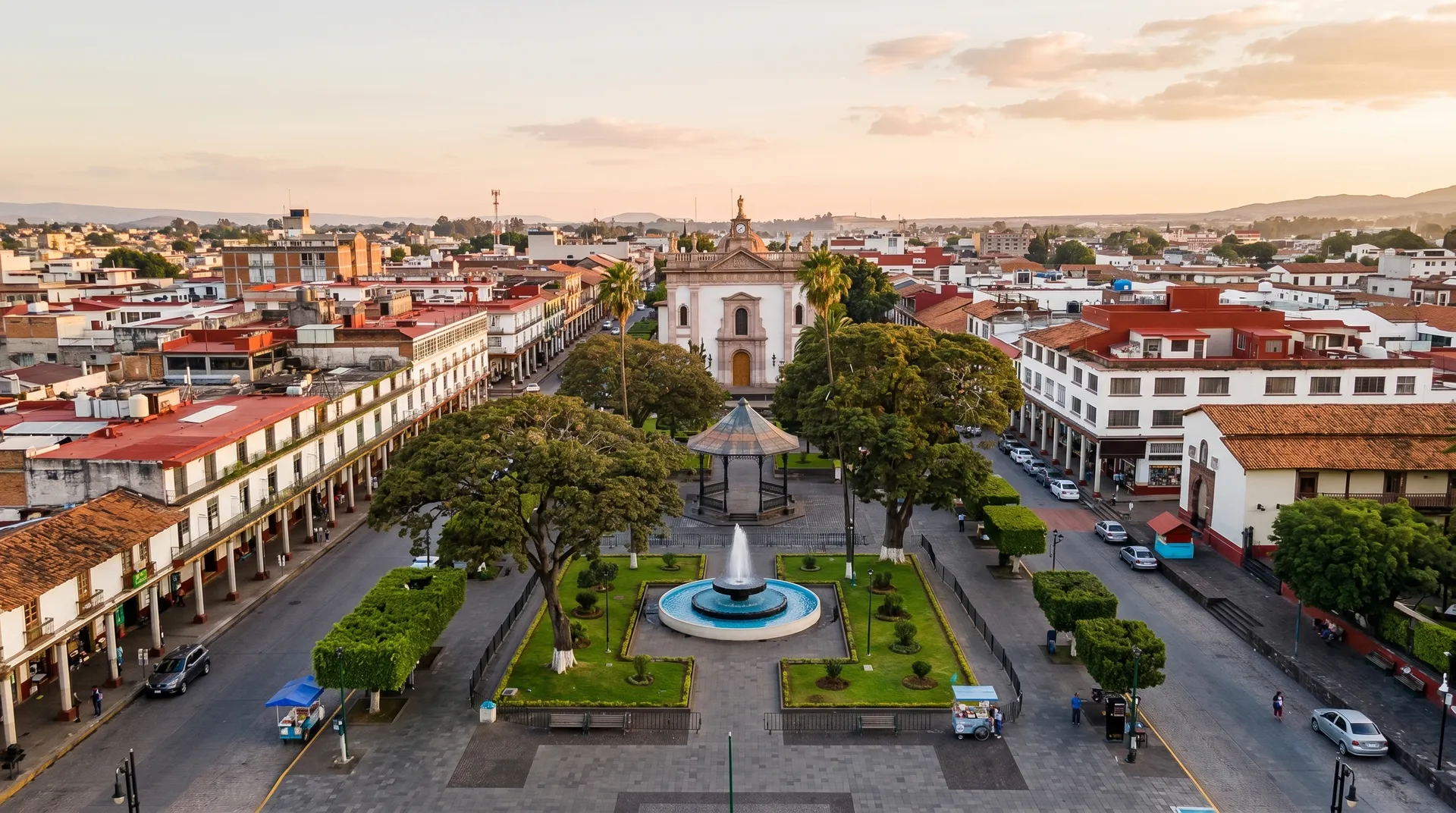
Uruapan, located in the heart of Michoacán, Mexico, is a crucial logistics center for the Bajío region. Known as the 'World Avocado Capital,' Uruapan's economy is strongly tied to agriculture, particularly avocado and berry production. The city's strategic position near major industrial centers like Guadalajara and Querétaro, combined with its proximity to the Lázaro Cárdenas port, makes it an essential node in Mexico's supply chain. Uruapan benefits from a developing industrial park infrastructure and improving highway connections to the U.S. border.










