Charleston to Regina
Regina → CharlestonFTL freight transportation service between Charleston and Regina. Reliable logistics solutions for your business.
Route Description
Everything you need to know about the corridor Charleston - Regina
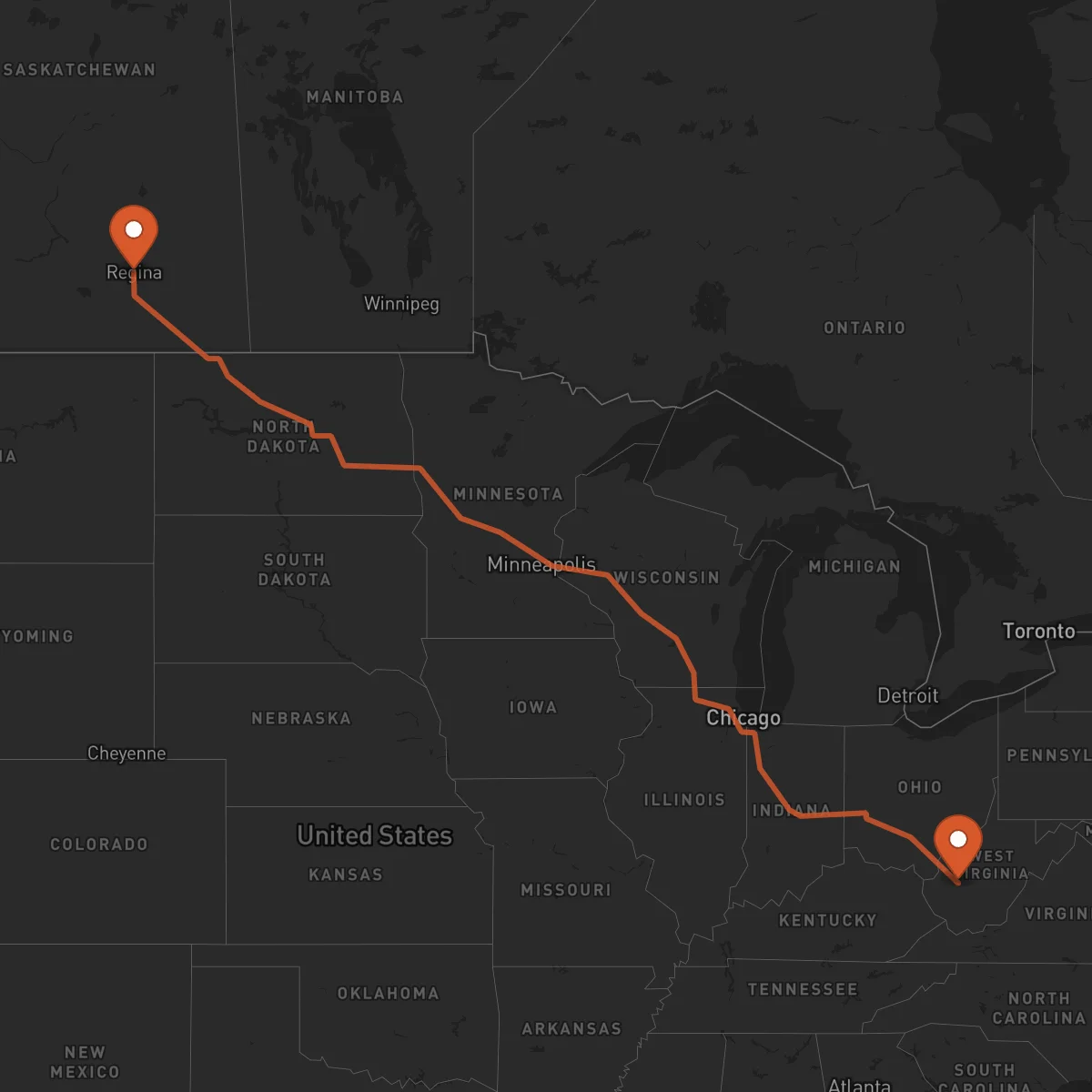
The logistics corridor between Charleston, West Virginia and Regina, Saskatchewan represents a vital cross-border connection between the United States and Canada. This 2,253 km route traverses diverse landscapes and connects key economic regions of North America. The corridor serves as a critical link for industries requiring efficient transportation of goods between the Midwest and Western Canadian markets. Control Terrestre's strategic positioning along this route enables us to provide seamless cross-border freight transportation solutions, ensuring your cargo moves efficiently through all checkpoints and jurisdictions.
Services for this Route
Available services for the corridor Charleston - Regina
 Origin
Charleston
Charleston, West Virginia serves as a strategic logistics hub in the Appalachian region, offering excellent connectivity to major eastern U.S. markets. The city benefits from its proximity to Interstate 64 and Interstate 77, providing direct access to regional distribution networks. Charleston's economy is anchored by healthcare, education, energy, and manufacturing sectors, creating consistent demand for freight transportation services. The region's industrial base includes chemical production, automotive parts manufacturing, and natural resource processing, making it an ideal origin point for diverse cargo types requiring specialized handling.
 Destination
Regina
Regina, Saskatchewan stands as a crucial logistics center in Western Canada, strategically positioned along the Trans-Canada Highway. As the capital of Saskatchewan, Regina serves as the economic heart of the province's agricultural and energy sectors. The city's location provides optimal access to Prairie provinces and facilitates connections to major Canadian markets. Regina's industrial landscape includes agriculture, mining equipment manufacturing, and energy production, generating substantial freight movement requirements. The city's transportation infrastructure includes rail connections and highway networks that integrate seamlessly with cross-border freight operations.










