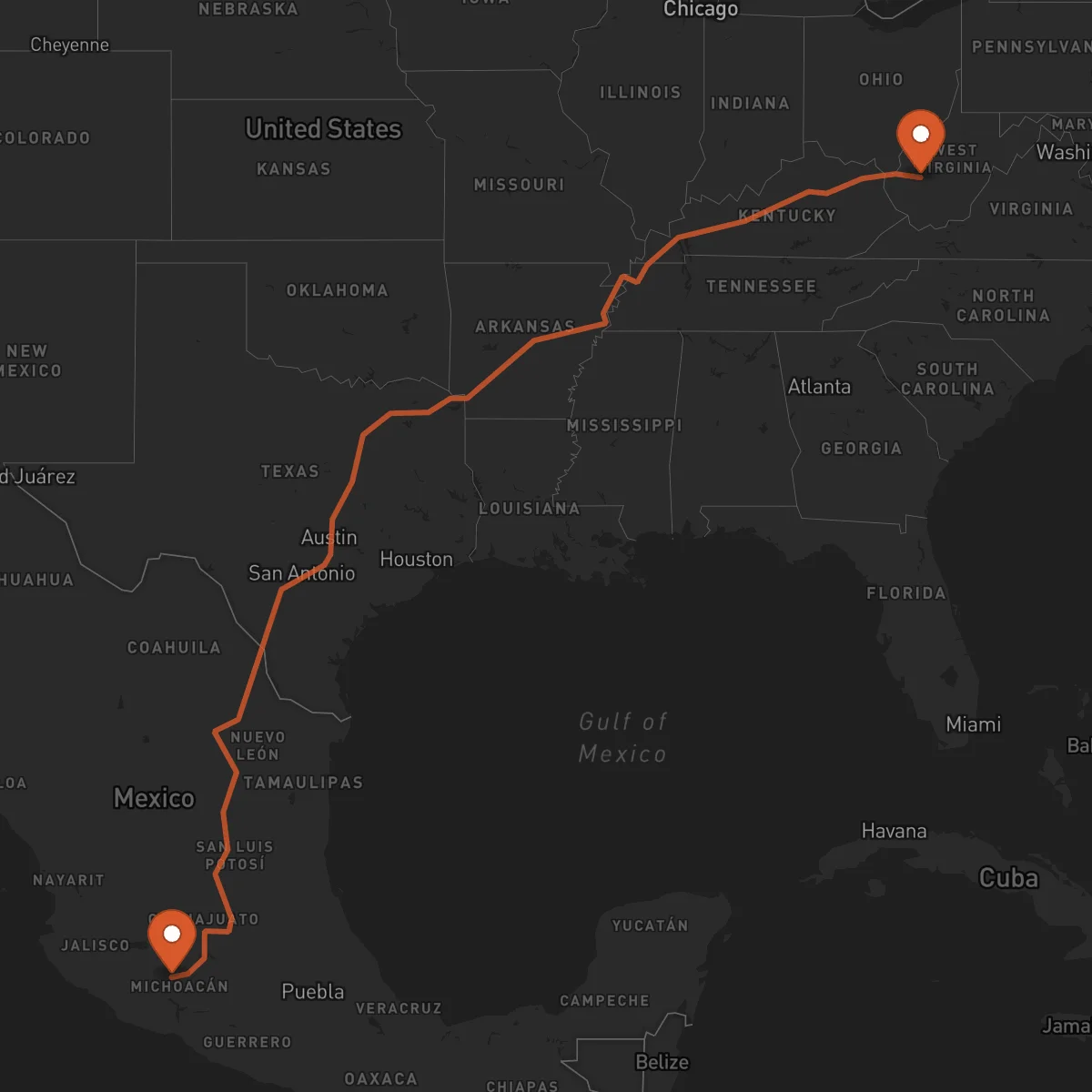
Uruapan to Charleston
Charleston → UruapanFTL freight transportation service between Uruapan and Charleston. Reliable logistics solutions for your business.
Route Description
Everything you need to know about the corridor Uruapan - Charleston
The logistics corridor connecting Uruapan, Michoacán with Charleston, West Virginia represents a vital trade route between Mexico and the United States, spanning approximately 2,882 kilometers. This cross-border corridor facilitates the movement of goods between the industrial heartland of central Mexico and the Appalachian region of the United States, serving as a crucial link in the North American supply chain. The route traverses diverse terrain and crosses multiple states, requiring expert logistics management to ensure timely and secure delivery of freight.
The economic significance of this corridor is substantial, connecting Mexico's growing automotive and agricultural sectors with West Virginia's manufacturing and energy industries. Uruapan serves as a key production center for automotive components, processed foods, and agricultural products, while Charleston's economy encompasses chemical manufacturing, energy production, and distribution services. This complementary economic relationship creates consistent demand for full truckload (FTL) freight services along this route.
Transportation infrastructure along this corridor includes major highways such as Mexican Federal Highway 15, which connects Uruapan to the U.S. border, and U.S. Interstate highways including I-64 and I-77 leading to Charleston. The primary border crossing utilized is typically Laredo/Nuevo Laredo or El Paso/Juárez, depending on specific routing and customs considerations. Control Terrestre's expertise in cross-border operations ensures seamless customs clearance and compliance with all regulatory requirements, minimizing delays and optimizing transit times for our clients' shipments.
Services for this Route
Available services for the corridor Uruapan - Charleston
 Origin
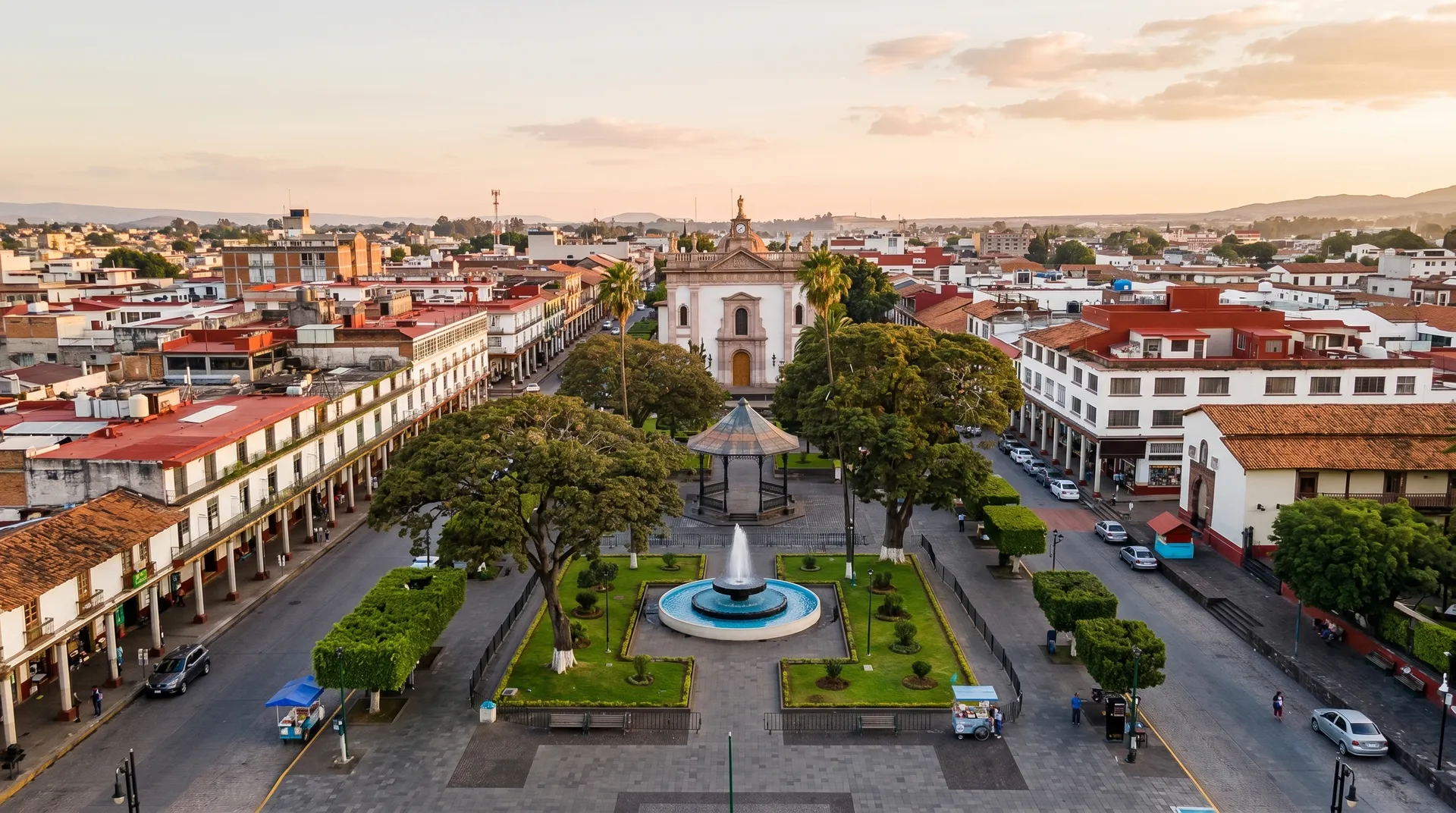
Uruapan, located in the state of Michoacán, Mexico, serves as a strategic logistics hub in central Mexico, positioned approximately 390 kilometers west of Mexico City. The city benefits from its location along Federal Highway 15, providing direct access to major ports and border crossings. Uruapan's elevation of 1,620 meters above sea level and temperate climate make it an ideal location for various industries, particularly those requiring stable environmental conditions for production and storage.
The region's economy is diverse, with strong automotive manufacturing presence, including suppliers to major automakers. Additionally, Uruapan is known for its agricultural production, particularly avocados, which has earned the region the nickname "Avocado Capital of the World." The city also has a growing food processing industry and furniture manufacturing sector. Transportation infrastructure includes the General Francisco J. Mujica International Airport, providing air cargo options, and extensive road networks connecting to major industrial centers throughout Mexico.
 Destination
Charleston
Charleston, the capital and largest city of West Virginia, occupies a strategic position in the Appalachian region of the United States. Located at the confluence of the Elk and Kanawha Rivers, the city serves as a regional distribution center with access to multiple transportation modes. Charleston's location provides connections to major interstate highways, including I-64, I-77, and I-79, facilitating efficient distribution throughout the eastern United States.
The local economy is anchored by energy production, chemical manufacturing, and healthcare services. Charleston and the surrounding region have a strong presence in natural gas extraction and processing, along with chemical and polymer manufacturing facilities. The city's Yeager Airport provides air cargo services, while the Port of Huntington-Tristate, located approximately 60 miles away, offers river transportation options for bulk commodities. The region's industrial base creates consistent demand for full truckload freight services to support manufacturing operations and distribution networks.










