Charleston to Somoto
Somoto → CharlestonFTL freight transportation service between Charleston and Somoto. Reliable logistics solutions for your business.
Route Description
Everything you need to know about the corridor Charleston - Somoto
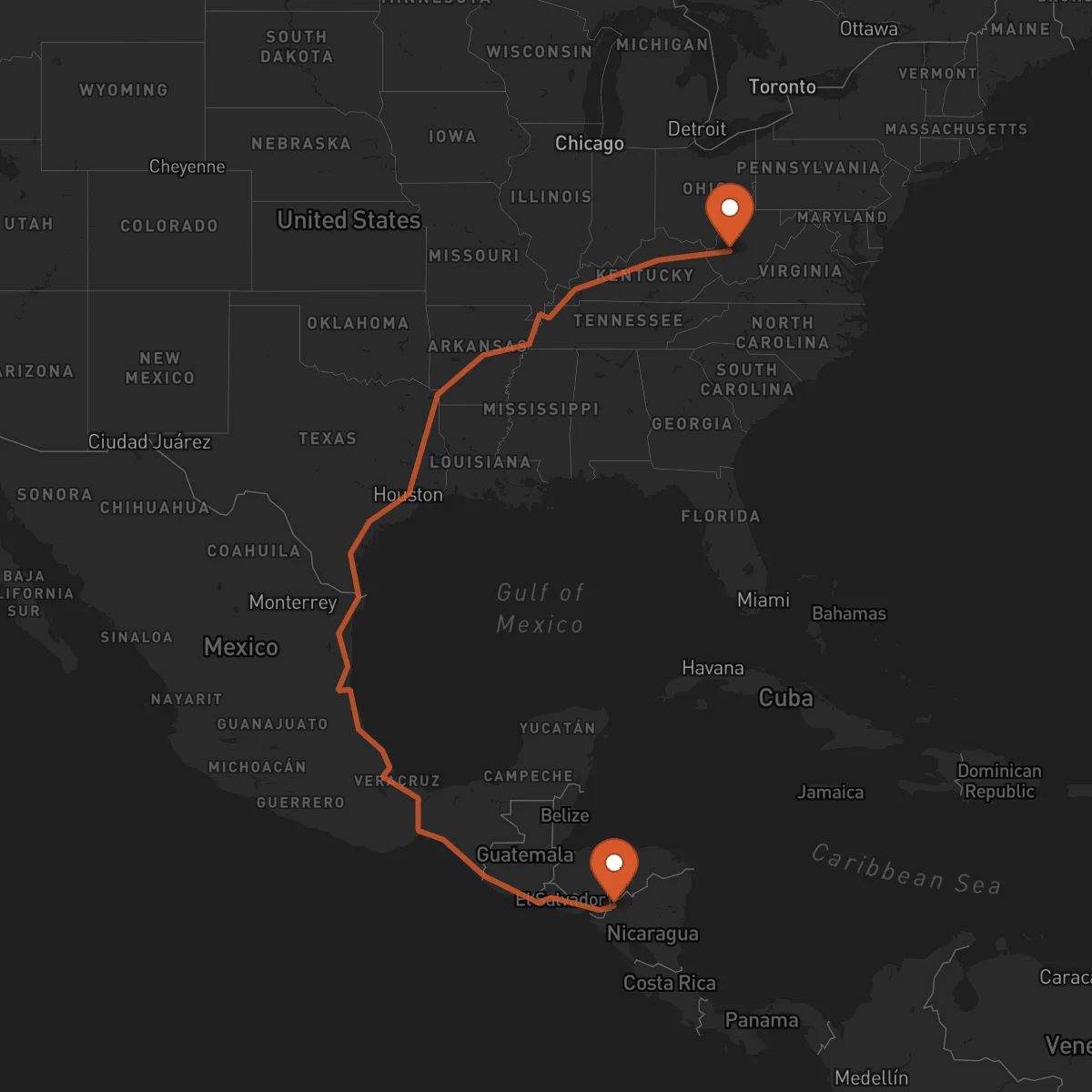
The Charleston, West Virginia to Somoto, Madriz corridor represents a critical North-South logistics artery connecting the industrial heartland of the United States with the agricultural and manufacturing regions of northern Nicaragua. This cross-border route is strategically vital for facilitating trade between the U.S. and Central America, enabling the efficient movement of goods across diverse economic zones. The corridor supports the flow of raw materials inbound to Central America and finished products outbound to U.S. markets, underpinning supply chains for industries ranging from agriculture to heavy manufacturing. Control Terrestre leverages our robust alliance of certified providers to navigate the complexities of this international lane, offering clients a seamless, single-point-of-contact solution for their full truckload (FTL) requirements.
Economically, the corridor bridges the Appalachian industrial base with Nicaragua's key agricultural and textile sectors. West Virginia's economy is historically rooted in chemicals, machinery, and polymer production, while the Madriz region and northern Nicaragua are significant for coffee, beef, dairy, and basic consumer goods. The primary industries utilizing this corridor include chemical manufacturers shipping bulk materials, agricultural processors moving packaged foods and ingredients, and industrial equipment suppliers. The consistent demand from these sectors requires reliable, scheduled capacity, which we provide through our dedicated and spot freight services.
Transportation infrastructure relies on a network of major U.S. Interstates, including I-77 south from Charleston through Virginia and the Carolinas, connecting to I-95 and I-26 before reaching the Southeast border. The route then traverses Mexico via highways such as the Pan-American corridor (e.g., MX-150, MX-190) before entering Central America. The most relevant border crossings for this corridor are typically between the U.S. and Mexico (e.g., Laredo/El Paso) and subsequently through Central American checkpoints like the Honduras-Nicaragua border at Las Manos. Each crossing presents unique customs and documentation requirements, including compliance with programs like C-TPAT and FAST. Our providers hold certifications including BASC and Clean Transportation, ensuring secure and compliant cross-border operations.
Control Terrestre facilitates operations on this corridor by managing the entire door-to-door process through our alliance model. We coordinate dedicated equipment—from dry vans and reefers to flatbeds for oversized cargo—matching specific shipment needs. Our expertise in cross-border freight transportation handles the intricate customs brokerage coordination, documentation, and border crossing logistics, mitigating delays for our clients. We offer expedited options for urgent shipments and specialized solutions for hazardous materials or temperature-sensitive goods, ensuring that whether the cargo is a standard FTL or a complex specialized load, it moves efficiently from a Charleston warehouse to a Somoto distribution center.
Services for this Route
Available services for the corridor Charleston - Somoto
 Origin
Charleston
Charleston, West Virginia, serves as a strategic logistics origin due to its central location within the Appalachian region and its excellent connectivity to national transportation networks. The city is a major hub for interstate highways, most notably I-77, which provides a direct north-south corridor to Ohio and Virginia, and I-64, linking it to Huntington, WV, and Lexington, KY. This positioning allows for efficient consolidation and dispatch of freight to all major U.S. markets and border crossings. The Kanawha River also supports barge traffic, offering multimodal flexibility for bulk commodities.
The economic engine of Charleston and its surrounding metro area is diverse, with significant strength in chemical manufacturing, polymer production, machinery, and healthcare. Major industrial sectors include chemical processing, metal fabrication, and wood products. These industries generate consistent demand for outbound freight, including bulk chemical tankers, machinery on flatbeds, and packaged goods in dry vans. The presence of a skilled workforce and established industrial parks makes it a reliable origin point for manufacturing and distribution.
Available transportation infrastructure is robust for FTL operations. The region is well-served by motor carriers with direct access to I-77 and I-64. For specialized cargo, providers offer tanker, flatbed, and dry van equipment. The proximity to key border crossing corridors via the Southeast U.S. (through Charlotte or Atlanta) streamlines the export process to Mexico and beyond. Control Terrestre's network includes providers with dedicated routes from this region, ensuring capacity for both national ground transportation and cross-border shipments.
 Destination
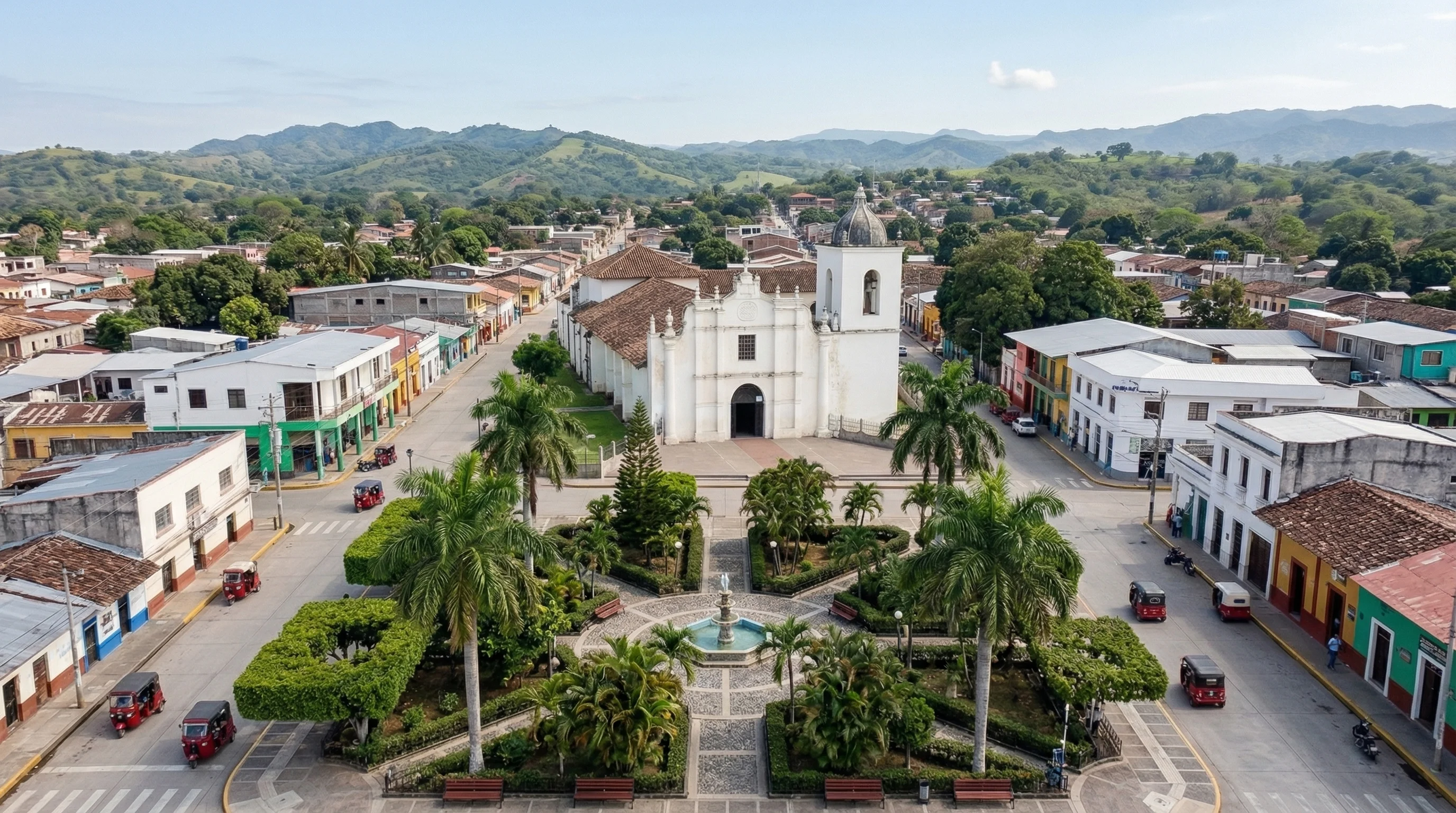
Somoto, located in the Madriz department of northern Nicaragua near the Honduran border, holds strategic importance as a logistics destination due to its position in one of Nicaragua's primary agricultural and cattle-raising regions. Its proximity to the Las Manos border crossing with Honduras makes it a key node in the Central American land bridge, facilitating trade between Nicaragua and its northern neighbors, and ultimately connecting to the broader Pan-American corridor. This location is ideal for distributing goods throughout northern Nicaragua and for transiting cargo to and from Honduras and El Salvador.
The local and regional economy is heavily driven by agriculture and livestock. Key industries include coffee production (a major export), beef and dairy cattle, basic grain farming (beans, corn), and artisanal manufacturing of goods like footwear and leather products. These sectors require inbound shipments of agricultural inputs, fertilizers, and machinery, and generate outbound freight of perishable goods (requiring reefer capacity), packaged foods, and raw materials. The commercial activity supports a steady demand for reliable door-to-door freight services.
Transportation infrastructure in the region includes the Pan-American Highway (Nicaragua's RN-1), which runs near Somoto and connects it to Managua in the south and the Honduran border in the north. While road conditions can vary, this main artery is the primary route for commercial trucking. For final-mile delivery, well-maintained secondary roads are essential. The destination's infrastructure supports standard FTL equipment like dry vans and reefers. For cargo originating from the U.S., the final leg after the Central American border crossings is efficiently managed by our local provider partners, ensuring secure and timely delivery to Somoto's industrial and agricultural facilities.










