Somoto to Charleston
Charleston → SomotoFTL freight transportation service between Somoto and Charleston. Reliable logistics solutions for your business.
Route Description
Everything you need to know about the corridor Somoto - Charleston
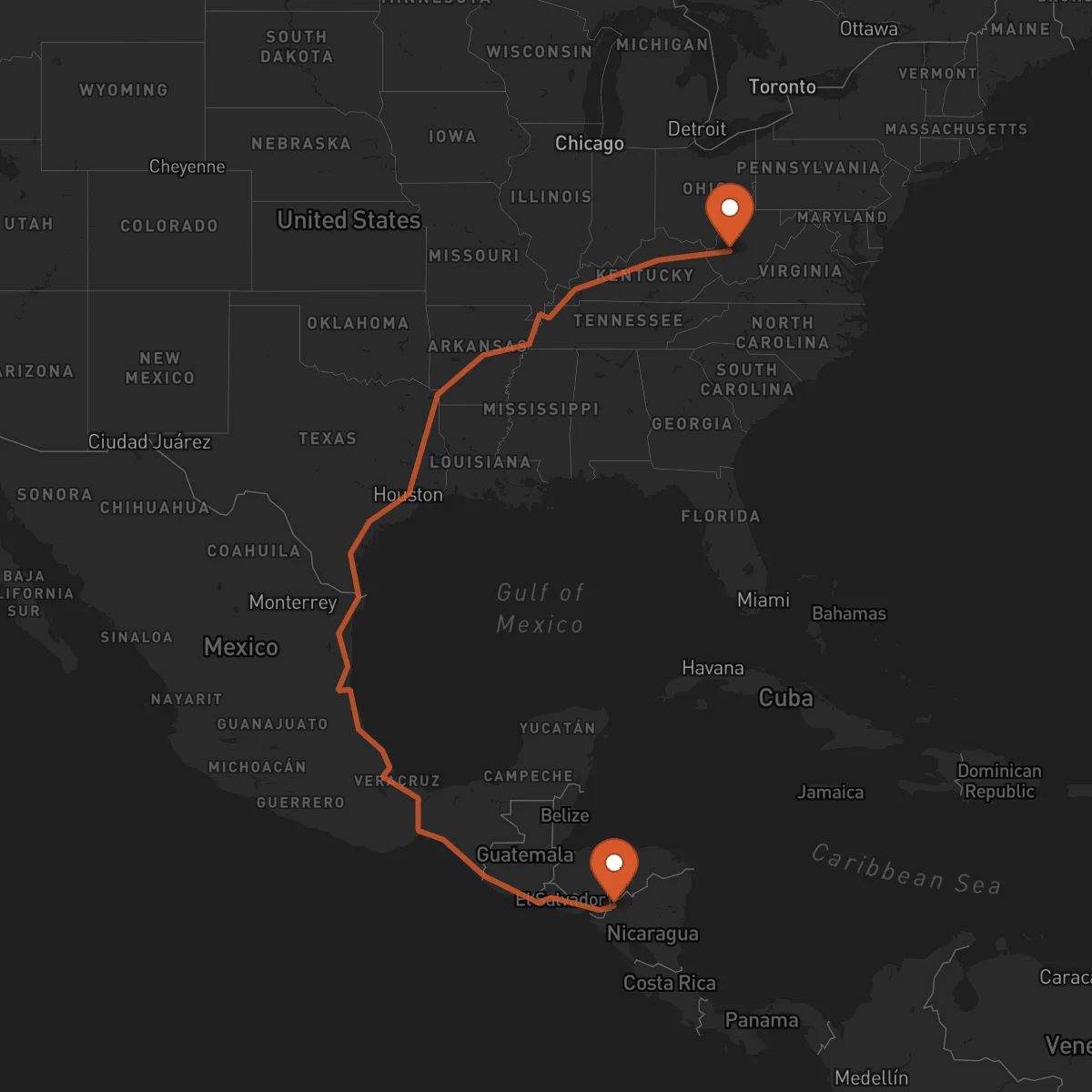
The Somoto to Charleston corridor represents a vital cross-border logistics link connecting Central America with the Appalachian region of the United States. This strategic route facilitates the movement of goods across approximately 2,808 kilometers, bridging key agricultural and industrial zones in Nicaragua with manufacturing and energy hubs in West Virginia. Its importance lies in enabling efficient trade flows for full truckload (FTL) cargo, supporting supply chains that require reliable, direct transportation without consolidation.
Economically, the corridor serves regions with complementary industrial profiles. The origin area around Somoto is deeply rooted in agriculture and livestock, while the Charleston destination is a center for chemical manufacturing, polymer production, and energy logistics. This creates a consistent demand for dedicated FTL services to transport raw materials inbound to the U.S. and finished goods outbound from the region. Main industries utilizing this route include agriculture (coffee, meat), chemicals, and industrial manufacturing.
Transportation infrastructure relies on a combination of Central American and U.S. highway networks. The journey typically utilizes the Pan-American Highway (CA-1) through Nicaragua, Honduras, Guatemala, and Mexico, before connecting to major U.S. interstates like I-35, I-44, and I-64. Key border crossings, such as those at El Paso/Ciudad Juárez and Laredo/Colombia, are critical transit points where customs clearance and regulatory compliance are managed. Control Terrestre’s alliance of providers holds certifications including C-TPAT, FAST, and BASC, which streamline cross-border procedures and enhance security for our clients' cargo.
We facilitate seamless operations on this corridor by coordinating dedicated FTL capacity with providers experienced in cross-border intricacies. Our network ensures proper handling for specialized cargo, including refrigerated and dry van equipment, while managing all documentation and compliance. By leveraging our strategic partnerships, we offer a single point of contact for door-to-door service from Somoto to Charleston, optimizing transit reliability for your full truckload shipments without the delays of LTL consolidation.
Services for this Route
Available services for the corridor Somoto - Charleston
 Origin
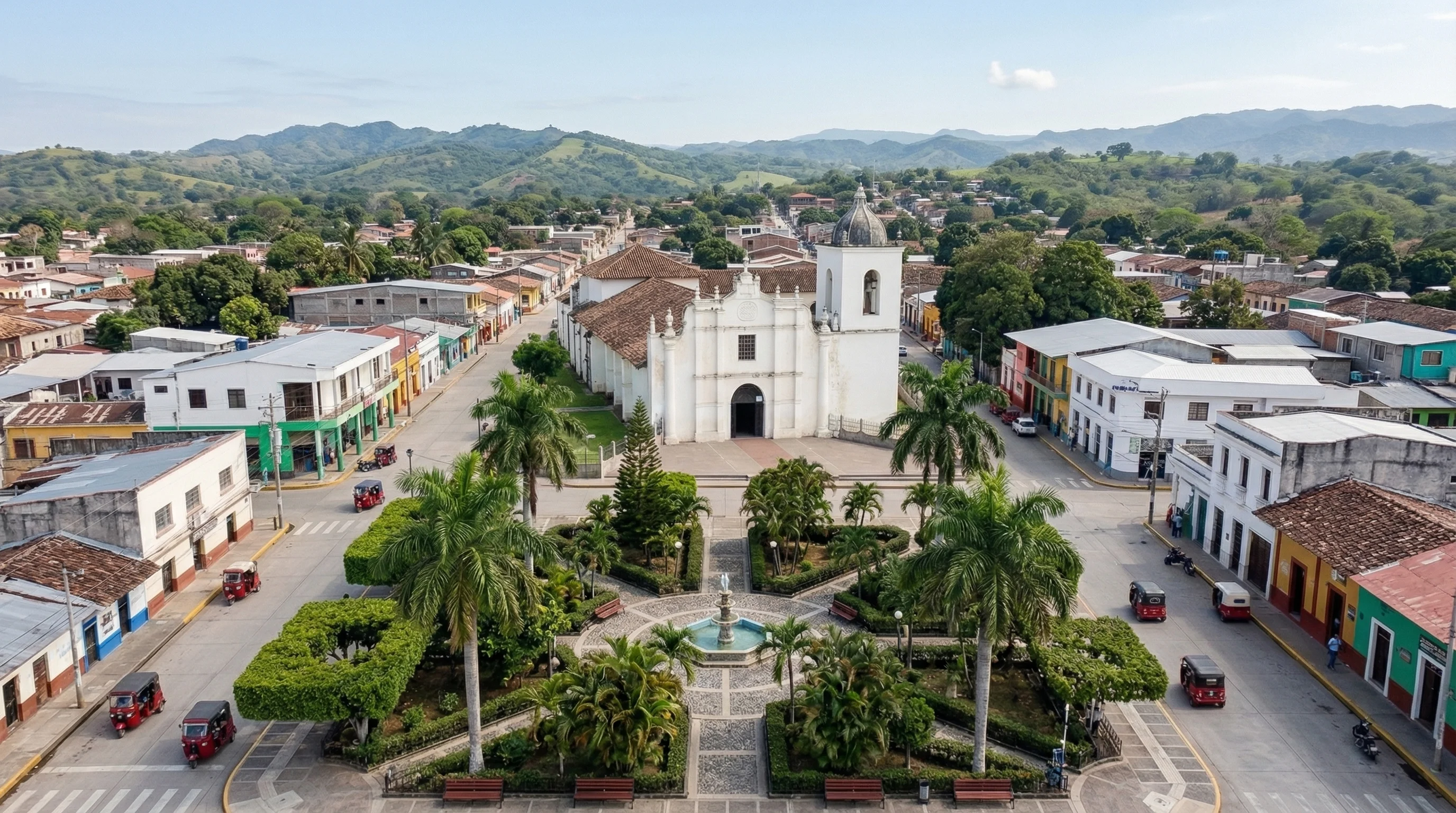
Somoto, located in Nicaragua's Madriz department near the Honduran border, serves as a strategic northern gateway for exports heading toward North America. Its proximity to the Pan-American Highway (CA-1) provides direct access to the Central American corridor, making it a logical consolidation point for agricultural and livestock products from the region. The local economy is predominantly agricultural, with coffee, beef, and dairy being primary sectors that generate consistent outbound freight demand. Transportation infrastructure is centered on this major highway, supporting the movement of full truckloads to border crossings. While primarily an agricultural hub, Somoto's location positions it effectively for cross-border logistics, connecting rural production areas to international supply chains via robust overland routes.
 Destination
Charleston
Charleston, the capital of West Virginia, is a pivotal logistics and industrial hub in the Appalachian region. Its strategic location is defined by the confluence of the Kanawha and Elk Rivers, historically supporting river barge traffic, and its intersection of major interstate highways I-64 and I-77. These provide direct north-south and east-west connectivity to markets across the Eastern U.S. The city's economy is anchored by chemical manufacturing, polymer production, and energy logistics, including support for the natural gas industry. This industrial base drives significant demand for inbound raw materials and outbound finished goods via full truckload. Charleston's infrastructure includes extensive warehousing and intermodal facilities, making it a key distribution point for FTL services serving the Midwest and Southeast United States.










