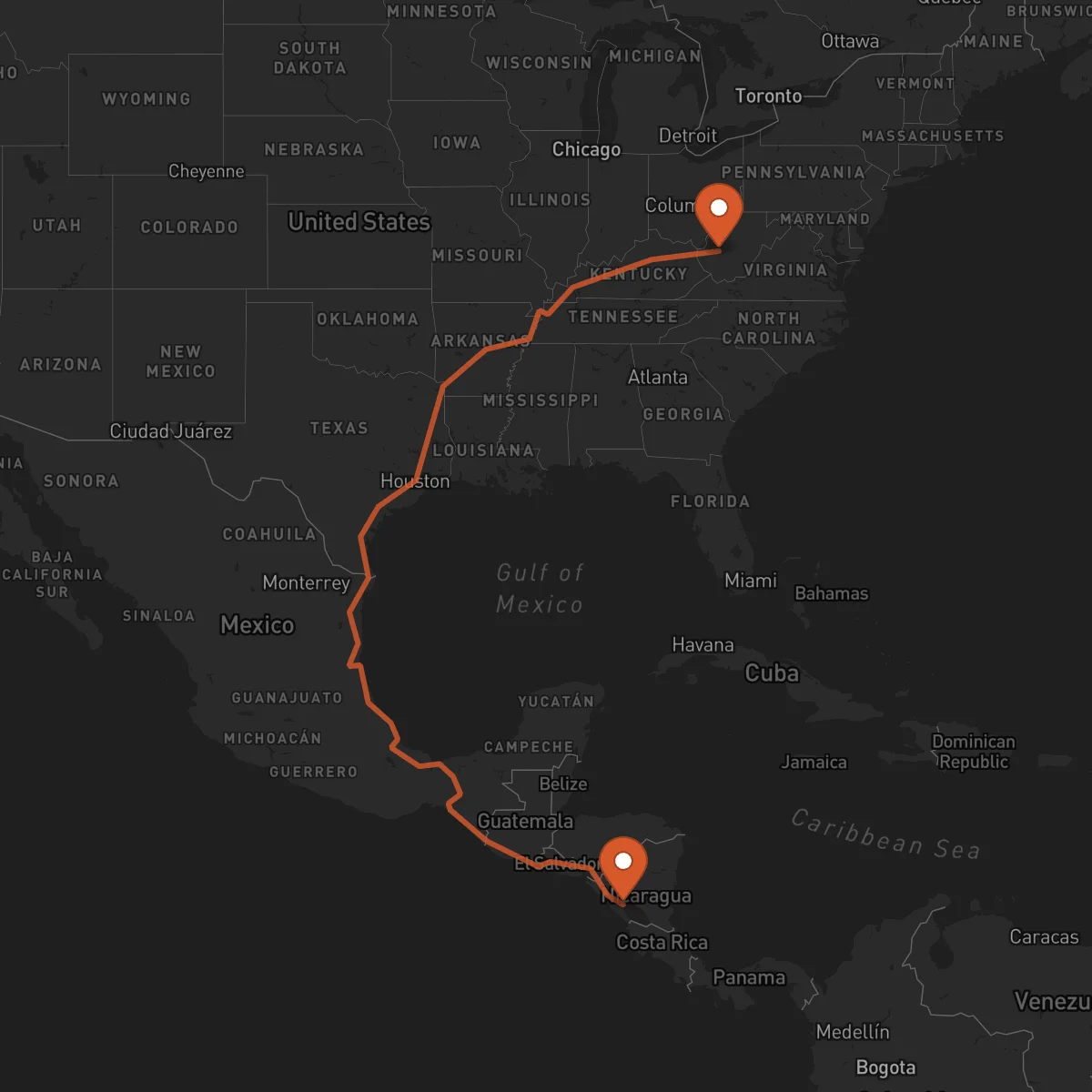
Charleston to Granada
Granada → CharlestonFTL freight transportation service between Charleston and Granada. Reliable logistics solutions for your business.
Route Description
Everything you need to know about the corridor Charleston - Granada
The Charleston, West Virginia to Granada, Nicaragua corridor is a critical cross-border artery connecting the industrial heartland of the United States with the growing markets of Central America. This approximately 2,968 km route serves as a vital economic bridge, facilitating the movement of goods between manufacturing hubs and consumer markets across diverse geopolitical landscapes. The corridor traverses the Appalachian region, through the southern United States, across Mexico, and into the heart of Nicaragua, requiring sophisticated coordination of international logistics and customs compliance.
Economically, this corridor supports key industries on both ends. From the U.S., it channels manufactured goods, chemicals, machinery, and processed materials southward. In return, it transports Nicaragua's primary exports, including agricultural products like coffee, sugar, and beef, as well as manufactured goods and textiles northward. The strategic importance is underscored by its role in regional supply chains, enabling just-in-time delivery for manufacturers and distributors seeking efficient market access.
Transportation infrastructure relies on a network of major highways. The journey begins utilizing the U.S. Interstate system, primarily I-64 and I-77 from Charleston, connecting to I-10 and I-35 for the southbound traverse through Texas. South of the U.S.-Mexico border, the route integrates Mexico's federal highway network, notably the Trans-Mexican Highway (Mexico 150D/150), before entering Central America via the Pan-American Highway system through Guatemala, El Salvador, Honduras, and into Nicaragua. Key border crossings, such as those at El Paso/Ciudad Juárez and in Central America, demand meticulous documentation and adherence to international trade protocols.
Control Terrestre facilitates seamless operations on this complex corridor through our alliance of certified transportation providers. Our partners hold essential certifications like C-TPAT and FAST for expedited U.S. border processing, and BASC for security standards in Latin America. We exclusively coordinate Full Truckload (FTL) services, ensuring dedicated capacity for your cargo—whether standard dry van, refrigerated, specialized, or oversized—from door to door. Our expertise in cross-border documentation, customs coordination, and carrier network management transforms this multinational route into a streamlined, reliable solution for your supply chain.
Services for this Route
Available services for the corridor Charleston - Granada
 Origin
Charleston
Charleston, West Virginia, serves as a strategic logistics origin point in the Appalachian region of the United States. Its location provides efficient access to the extensive U.S. Interstate highway system, notably I-64 running east-west and I-77 providing a direct north-south corridor to key manufacturing and distribution centers in the Midwest and Southeast. The city benefits from the Port of Huntington Tri-State, the largest inland port in the U.S., offering multimodal connectivity via the Ohio River and rail networks. Key economic sectors driving outbound freight from the Charleston area include chemical manufacturing, timber and wood products, machinery, and aerospace components. The available infrastructure, combining robust highway, river, and rail assets, positions Charleston as a viable launch point for long-haul, cross-border freight transportation to international destinations.
 Destination
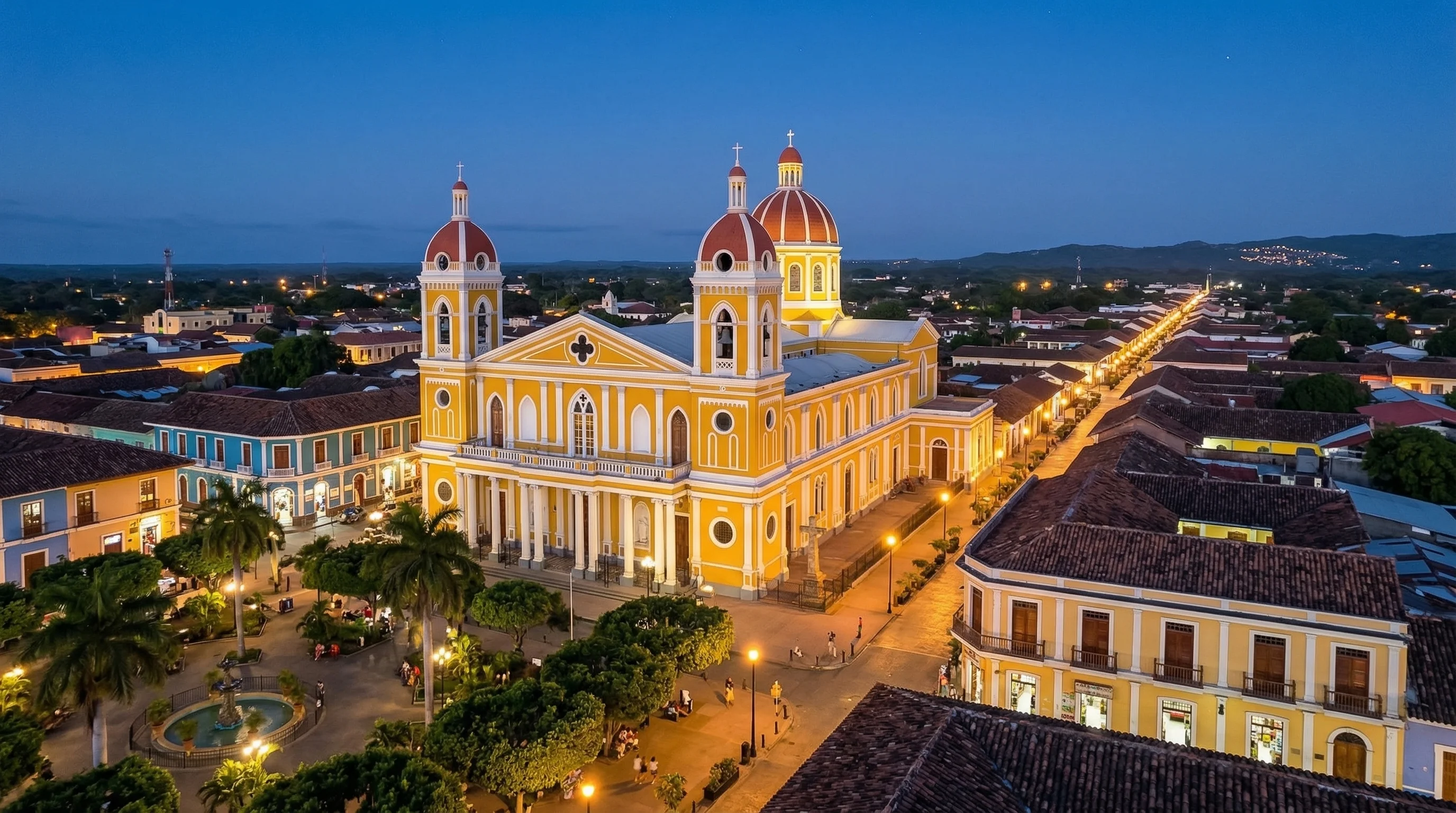
Granada, Nicaragua, is a strategically located destination in Central America, situated on the shores of Lake Nicaragua and serving as a historical and commercial hub for the region. Its logistics significance stems from its central position within Nicaragua, providing access to both Pacific coastal ports like Corinto and overland routes to neighboring Costa Rica and Honduras via the Pan-American Highway. The primary economic sectors generating inbound and outbound freight demand include agriculture (coffee, sugar cane, beef, and tropical fruits), tourism, light manufacturing, and construction materials. The transportation infrastructure relies heavily on the national road network, with the Pan-American Highway (Nicaraguan Route 1) being the critical artery for long-distance freight. While port facilities are concentrated on the Pacific coast, Granada's connectivity via road makes it an essential inland logistics node for distributing goods throughout Nicaragua and into the broader Central American market.










