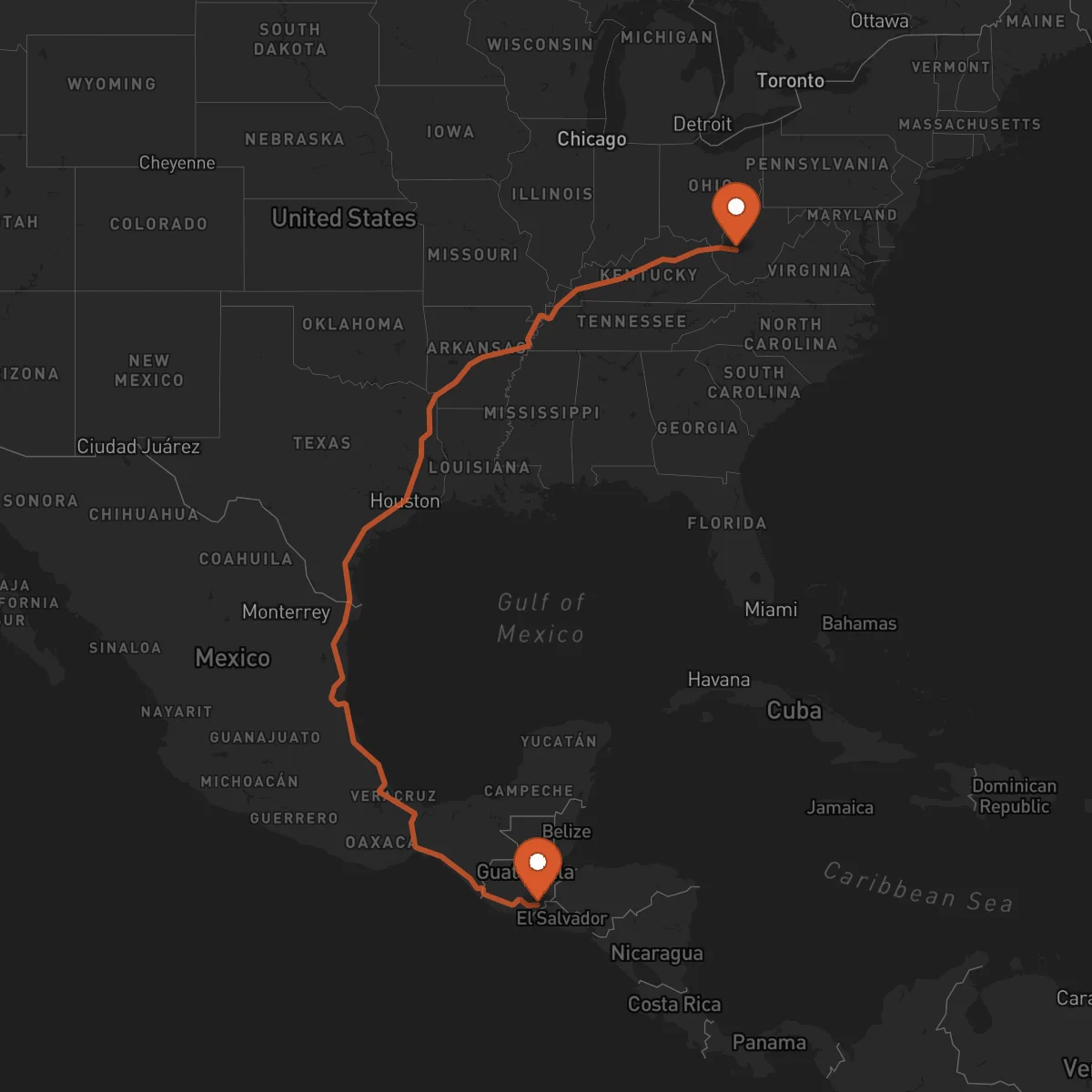
Charleston to Jutiapa
Jutiapa → CharlestonFTL freight transportation service between Charleston and Jutiapa. Reliable logistics solutions for your business.
Route Description
Everything you need to know about the corridor Charleston - Jutiapa
The Charleston, West Virginia to Jutiapa, Guatemala corridor is a critical north-south logistics artery connecting the industrial heartland of the United States with the productive agricultural and manufacturing regions of Central America. This cross-border route traverses a diverse geographical and economic landscape, serving as a vital conduit for trade between the two regions. Its strategic importance lies in its ability to facilitate the movement of goods that support key industries on both ends, from U.S. chemical and manufacturing outputs to Guatemalan agricultural exports and regional consumer goods. Control Terrestre leverages our robust network of certified carriers to provide seamless Full Truckload (FTL) solutions along this complex corridor, ensuring reliability for our clients' supply chains.
The economic context of this corridor is defined by the complementary strengths of its endpoints. Charleston, WV, is a hub for chemical production, timber, and advanced manufacturing, while the Jutiapa region in southeastern Guatemala is a major agricultural producer, known for coffee, bananas, sugar, and a growing textile sector. The primary industries utilizing this route include chemical and plastic product shippers from the U.S. and agricultural commodity exporters from Guatemala, alongside general manufactured goods moving in both directions. The transportation infrastructure is anchored by a network of major U.S. interstate highways, transitioning to Central American regional roads, requiring expert navigation of varying road conditions and regulatory environments.
Key infrastructure includes the initial stretch on I-64 and I-77 from Charleston, connecting to southern routes like I-75 and I-10 towards the Texas/Mexico border. The critical border crossing is typically via the Texas-Mexico gateway (such as Laredo/El Paso), followed by the transit through Mexico on federal highways before reaching the Guatemalan border at points like El Carmen/La Hachadura. The final leg utilizes Guatemala's CA-1 highway system to reach Jutiapa. Navigating the customs and regulatory considerations at multiple international borders—U.S. export, Mexican transit, and Guatemalan import—is a complex process involving documentation, duties, and compliance with programs like C-TPAT and FAST for expedited clearance.
Control Terrestre facilitates efficient operations on this corridor by acting as a single point of contact for the entire journey. Our alliance of experienced providers is pre-vetted with essential certifications (C-TPAT, FAST, BASC) to ensure secure and compliant cross-border movement. We manage the full Door-to-Door logistics, from pickup in Charleston to delivery in Jutiapa, coordinating border crossing procedures, customs brokerage support, and leveraging our expertise in specialized equipment as needed—from dry vans for general cargo to reefers for perishable agricultural products. This integrated approach mitigates the risks and complexities of a multi-country transit, providing our clients with a streamlined and professional FTL service.
Services for this Route
Available services for the corridor Charleston - Jutiapa
 Origin
Charleston
Charleston, West Virginia, serves as a strategic logistics origin point due to its central location within the Appalachian region and its robust industrial base. The city is a major center for chemical manufacturing, with the Kanawha Valley hosting numerous chemical plants, alongside significant timber, aerospace, and advanced manufacturing sectors. This industrial profile generates consistent demand for outbound freight transportation of raw materials, chemicals, and finished goods. The area's transportation infrastructure is well-developed for multimodal logistics, featuring direct access to Interstate 64 and Interstate 77, which provide efficient east-west and north-south connections across the U.S. The Kanawha River also supports barge traffic, and the region is served by major rail lines, offering intermodal options. For FTL road freight, Charleston's highway network seamlessly integrates into the national system, making it an effective launch point for long-haul corridors heading south and west toward the Mexican border.
 Destination
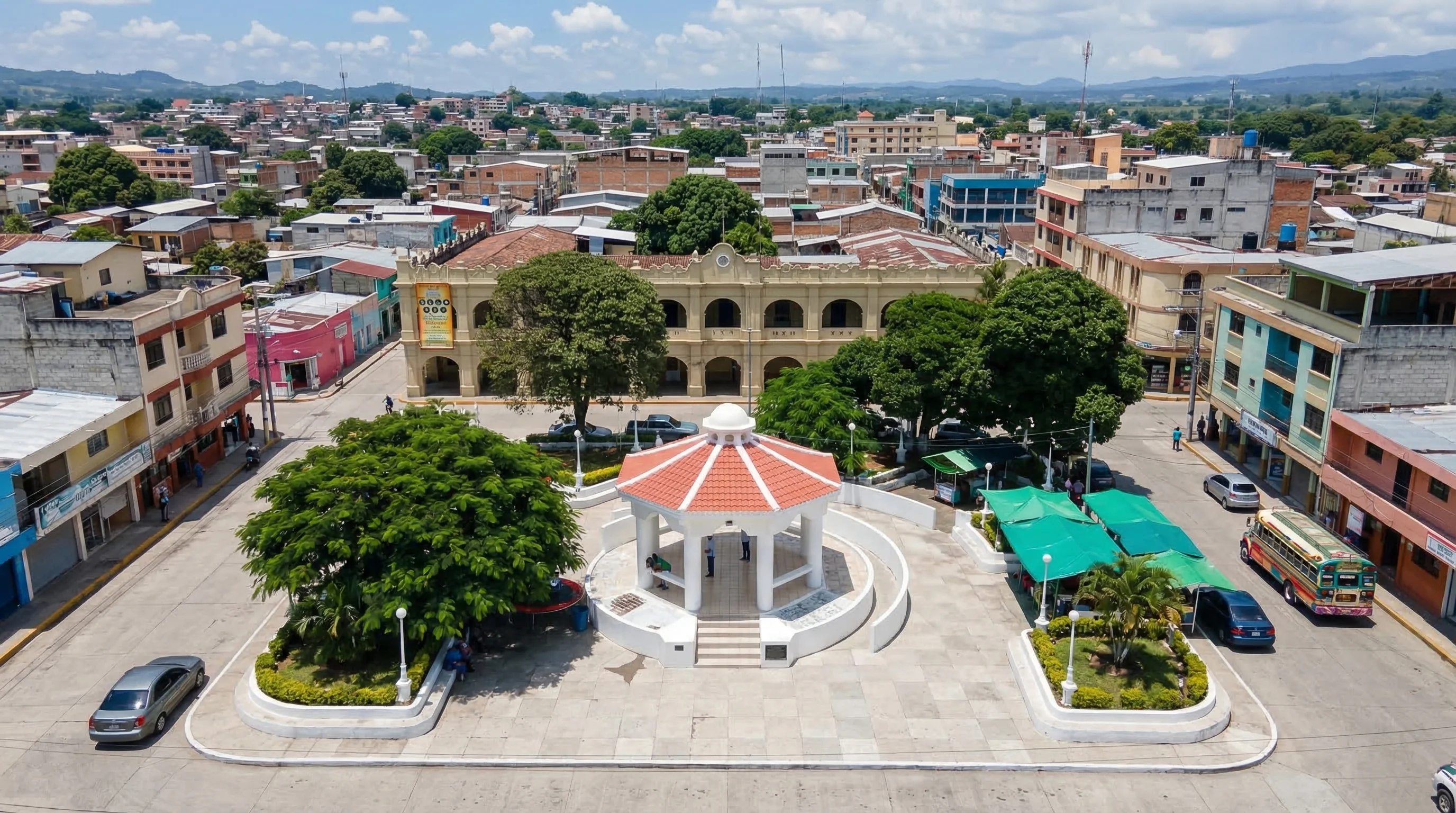
Jutiapa, located in the southeast of Guatemala, is a strategically important logistics destination as the capital of its department and a key commercial hub for one of the country's most productive agricultural regions. The surrounding Jutiapa valley is a major agricultural producer, with primary industries including coffee, banana and tropical fruit plantations, sugarcane, and livestock. Additionally, the area hosts growing light manufacturing and textile industries, creating a diverse flow of inbound raw materials and outbound finished goods. The available transportation infrastructure centers on the CA-1 highway, a primary component of Central America's Pan-American Highway network, which connects Jutiapa directly to major ports on Guatemala's Pacific coast (like Puerto Quetzal) and to the borders with El Salvador and Honduras. The primary border crossing for this corridor is at La Hachadura/El Carmen, which links to El Salvador's highway network for the onward journey. This road-centric infrastructure makes Jutiapa highly accessible for FTL trucking, serving as a central distribution point for the southeastern Guatemalan economy.










