Cancún to Calgary
Calgary → CancúnFTL freight transportation service between Cancún and Calgary. Reliable logistics solutions for your business.
Route Description
Everything you need to know about the corridor Cancún - Calgary
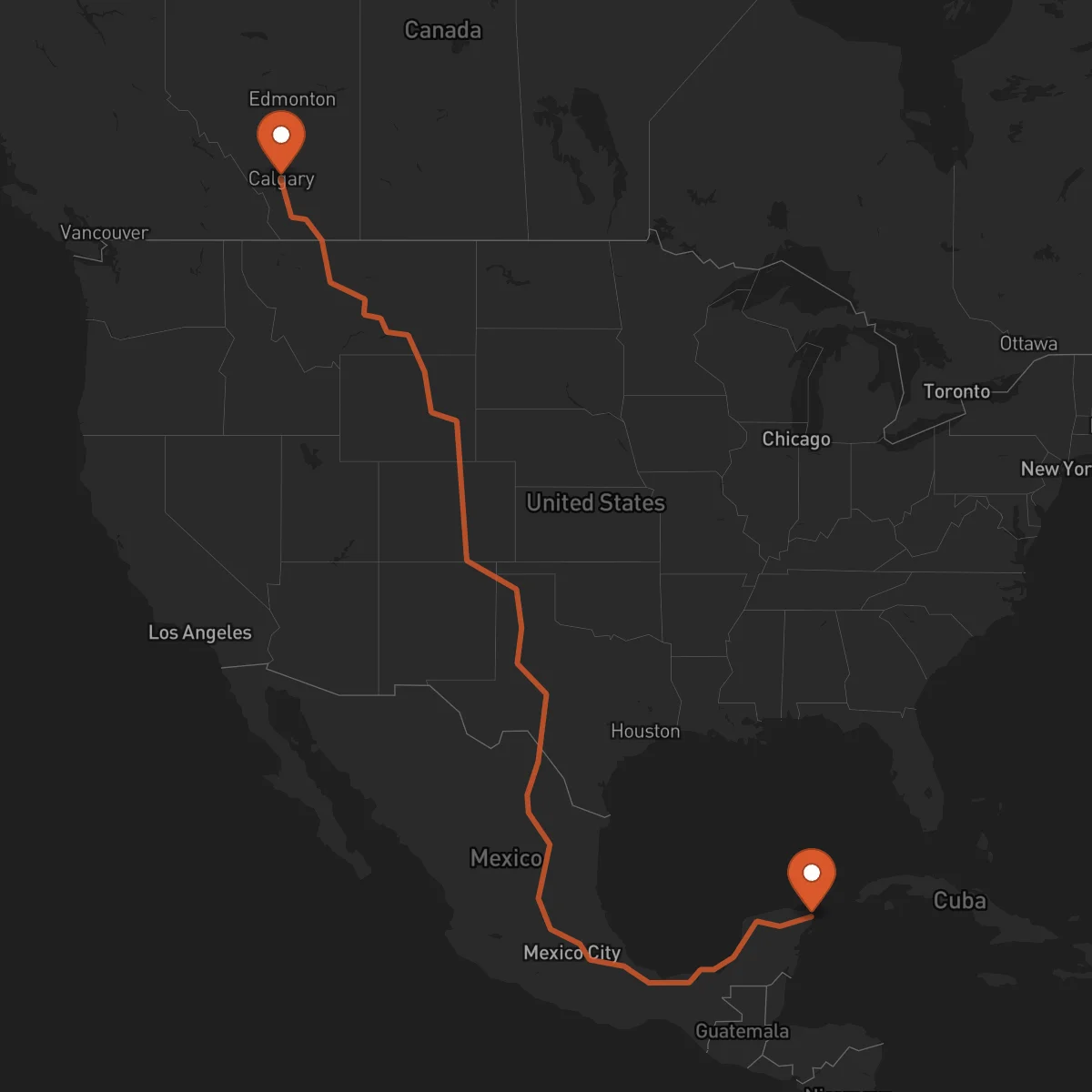
The Cancún-Calgary corridor represents a vital logistics connection between Mexico's Caribbean coast and Canada's energy capital. This cross-border route spans approximately 4,077 kilometers, traversing diverse terrain from tropical beaches to mountainous regions. The corridor serves as a crucial link for industries requiring efficient transportation between North America's manufacturing hubs and energy sectors.
The route connects Cancún's growing industrial base with Calgary's robust energy and technology sectors. Key industries utilizing this corridor include automotive parts, electronics, consumer goods, and specialized equipment. The transportation infrastructure includes major highways such as Mexican Federal Highway 180, connecting to U.S. Interstate 29 and Canadian Highway 1, ensuring reliable transit across international borders.
Border crossings at Laredo-Nuevo Laredo and Coutts-Carway facilitate smooth customs clearance for freight operations. Control Terrestre provides comprehensive cross-border expertise, managing documentation, customs compliance, and regulatory requirements throughout the journey. Our strategic partnerships with certified carriers ensure consistent service quality and adherence to C-TPAT and FAST program standards, minimizing delays and optimizing transit times for full truckload shipments.
Services for this Route
Available services for the corridor Cancún - Calgary
 Origin
Cancún
Cancún serves as a strategic logistics hub for Mexico's Caribbean region, combining tourism infrastructure with industrial development. The city's proximity to major ports and international airports creates a multimodal transportation network ideal for freight operations. Cancún's industrial parks house manufacturers of automotive components, electronics, and consumer goods, while its free trade zone status facilitates international commerce.
The region benefits from modern transportation infrastructure including Federal Highway 180, which connects to the broader Mexican highway system. Cancún International Airport provides air cargo capabilities, complementing ground transportation options. The city's growing industrial base and strategic location make it an ideal origin point for cross-border freight shipments to North American destinations.
 Destination
Calgary stands as a major logistics center in Western Canada, serving as the gateway to Alberta's energy resources and industrial heartland. The city's strategic location provides access to the Canadian Prairies and Pacific Northwest markets, making it a crucial distribution point for various industries. Calgary's economy centers on energy, technology, and manufacturing sectors, creating consistent demand for freight transportation services.
The region features excellent transportation infrastructure including the Trans-Canada Highway and connections to the Canadian National Railway network. Calgary International Airport supports air cargo operations, while the city's proximity to the U.S. border facilitates cross-border trade. The metropolitan area's industrial parks and distribution centers provide efficient facilities for freight handling and storage, supporting seamless logistics operations for businesses throughout Western Canada.










