Cancún to Brampton
Brampton → CancúnFTL freight transportation service between Cancún and Brampton. Reliable logistics solutions for your business.
Route Description
Everything you need to know about the corridor Cancún - Brampton
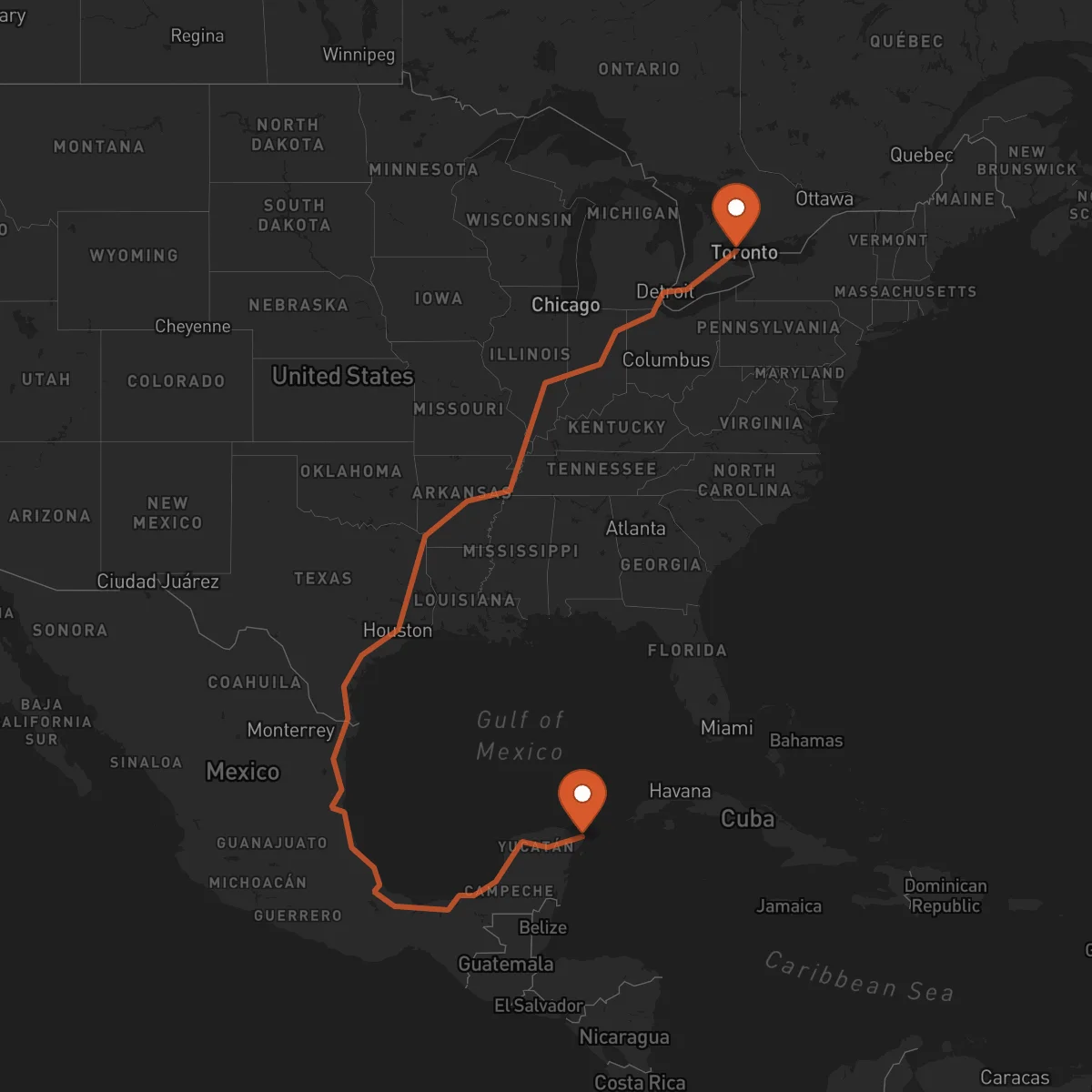
The Cancún-Brampton logistics corridor represents a vital trade link between Mexico's Caribbean coast and Canada's manufacturing hub. This 2,589 km route connects one of Mexico's most important tourist destinations with Ontario's industrial heartland, facilitating the movement of diverse cargo types between North American markets. The corridor traverses key economic regions, crossing multiple states and provinces before reaching its northern terminus.
The route primarily utilizes Mexico's Federal Highway 180 and Federal Highway 190, transitioning through the United States via I-69 and I-94, before entering Canada through Ontario's provincial highways. Major border crossings include Laredo/Nuevo Laredo or Brownsville/Matamoros, depending on the specific routing. This strategic pathway enables efficient freight movement between Mexico's growing export economy and Canada's sophisticated manufacturing sector.
Key industries utilizing this corridor include automotive parts, electronics, agricultural products, and consumer goods. The route particularly benefits from the USMCA trade agreement, facilitating seamless cross-border operations. Control Terrestre provides comprehensive FTL services along this corridor, leveraging our network of certified carriers and expertise in cross-border documentation to ensure reliable, timely deliveries between Cancún and Brampton.
Services for this Route
Available services for the corridor Cancún - Brampton
 Origin
Cancún
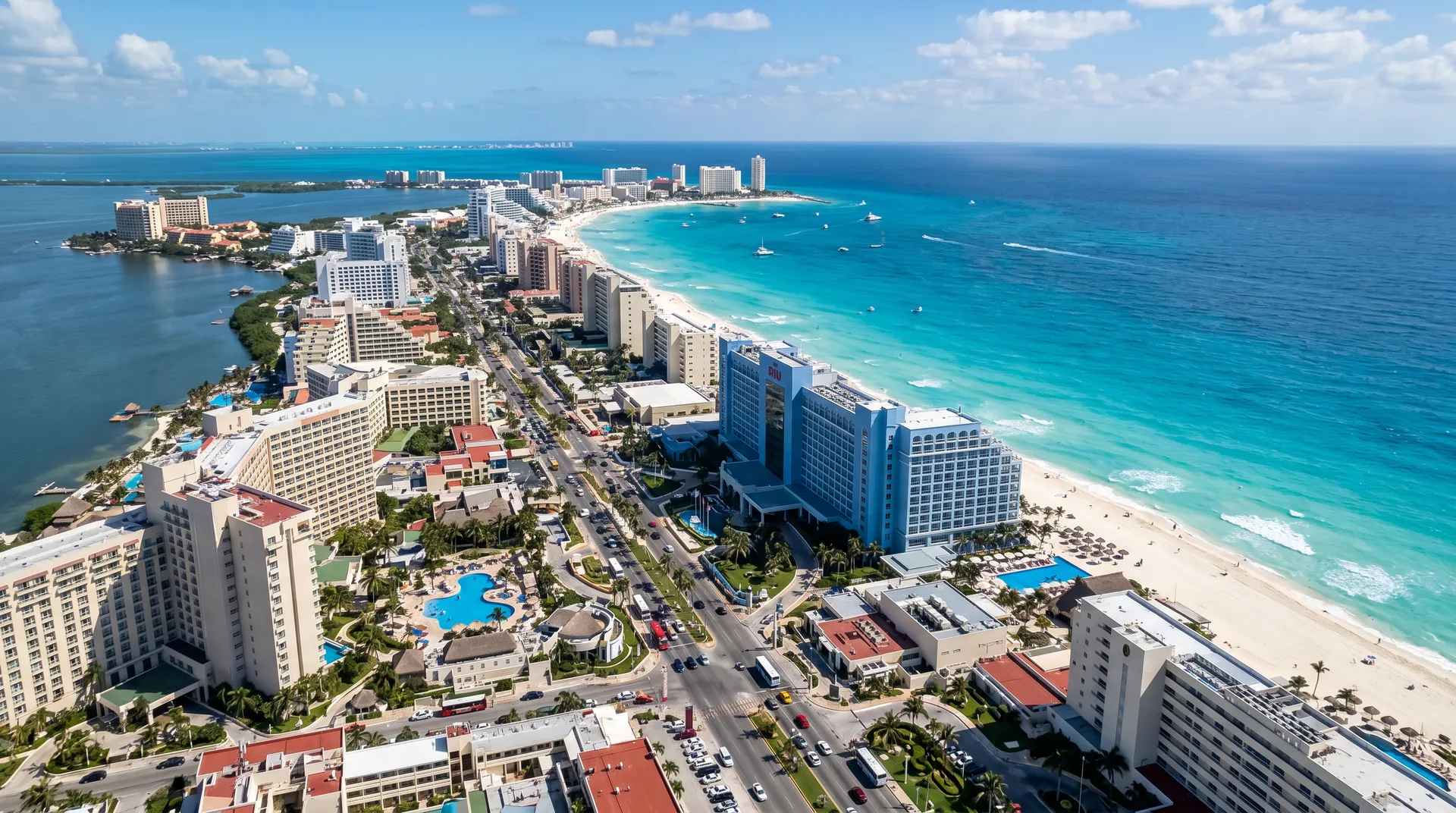
Cancún serves as a strategic logistics hub for Mexico's Caribbean region, combining its importance as a major tourist destination with growing industrial capabilities. The city's proximity to the Port of Puerto Morelos and its connection to Cancún International Airport create multimodal transportation advantages. Cancún's economy extends beyond tourism, with emerging sectors in electronics assembly, food processing, and agricultural exports including tropical fruits and vegetables. The region's infrastructure includes modern highways connecting to the rest of the Yucatán Peninsula and beyond, with Federal Highways 180 and 307 providing primary north-south and east-west connections.
 Destination
Brampton stands as one of Canada's most important logistics and manufacturing centers, strategically located within the Greater Toronto Area. The city hosts a diverse industrial base including advanced manufacturing, automotive parts production, pharmaceuticals, and food processing. Brampton's transportation infrastructure is exceptional, featuring direct access to major highways including Highway 401, Canada's busiest freeway. The city benefits from proximity to Toronto Pearson International Airport and robust rail connections through CN and CP rail lines. This infrastructure, combined with its position in Canada's most populous region, makes Brampton a critical node for North American supply chains.










