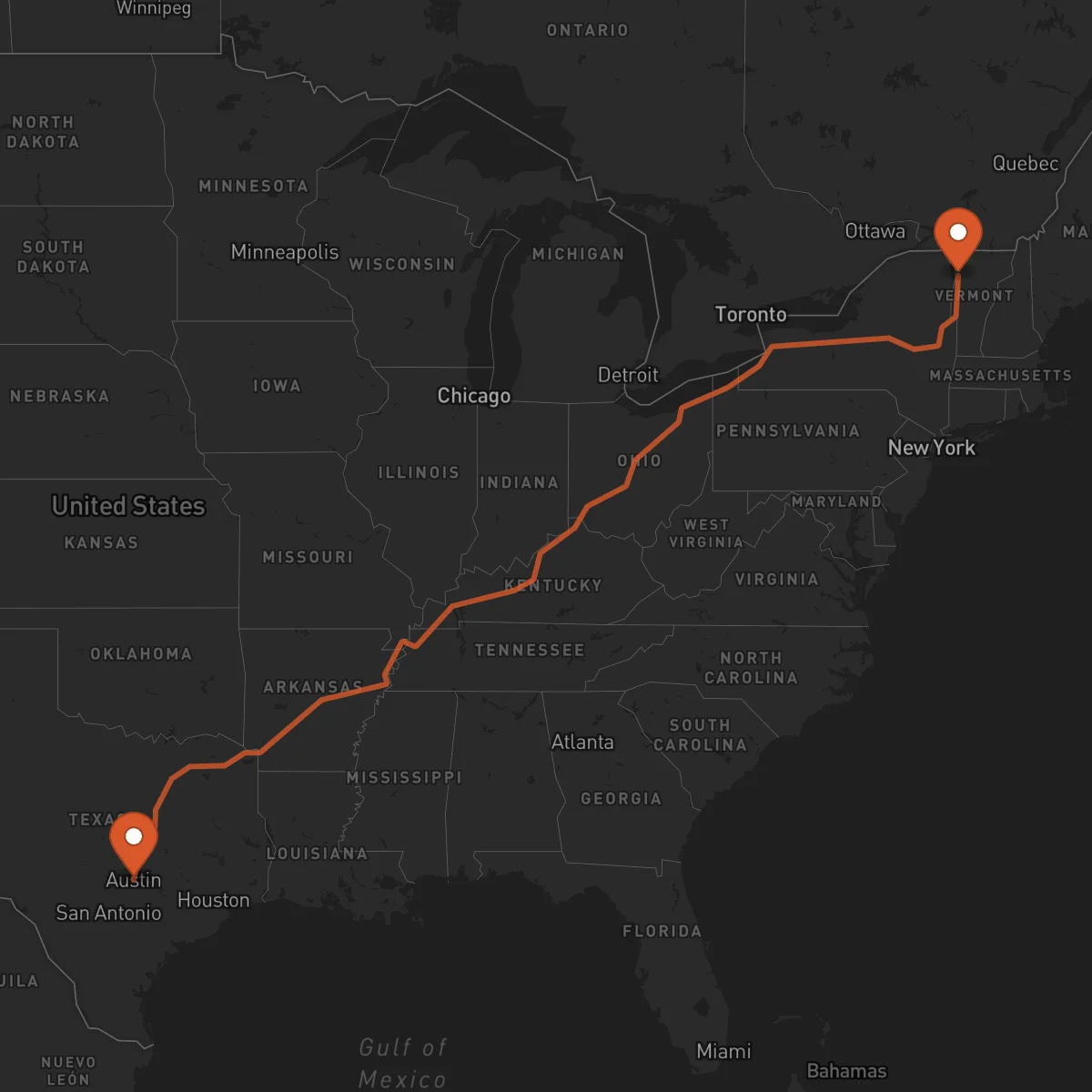
Burlington to Austin
Austin → BurlingtonFTL freight transportation service between Burlington and Austin. Reliable logistics solutions for your business.
Route Description
Everything you need to know about the corridor Burlington - Austin
The Burlington to Austin corridor represents a vital logistics connection between the Northeast and the Southwest of the United States, spanning approximately 2,665 kilometers across diverse geographic and economic regions. This route traverses major industrial and commercial centers, connecting Vermont's manufacturing and agricultural base with Texas's booming technology and energy sectors. The corridor primarily utilizes Interstate 89, I-90, I-80, and I-35, providing reliable access through key states including Vermont, New York, Pennsylvania, Ohio, Indiana, Illinois, Missouri, Oklahoma, and Texas.
The economic significance of this corridor is substantial, facilitating the movement of high-value electronics, industrial machinery, automotive parts, and agricultural products between these two dynamic regions. Vermont's specialized manufacturing and craft industries complement Texas's large-scale production capabilities, creating a symbiotic trade relationship that drives consistent freight demand along this route. The corridor also serves as a critical link for companies expanding their distribution networks across the central United States.
Control Terrestre optimizes operations on this corridor through our extensive network of certified transportation providers and specialized equipment. Our dedicated FTL services ensure that your cargo moves efficiently from origin to destination without intermediate handling, maintaining the integrity of your supply chain. With our 24/7 tracking capabilities and experienced logistics team, we provide the reliability and transparency that businesses require for successful cross-country transportation between Burlington and Austin.
Services for this Route
Available services for the corridor Burlington - Austin
 Origin
Burlington
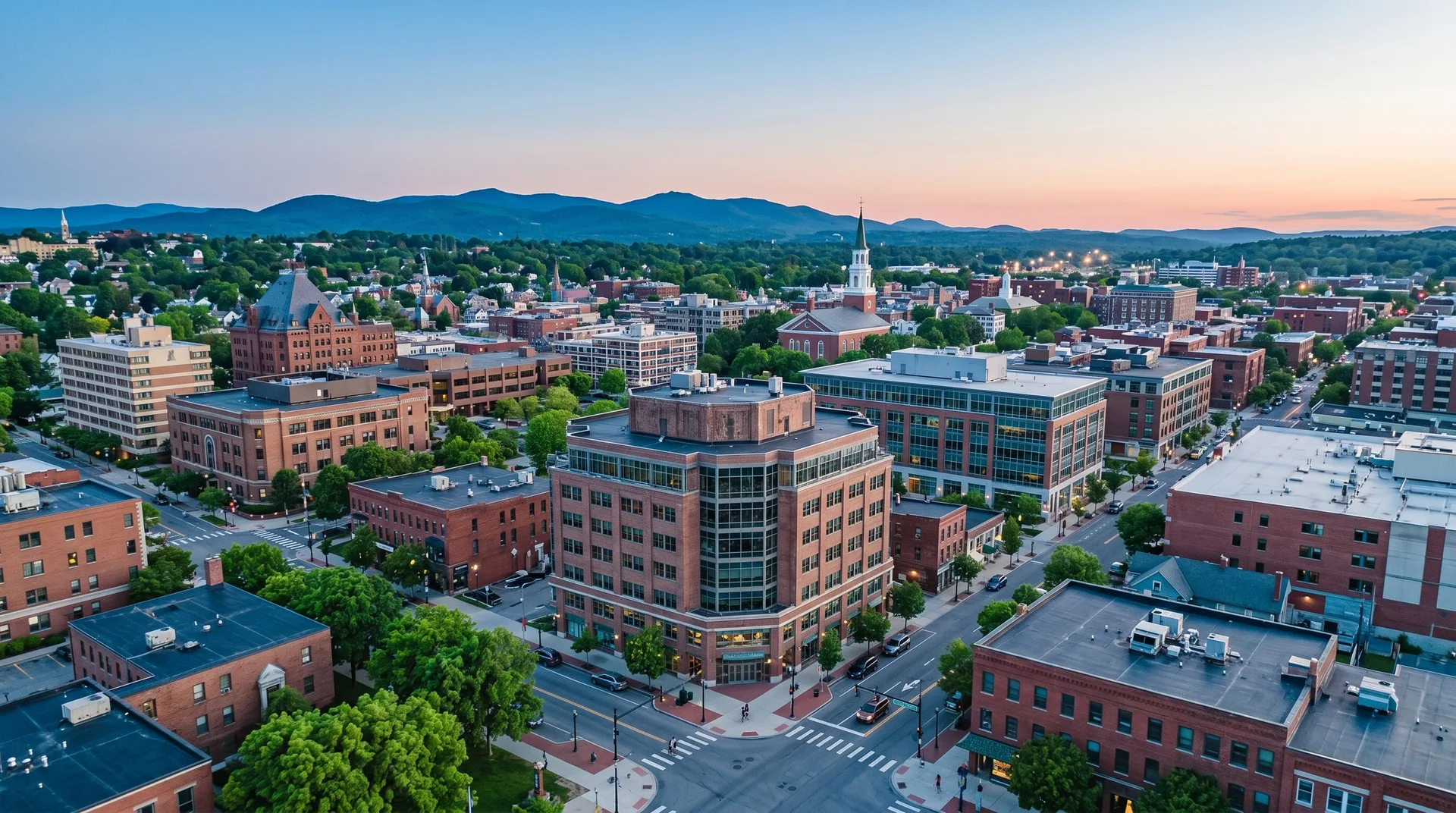
Burlington, Vermont serves as a strategic logistics hub in the Northeast, leveraging its proximity to major transportation routes and its position as a gateway to New England markets. The city's location on Lake Champlain provides multimodal transportation options, while its access to Interstate 89 and connections to rail networks facilitate efficient distribution throughout the region. Burlington's transportation infrastructure includes Burlington International Airport and the Port of Burlington, offering comprehensive logistics solutions for businesses operating in the area.
The economic landscape of Burlington is characterized by a diverse mix of industries, including advanced manufacturing, healthcare technology, education, and specialty food production. The region is known for its high-tech manufacturing facilities, craft breweries, and organic food producers, creating a unique industrial profile that requires specialized logistics services. Burlington's commitment to sustainability and innovation aligns with modern supply chain requirements, making it an ideal origin point for companies seeking efficient transportation solutions.
 Destination
Austin
Austin, Texas has emerged as a major logistics and economic center in the Southwest, driven by its strategic location and robust infrastructure network. The city's position along Interstate 35 provides direct access to major markets throughout Texas and beyond, while Austin-Bergstrom International Airport and multiple rail terminals support diverse transportation needs. Austin's extensive highway system and growing port facilities at nearby Houston create a comprehensive logistics ecosystem that accommodates various freight requirements.
The Austin metropolitan area is experiencing rapid economic growth, particularly in technology, healthcare, and advanced manufacturing sectors. Known as "Silicon Hills," the region hosts numerous tech companies, semiconductor manufacturers, and research institutions that generate substantial freight demand. Austin's diverse economy also includes significant activity in music and entertainment production, renewable energy, and biotechnology, creating a dynamic market that requires reliable transportation services to support its expanding industrial base.










