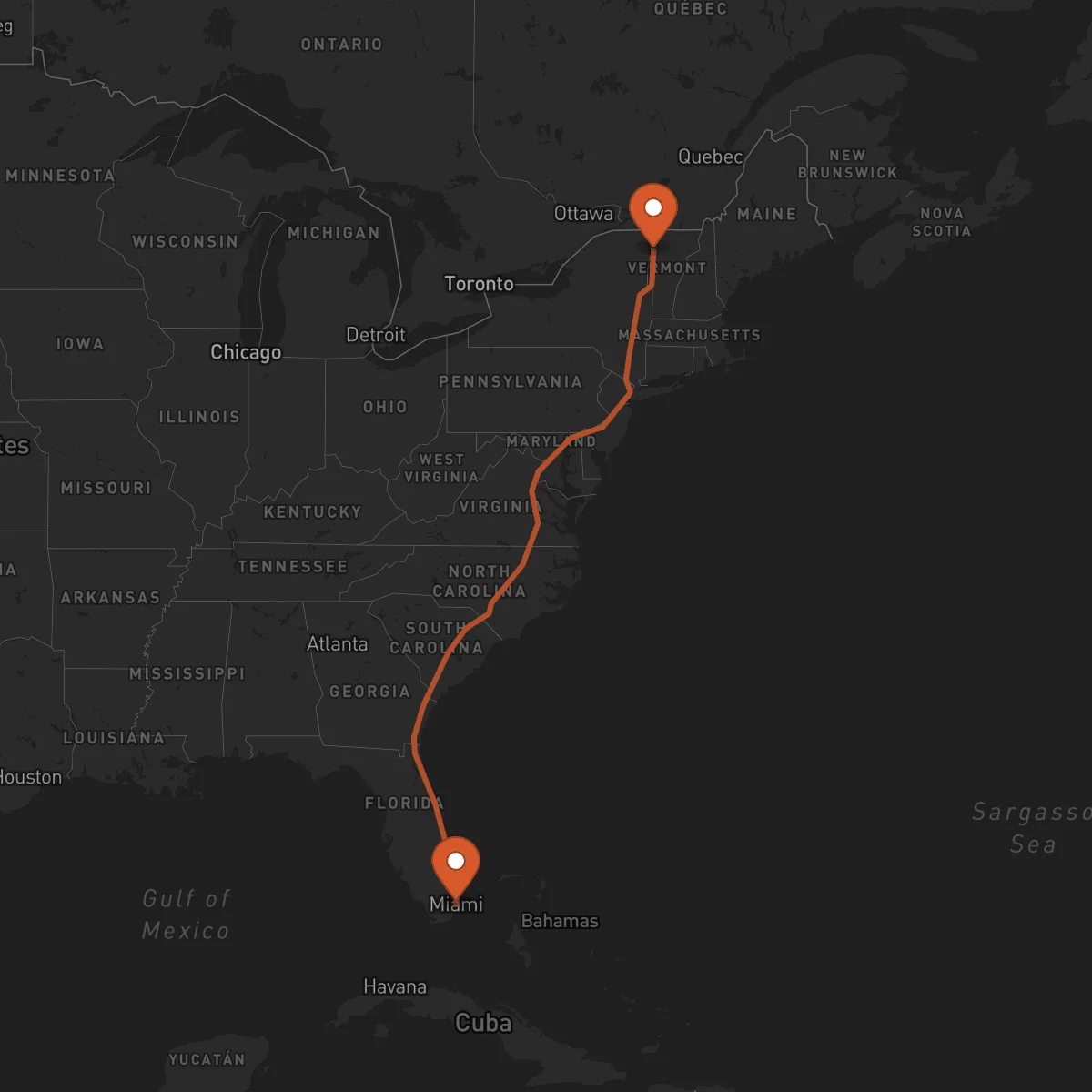
Burlington to Miami
Miami → BurlingtonFTL freight transportation service between Burlington and Miami. Reliable logistics solutions for your business.
Route Description
Everything you need to know about the corridor Burlington - Miami
The Burlington to Miami corridor represents one of the most significant freight transportation routes in the eastern United States, spanning approximately 2,174 kilometers. This north-to-south corridor connects Vermont's manufacturing and agricultural heartland with Florida's major port and distribution center, creating a vital link in the North American supply chain. The route traverses multiple states and economic regions, making it essential for businesses that require reliable transportation between the Northeast and Southeast.
The corridor's strategic importance is amplified by the diverse economic activities it connects. Burlington serves as a gateway for Vermont's dairy products, craft beverages, and specialty manufacturing, while Miami functions as a global trade hub with its world-class port facilities and proximity to Latin American markets. The route passes through major industrial centers including New York, Philadelphia, Washington D.C., and Atlanta, providing access to millions of consumers and businesses along the way.
Control Terrestre facilitates seamless operations along this corridor through our extensive network of certified transportation providers. Our dedicated FTL services ensure that shipments maintain their integrity throughout the journey, whether transporting temperature-sensitive products from Vermont's farms or time-critical components destined for Miami's manufacturing facilities. Our providers' certifications including C-TPAT and FAST enable expedited border crossings and customs clearance where applicable, while our specialized equipment options accommodate everything from standard dry freight to refrigerated cargo and oversized loads.
Services for this Route
Available services for the corridor Burlington - Miami
 Origin
Burlington
Burlington, Vermont serves as a strategic logistics hub in the Northeast, positioned along the eastern shore of Lake Champlain with excellent connectivity to major transportation networks. The city's location provides direct access to Interstate 89 and proximity to the Canadian border, making it an ideal gateway for both domestic and international freight movements. Burlington International Airport and the Port of Burlington further enhance the region's multimodal transportation capabilities, supporting efficient cargo handling and distribution.
The Burlington area's economy is anchored by advanced manufacturing, agricultural production, and technology sectors. Vermont's renowned dairy industry, craft breweries, and specialty food producers rely heavily on reliable transportation services to reach markets across the country. The region's manufacturing base includes precision instruments, aerospace components, and medical devices, all requiring specialized handling and timely delivery. Burlington's educated workforce and quality of life also attract logistics companies and distribution centers, creating a robust ecosystem for freight transportation and supply chain management.
 Destination
Miami
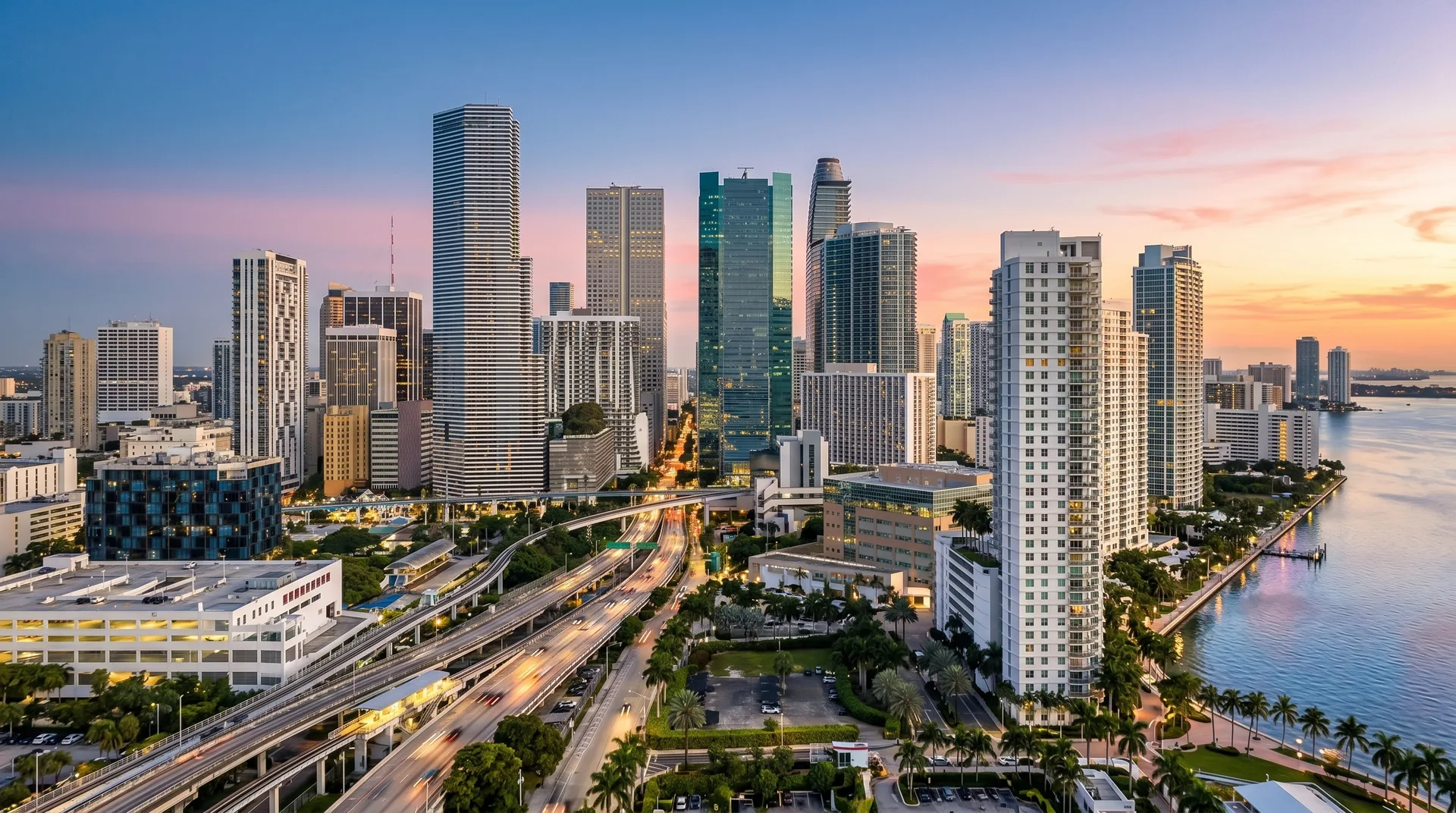
Miami, Florida stands as one of the most strategically important logistics hubs in the United States, serving as the primary gateway between North America and Latin America. The city's location at the southeastern tip of Florida provides unique advantages for international trade, with Miami International Airport being one of the busiest cargo airports in the world. The Port of Miami, known as the "Cargo Gateway of the Americas," handles millions of tons of freight annually and connects seamlessly with the extensive highway network that radiates throughout the southeastern United States.
The Miami metropolitan area's economy is diverse and dynamic, encompassing international trade, tourism, healthcare, and technology sectors. The region's proximity to Latin American markets makes it a critical distribution point for companies engaged in import-export activities, particularly those dealing with perishable goods, pharmaceuticals, and consumer products. Miami's well-developed infrastructure includes multiple intermodal facilities, warehousing complexes, and specialized logistics zones that support the efficient movement of goods throughout the region and beyond.










