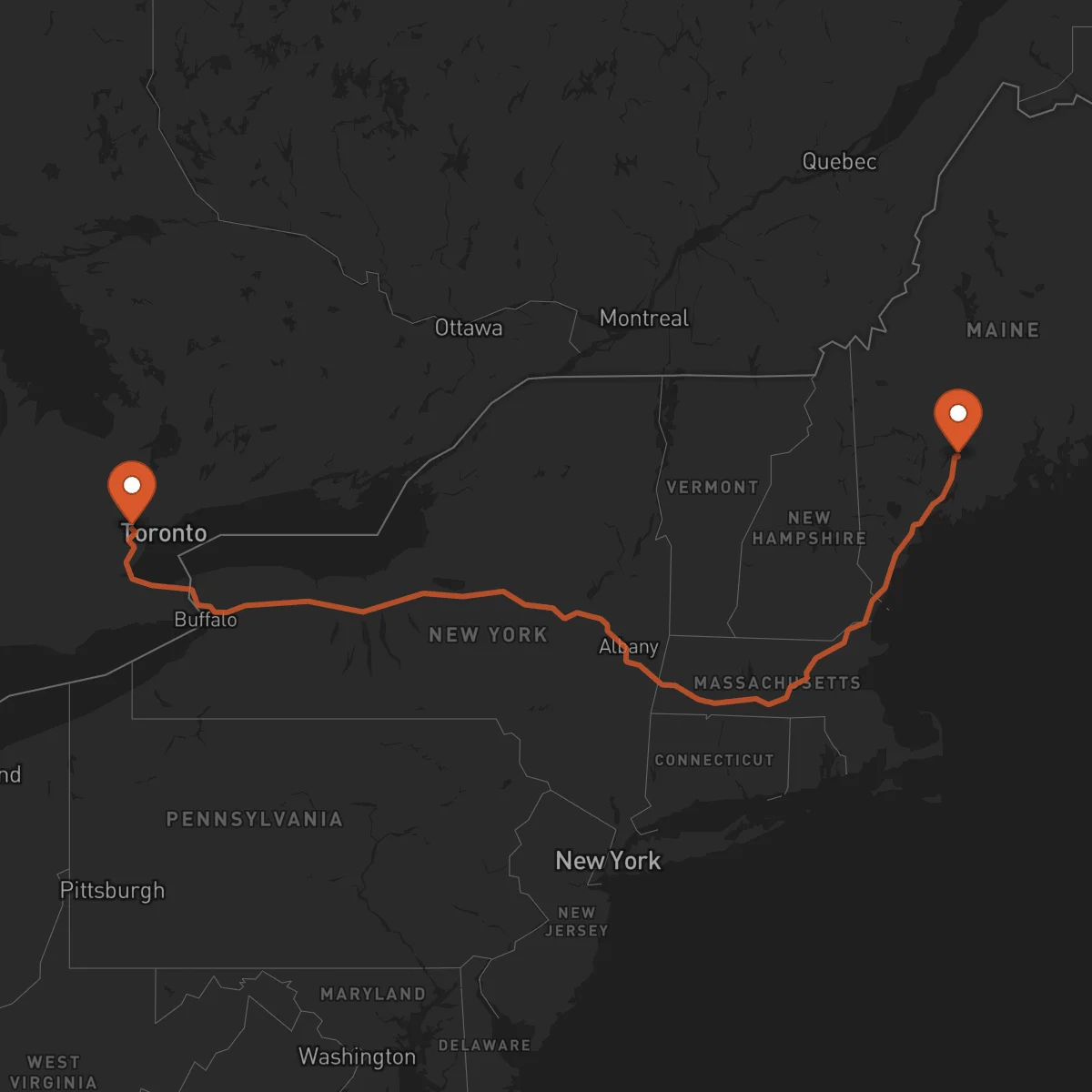
Brampton to Augusta
Augusta → BramptonFTL freight transportation service between Brampton and Augusta. Reliable logistics solutions for your business.
Route Description
Everything you need to know about the corridor Brampton - Augusta
The logistics corridor between Brampton, Ontario, and Augusta, Maine, represents a vital cross-border route connecting the industrial heartland of Canada with the northeastern United States. This 802-kilometer corridor serves as a critical link for businesses operating in both countries, facilitating the seamless movement of goods across the Canada-US border. The route traverses diverse economic regions, from the Greater Toronto Area's manufacturing hub to Maine's resource-based industries and distribution centers.
The corridor's economic significance is underscored by the complementary industrial activities in both regions. Brampton serves as a major logistics and manufacturing center, while Augusta benefits from its strategic position in Maine's supply chain network. The route accommodates substantial freight volumes, particularly for industries such as automotive parts, consumer goods, industrial equipment, and agricultural products. This cross-border connection supports just-in-time manufacturing processes and retail distribution networks that span both nations.
Transportation infrastructure along this corridor includes major highways such as Ontario's Highway 401 and Quebec's Autoroute 20, transitioning to US Interstate 95 in Maine. The corridor typically utilizes border crossings like the Thousand Islands Bridge or Lacolle-Champlain crossing, depending on specific routing needs. Control Terrestre's expertise in cross-border operations ensures efficient customs clearance and compliance with both Canadian and US regulations, minimizing delays and optimizing transit times for our clients' freight shipments.
Services for this Route
Available services for the corridor Brampton - Augusta
 Origin
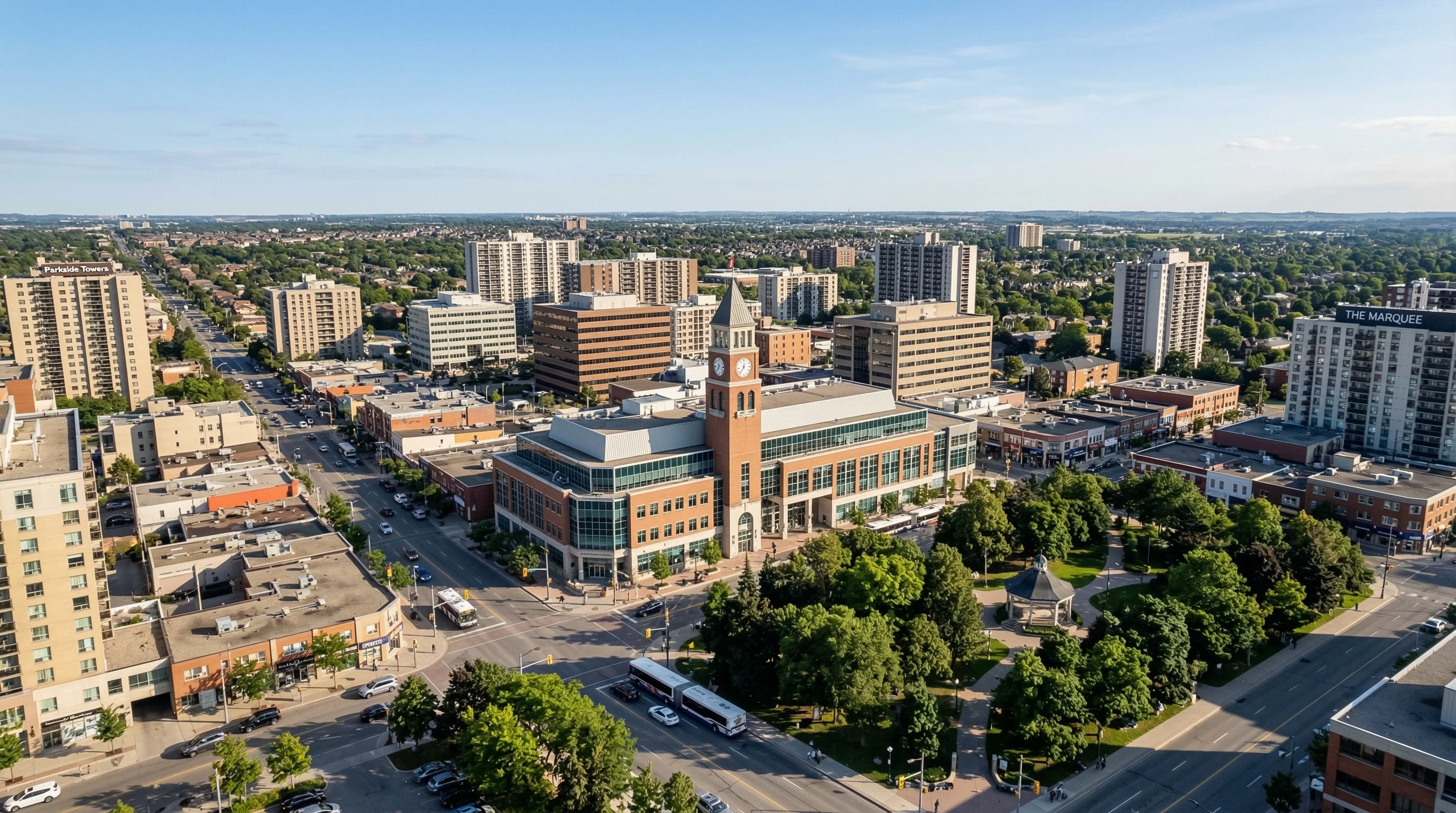
Brampton, located in the Greater Toronto Area, stands as one of Canada's most dynamic logistics hubs. The city's strategic position near major transportation arteries, including Highway 401 and proximity to Toronto Pearson International Airport, makes it an ideal origin point for freight distribution. Brampton's robust industrial base encompasses advanced manufacturing, automotive parts production, food processing, and technology sectors, generating substantial freight volumes that require reliable transportation solutions.
The city boasts extensive warehousing and distribution facilities, supported by a well-developed transportation infrastructure. Brampton's location within the Golden Horseshoe region provides access to a vast consumer market and industrial supply chains. The presence of major intermodal terminals and logistics parks further enhances its capabilities as a freight origin, enabling efficient consolidation and distribution of goods destined for various US markets, including Maine.
 Destination
Augusta
Augusta, Maine's capital city, serves as a strategic logistics destination with its advantageous location in the northeastern United States. The city's position along the Kennebec River and proximity to major transportation routes makes it an important node in Maine's distribution network. Augusta benefits from its role as a state capital, supporting government operations, while also serving as a regional center for healthcare, education, and retail distribution.
The region's economy includes significant activities in forest products, paper manufacturing, and agricultural processing, all of which generate freight traffic requiring cross-border transportation. Augusta's location provides access to Maine's extensive coastline and inland markets, making it a crucial point for goods distribution throughout the state. The city's infrastructure includes connections to Interstate 95, facilitating efficient freight movement from Canadian origins and supporting the broader supply chain needs of businesses operating in Maine.










