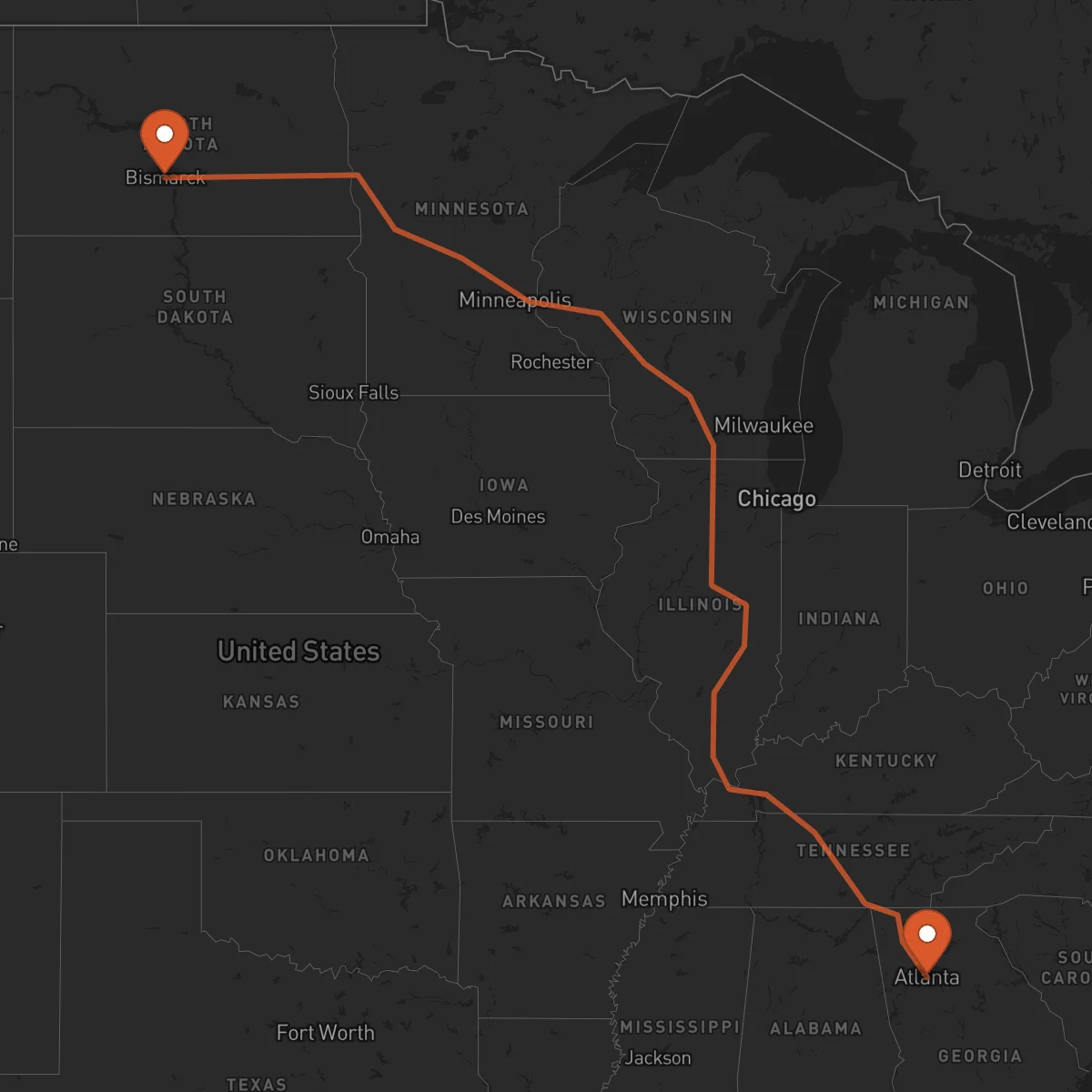
Bismarck to Atlanta
Atlanta → BismarckFTL freight transportation service between Bismarck and Atlanta. Reliable logistics solutions for your business.
Route Description
Everything you need to know about the corridor Bismarck - Atlanta
The logistics corridor connecting Bismarck, North Dakota, to Atlanta, Georgia, spans approximately 2,003 kilometers across the heart of the United States. This vital domestic freight route links the Upper Midwest with the Southeast, traversing diverse terrain and connecting major economic hubs. The corridor serves as a critical artery for commerce, facilitating the movement of goods between regions with distinct industrial profiles and market demands.
The route primarily follows major interstate highways including I-94, I-29, I-70, and I-75, providing reliable access through key states such as North Dakota, Minnesota, Iowa, Missouri, Illinois, Kentucky, Tennessee, and Georgia. This well-established transportation network ensures consistent transit times and multiple routing options for freight carriers. The corridor's infrastructure supports year-round operations, though seasonal weather patterns in the northern segments may require specialized equipment during winter months.
Control Terrestre specializes in optimizing this corridor for full truckload (FTL) freight operations. Our strategic partnerships with experienced carriers ensure reliable capacity and efficient handling of diverse cargo types. We leverage our network to provide dedicated services, real-time tracking, and responsive customer support throughout the journey. Our expertise in managing this specific route allows us to anticipate potential challenges and implement proactive solutions, ensuring your freight moves smoothly from origin to destination.
Services for this Route
Available services for the corridor Bismarck - Atlanta
 Origin
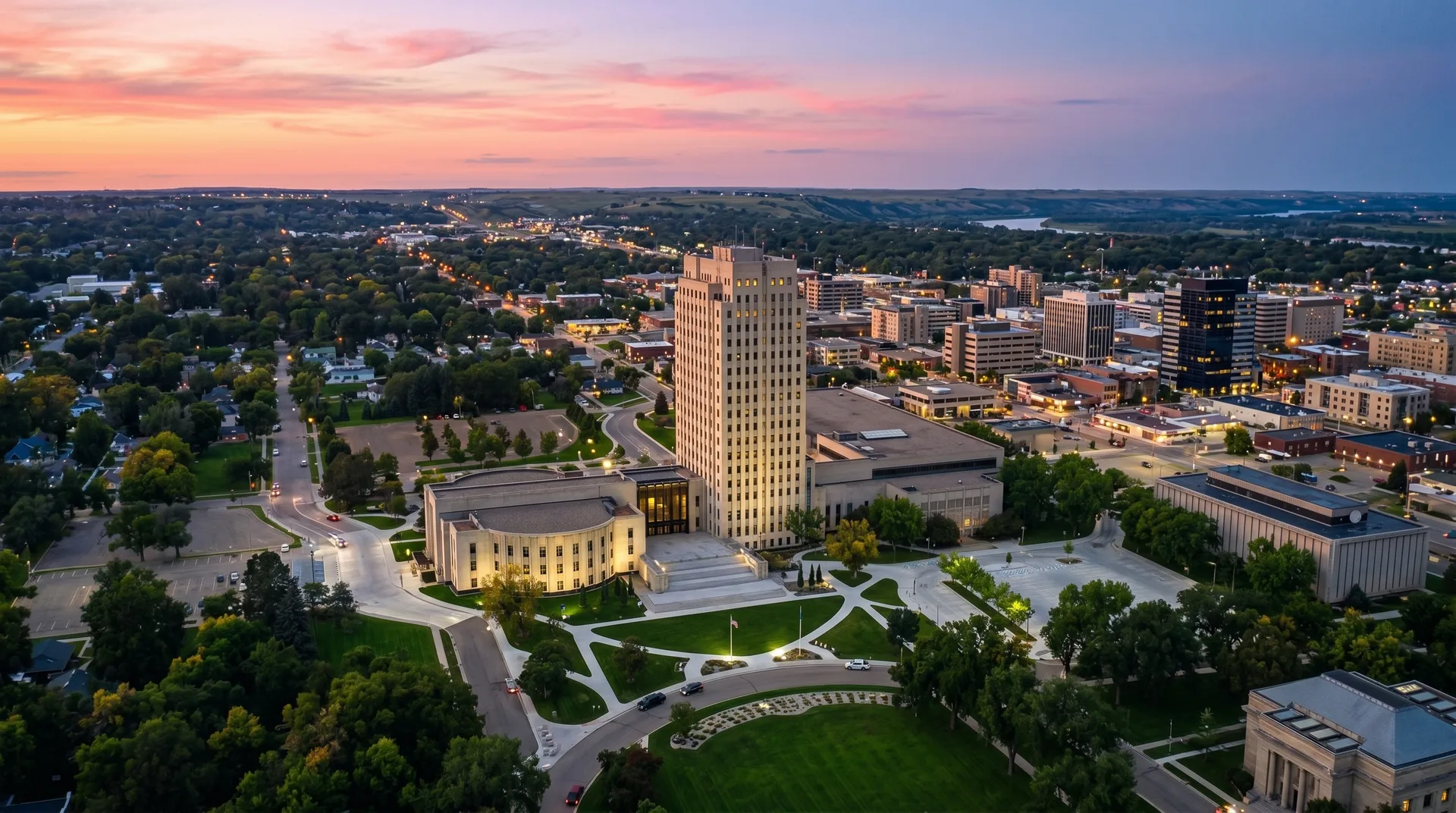
Bismarck
Bismarck, the capital city of North Dakota, serves as a strategic logistics hub in the Upper Midwest. Located along the Missouri River, Bismarck benefits from its position as a central distribution point for agricultural products, energy resources, and manufacturing goods. The city's economy is anchored by government services, healthcare, retail, and a growing technology sector. Bismarck's transportation infrastructure includes the Bismarck Municipal Airport, BNSF Railway connections, and direct access to Interstate 94, making it an ideal origin point for regional and national freight distribution.
The region's economic landscape is characterized by its role in the Bakken oil formation, agricultural production, and manufacturing of farm equipment and energy-related machinery. These industries generate consistent freight volumes requiring reliable transportation solutions. Bismarck's relatively low congestion levels and business-friendly environment make it an efficient origin for freight movements, particularly for oversized and specialized cargo that benefits from the region's spacious facilities and experienced handling capabilities.
 Destination
Atlanta
Atlanta, Georgia, stands as one of the most significant logistics and transportation hubs in the southeastern United States. The city's strategic location at the intersection of major interstate highways (I-20, I-75, I-85, and I-285) provides unparalleled access to regional and national markets. Atlanta's Hartsfield-Jackson International Airport, the world's busiest by passenger traffic, also serves as a major cargo hub, complementing the city's extensive ground transportation network. The Port of Savannah's proximity further enhances Atlanta's role in international trade logistics.
Atlanta's diverse economy encompasses logistics and transportation, media and entertainment, financial services, information technology, and advanced manufacturing. The city hosts numerous Fortune 500 company headquarters and serves as a distribution center for major retailers and e-commerce operations. Atlanta's concentration of third-party logistics providers, warehousing facilities, and intermodal terminals creates a robust infrastructure for handling various freight types, from consumer goods to industrial equipment. The region's mild climate and well-maintained infrastructure support year-round freight operations with minimal weather-related disruptions.










