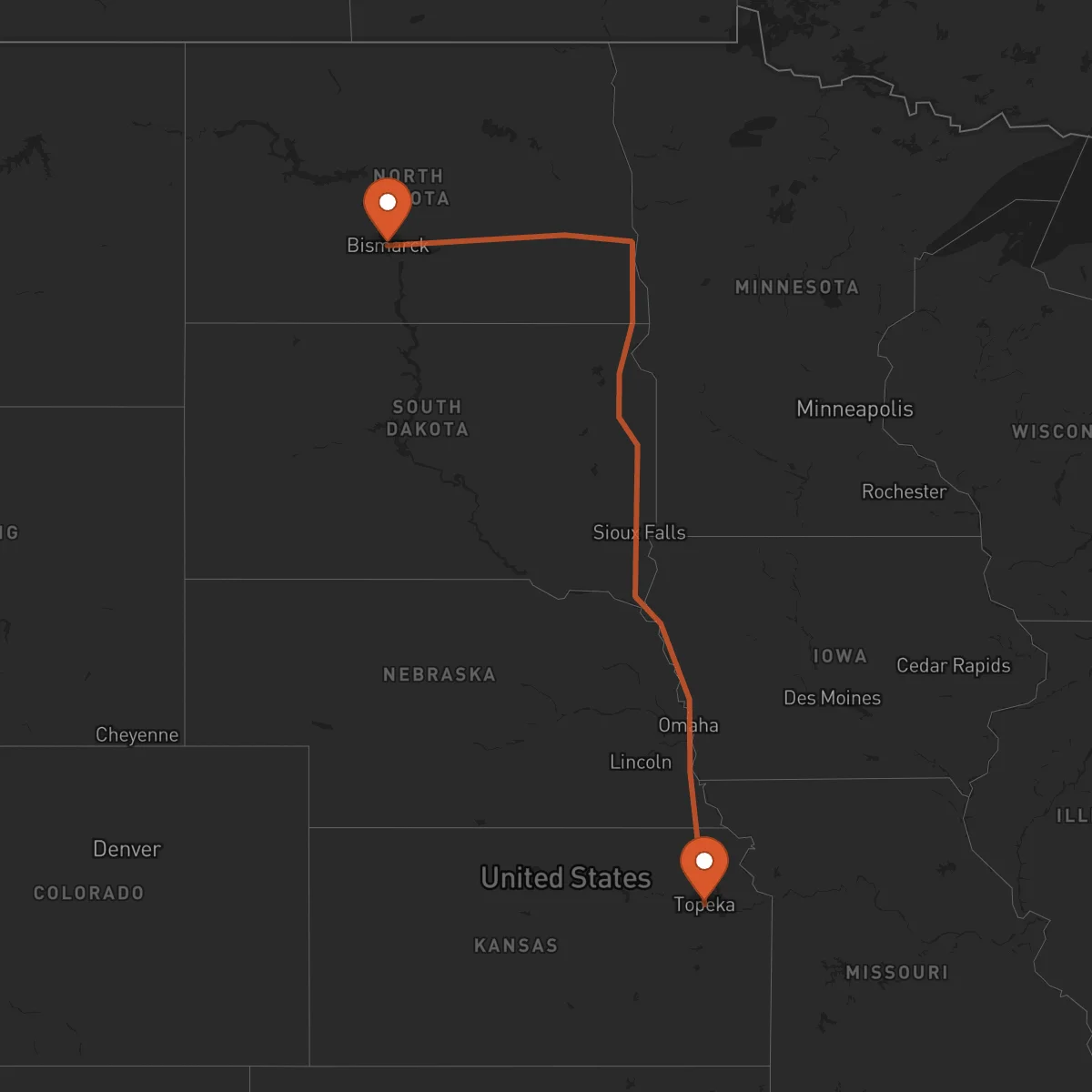
Bismarck to Topeka
Topeka → BismarckFTL freight transportation service between Bismarck and Topeka. Reliable logistics solutions for your business.
Route Description
Everything you need to know about the corridor Bismarck - Topeka
The Bismarck to Topeka corridor connects the northern plains of North Dakota with the central plains of Kansas, spanning approximately 957 kilometers through the heart of the American Midwest. This north-south route traverses diverse landscapes and crosses multiple state lines, making it a vital link for businesses operating between these two important regional centers. The corridor serves as a critical transportation artery for companies requiring reliable freight movement between the Upper Midwest and the Great Plains regions.
The economic significance of this corridor is substantial, connecting Bismarck's role as a regional hub for energy, agriculture, and government services with Topeka's position as a center for government, education, and manufacturing. The route facilitates the movement of goods between North Dakota's energy sector and Kansas's agricultural and industrial base, supporting the economic vitality of both states. This corridor particularly benefits companies involved in agricultural equipment, energy products, and industrial manufacturing, as it provides a direct connection between these complementary economic regions.
Key industries utilizing this corridor include energy production and distribution, agricultural equipment manufacturing, food processing, and government-related logistics. The route passes through or near major cities such as Fargo, Sioux Falls, and Kansas City, providing access to additional distribution networks and markets. Control Terrestre's dedicated FTL services along this corridor ensure that your freight moves efficiently and securely, with specialized equipment options available for various cargo types, including refrigerated units for temperature-sensitive products and flatbed trailers for oversized equipment.
Services for this Route
Available services for the corridor Bismarck - Topeka
 Origin
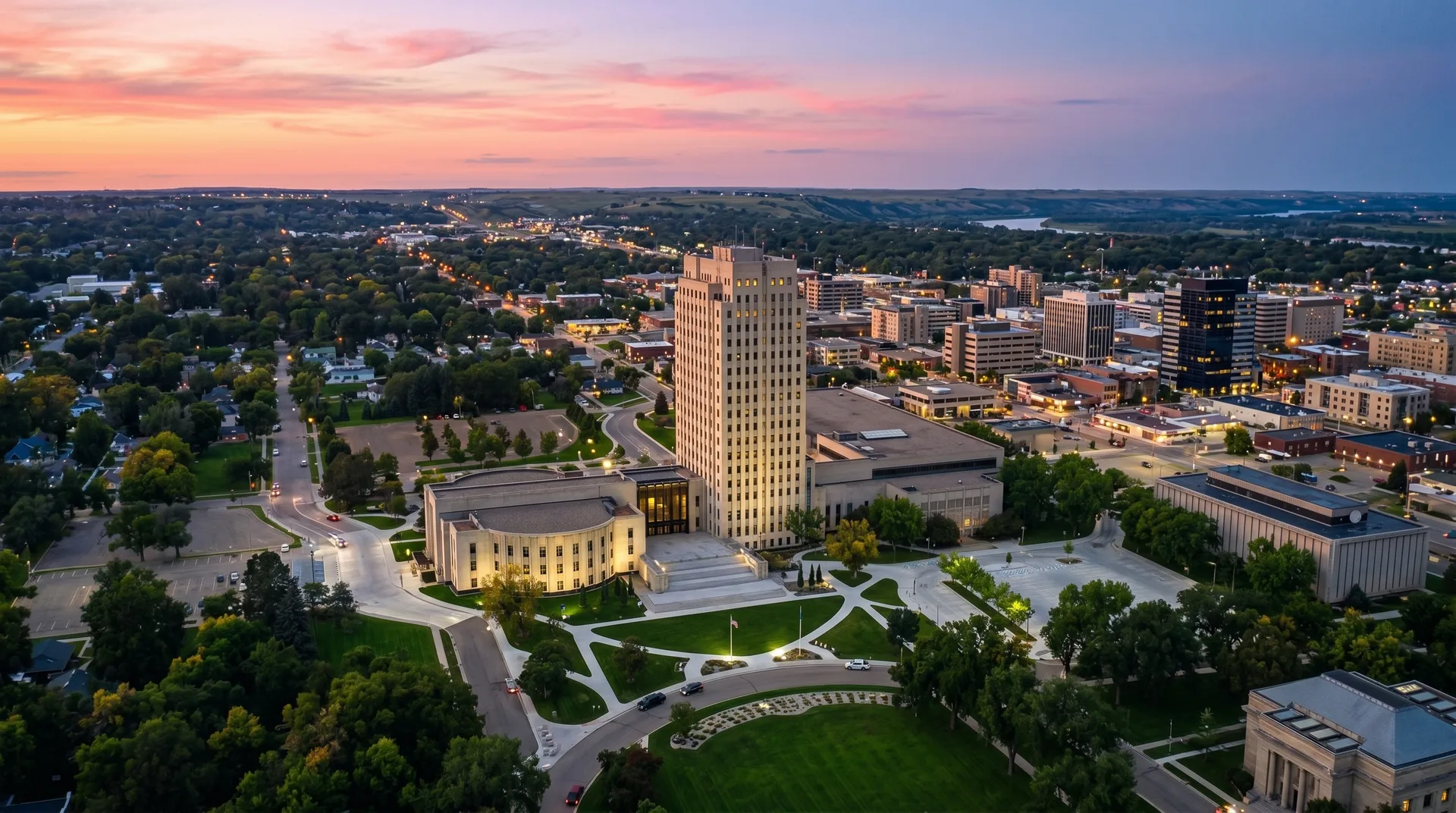
Bismarck
Bismarck, North Dakota serves as a strategic logistics hub for the northern Great Plains region, situated along the Missouri River with excellent transportation connectivity. The city's location provides access to major north-south and east-west transportation routes, making it an ideal origin point for freight distribution across the Midwest. Bismarck's position as the state capital and its growing energy sector contribute to its importance as a logistics center, with a well-developed infrastructure that supports efficient freight movement.
The region's economy is anchored by energy production, agriculture, healthcare, and government services. North Dakota's oil and natural gas industry, centered in the Bakken formation, creates significant freight demand for specialized equipment and materials. The agricultural sector produces grains, oilseeds, and livestock products that require reliable transportation to markets across the country. Bismarck's transportation infrastructure includes Interstate 94, which connects to major freight corridors, along with rail connections and the Bismarck Municipal Airport for air cargo operations.
 Destination
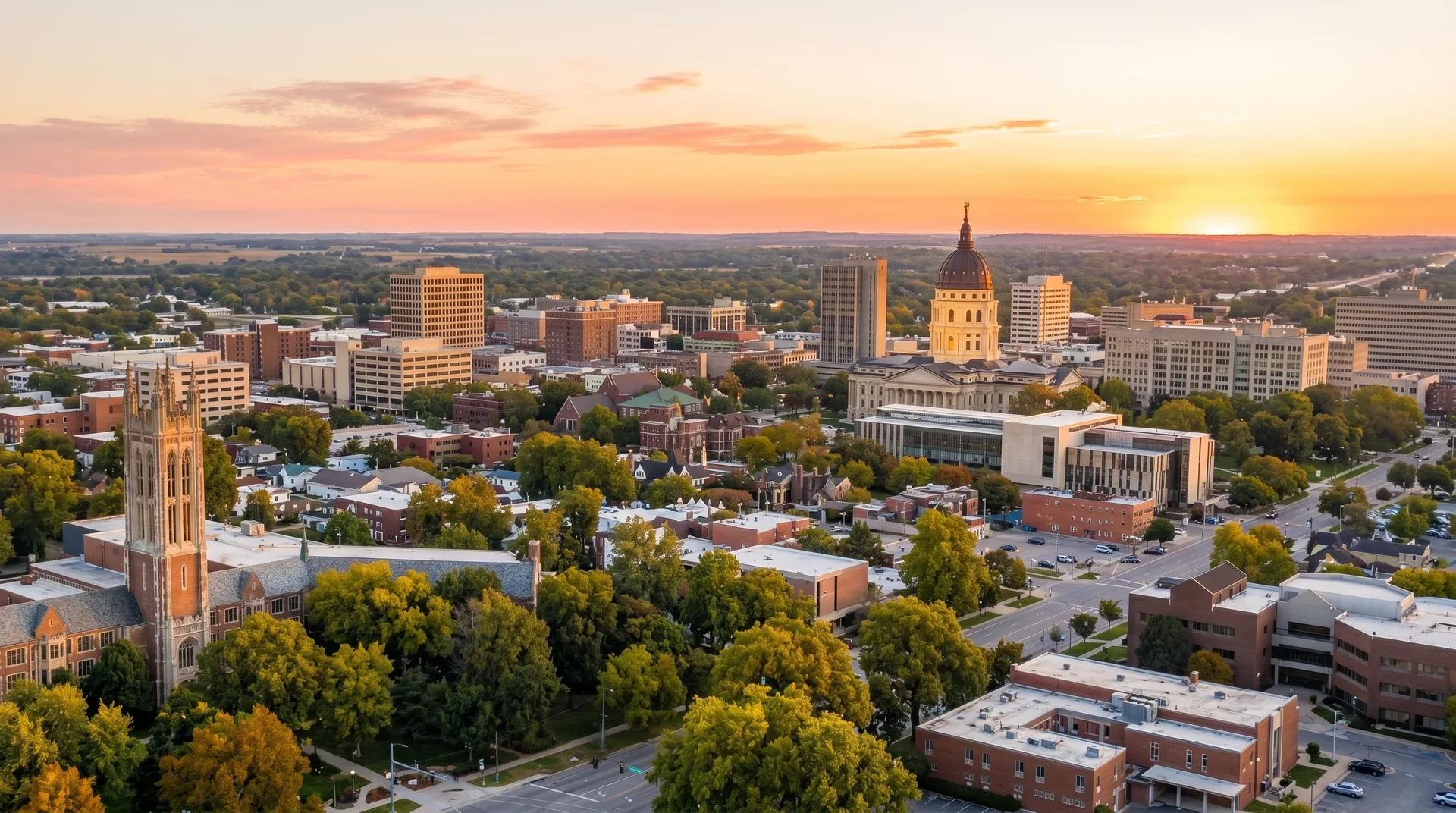
Topeka
Topeka, Kansas occupies a strategic position in the heart of the American Midwest, serving as a key logistics hub for the Great Plains region. Located along the Kansas River and at the intersection of major transportation routes, Topeka provides excellent connectivity for freight movement throughout the central United States. The city's central location makes it an ideal distribution point for companies serving multiple states, with access to both north-south and east-west freight corridors that facilitate efficient logistics operations.
The Topeka economy is diverse, with strong sectors in government services, education, healthcare, and manufacturing. The region is known for its agricultural processing facilities, food production, and industrial manufacturing, creating substantial freight demand for both inbound raw materials and outbound finished products. Topeka's transportation infrastructure includes Interstate 70, which provides direct access to major markets, along with rail connections and the Topeka Regional Airport for air cargo services. The city's central location and robust infrastructure make it an attractive destination for companies requiring reliable freight transportation solutions.










