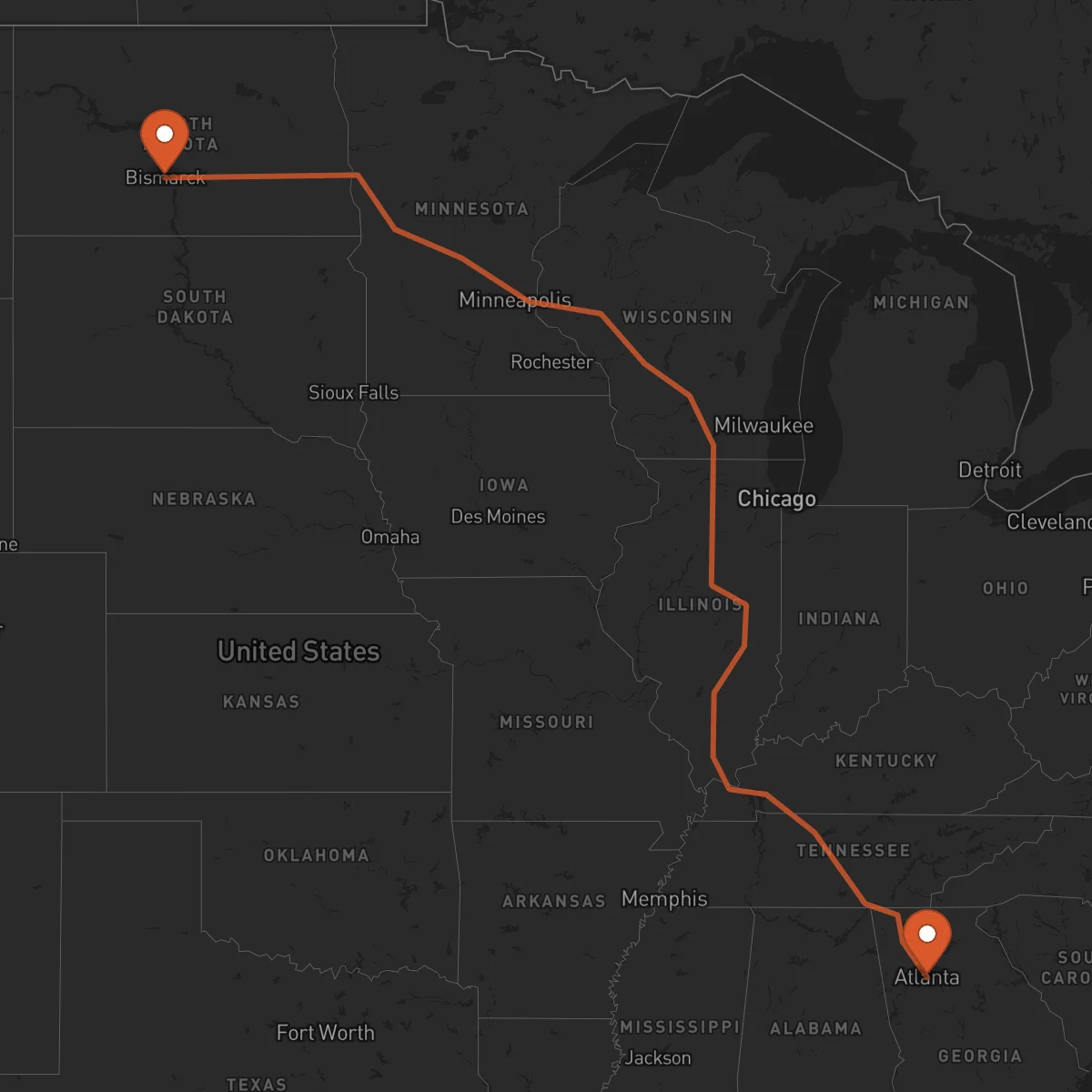
Atlanta to Bismarck
Bismarck → AtlantaFTL freight transportation service between Atlanta and Bismarck. Reliable logistics solutions for your business.
Route Description
Everything you need to know about the corridor Atlanta - Bismarck
The logistics corridor connecting Atlanta, Georgia to Bismarck, North Dakota represents a vital transportation route spanning approximately 2003 kilometers across the heart of the United States. This north-south corridor traverses diverse geographical regions and connects two economically significant cities, facilitating the movement of goods between the southeastern and northern central regions of the country. The route serves as a critical link in the national supply chain, enabling businesses to efficiently transport freight between major industrial and commercial centers.
The economic significance of this corridor is underscored by the diverse industrial activities it connects. Atlanta, as a major commercial hub, generates substantial freight volume including automotive parts, electronics, consumer goods, and agricultural products. Meanwhile, Bismarck serves as a distribution center for agricultural commodities, energy products, and manufactured goods serving the northern plains region. The corridor facilitates trade between these distinct economic zones, supporting industries such as manufacturing, agriculture, energy, and retail distribution.
Control Terrestre specializes in providing comprehensive full truckload (FTL) transportation solutions along this strategic corridor. Our extensive network of certified carriers ensures reliable and efficient freight movement between Atlanta and Bismarck. We leverage our expertise in domestic transportation to optimize routes, manage logistics operations, and deliver tailored solutions that meet the specific needs of our clients operating along this important trade route.
Services for this Route
Available services for the corridor Atlanta - Bismarck
 Origin
Atlanta
Atlanta, Georgia stands as a premier logistics hub in the southeastern United States, offering unparalleled strategic advantages for freight transportation. The city's Hartsfield-Jackson Atlanta International Airport, one of the busiest cargo airports globally, complements its extensive ground transportation infrastructure. Atlanta's central location in the Southeast provides excellent connectivity to major markets throughout the region, making it an ideal origin point for nationwide freight distribution. The city's robust transportation network includes multiple interstate highways, including I-75, I-85, and I-20, facilitating efficient ground transportation to all directions.
The economic landscape of Atlanta encompasses diverse industries that generate substantial freight volumes. The city serves as a major center for logistics and distribution, with numerous Fortune 500 companies maintaining significant operations in the area. Key industries include automotive manufacturing, technology, telecommunications, and food processing. Atlanta's position as a regional distribution hub is further strengthened by its proximity to major ports and its role as a gateway to international trade, making it an ideal origin for domestic freight movements across the United States.
 Destination
Bismarck
Bismarck, North Dakota occupies a strategic position as a logistics center in the northern plains region of the United States. Located along the Missouri River, the city serves as a crucial distribution point for goods moving throughout the upper Midwest and into Canada. Bismarck's transportation infrastructure includes direct access to Interstate 94, providing efficient connections to major markets in both eastern and western directions. The city's location makes it an ideal consolidation point for freight moving between regional producers and national markets.
The economic foundation of Bismarck is built upon diverse industries that create consistent freight demand. The energy sector, particularly oil and natural gas production from the Bakken formation, generates significant transportation needs. Additionally, Bismarck serves as a regional center for agriculture, manufacturing, and healthcare services. The city's role as the state capital also contributes to steady freight volumes related to government operations and associated services. This economic diversity ensures year-round freight movement opportunities, making Bismarck an important destination point in the national logistics network.










