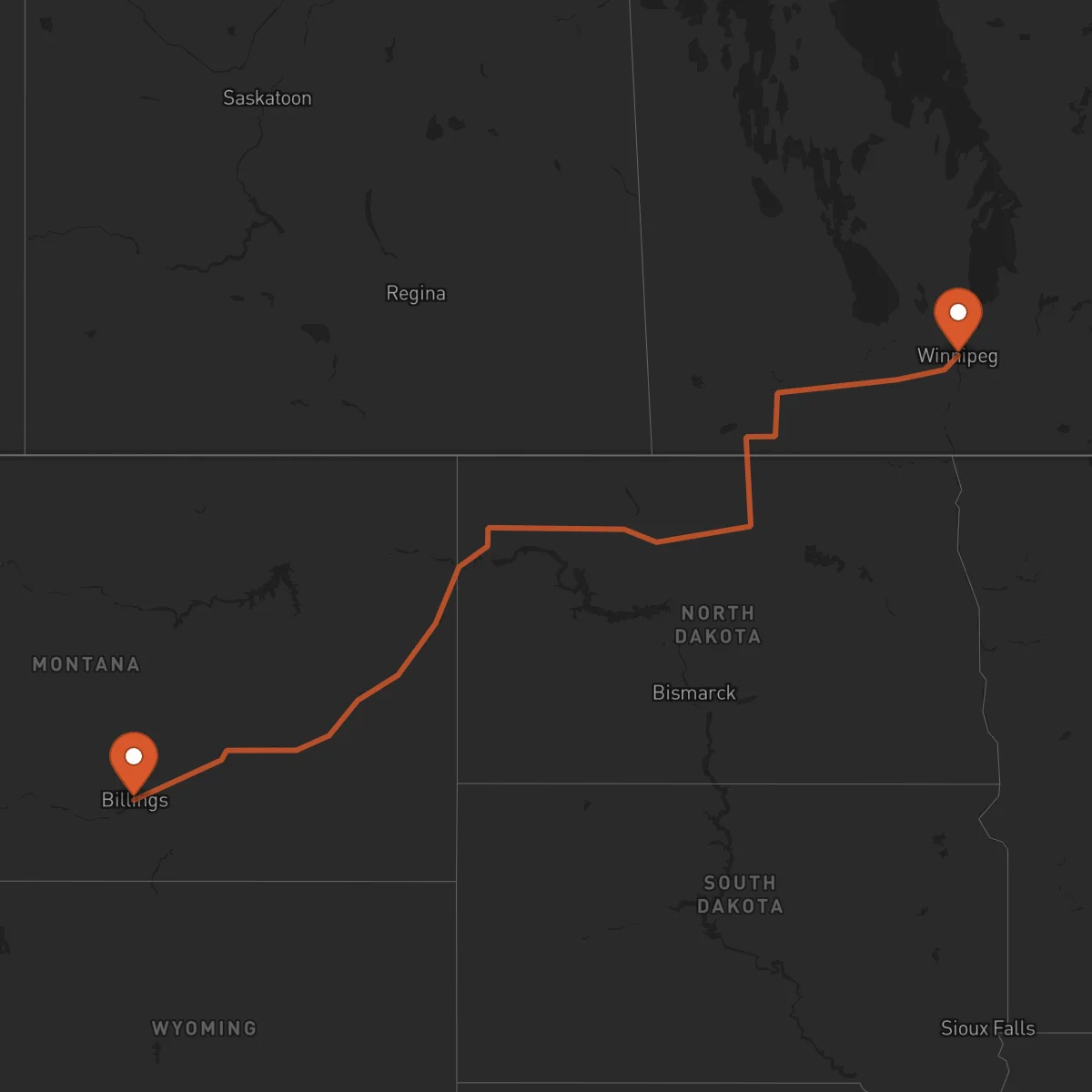
Billings to Winnipeg
Winnipeg → BillingsFTL freight transportation service between Billings and Winnipeg. Reliable logistics solutions for your business.
Route Description
Everything you need to know about the corridor Billings - Winnipeg
The Billings to Winnipeg corridor represents a vital cross-border logistics route connecting the energy-rich region of eastern Montana with the commercial hub of Manitoba. This 962 km transportation link traverses the Canadian Prairies, facilitating the movement of goods between the United States and Canada through key border crossings. The corridor serves as a crucial artery for industries operating in both nations, particularly those involved in energy production, agriculture, and manufacturing.
The economic significance of this route extends beyond its immediate endpoints. Billings, situated in the heart of Montana's energy sector, serves as a gateway for oil, natural gas, and agricultural products destined for Canadian markets. Meanwhile, Winnipeg functions as a major distribution center for Western Canada, with its strategic location at the confluence of the Red and Assiniboine Rivers making it a natural logistics hub. The corridor supports the flow of industrial equipment, consumer goods, and raw materials essential to both economies.
Transportation infrastructure along this route primarily follows Interstate 94 West from Billings, transitioning to Canadian Highway 1 upon crossing the border. The main border crossing at North Portal/Portal provides efficient customs processing for commercial freight. Control Terrestre leverages this infrastructure through our network of certified carriers, ensuring seamless cross-border operations. Our expertise in navigating customs requirements, combined with our fleet of specialized equipment, enables us to handle diverse cargo types, from oversized machinery to temperature-sensitive goods, making us the ideal partner for businesses operating along this critical North American trade corridor.
Services for this Route
Available services for the corridor Billings - Winnipeg
 Origin
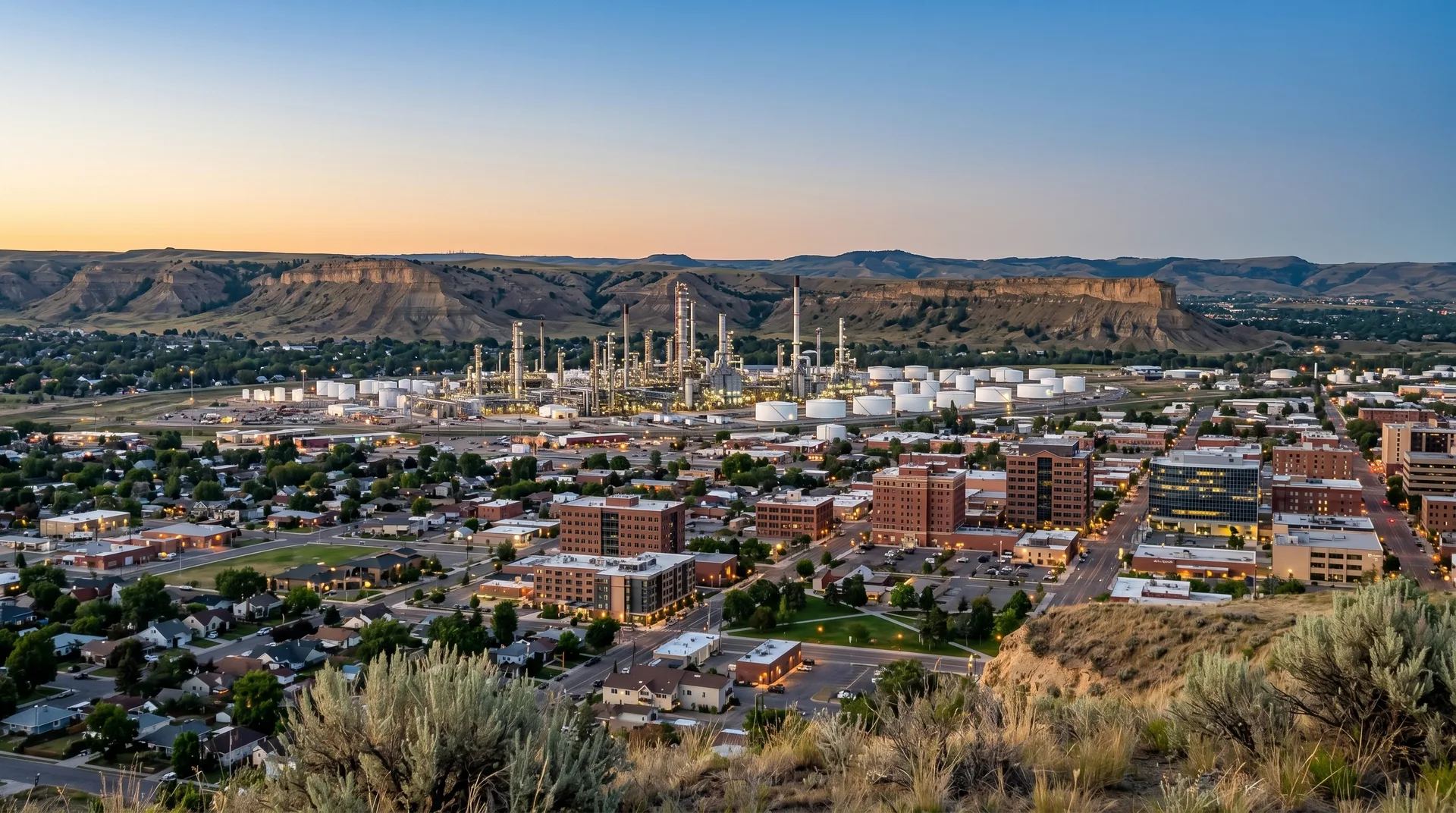
Billings
Billings, Montana serves as a strategic logistics gateway in the northwestern United States, positioned at the intersection of major transportation routes. The city's location in the Yellowstone Valley provides access to both rail and highway networks, making it an ideal origin point for freight distribution. Billings is the largest city in Montana and functions as the state's primary economic engine, with a diverse industrial base that includes energy production, agriculture, and manufacturing.
The transportation infrastructure in Billings is robust, featuring multiple interstate connections and proximity to major rail yards. The city's industrial parks and warehousing facilities support a thriving logistics sector, while Billings Logan International Airport provides air cargo options for time-sensitive shipments. The surrounding region's rich natural resources, particularly in oil and natural gas extraction, create consistent demand for specialized freight services capable of handling heavy equipment and oversized cargo.
 Destination
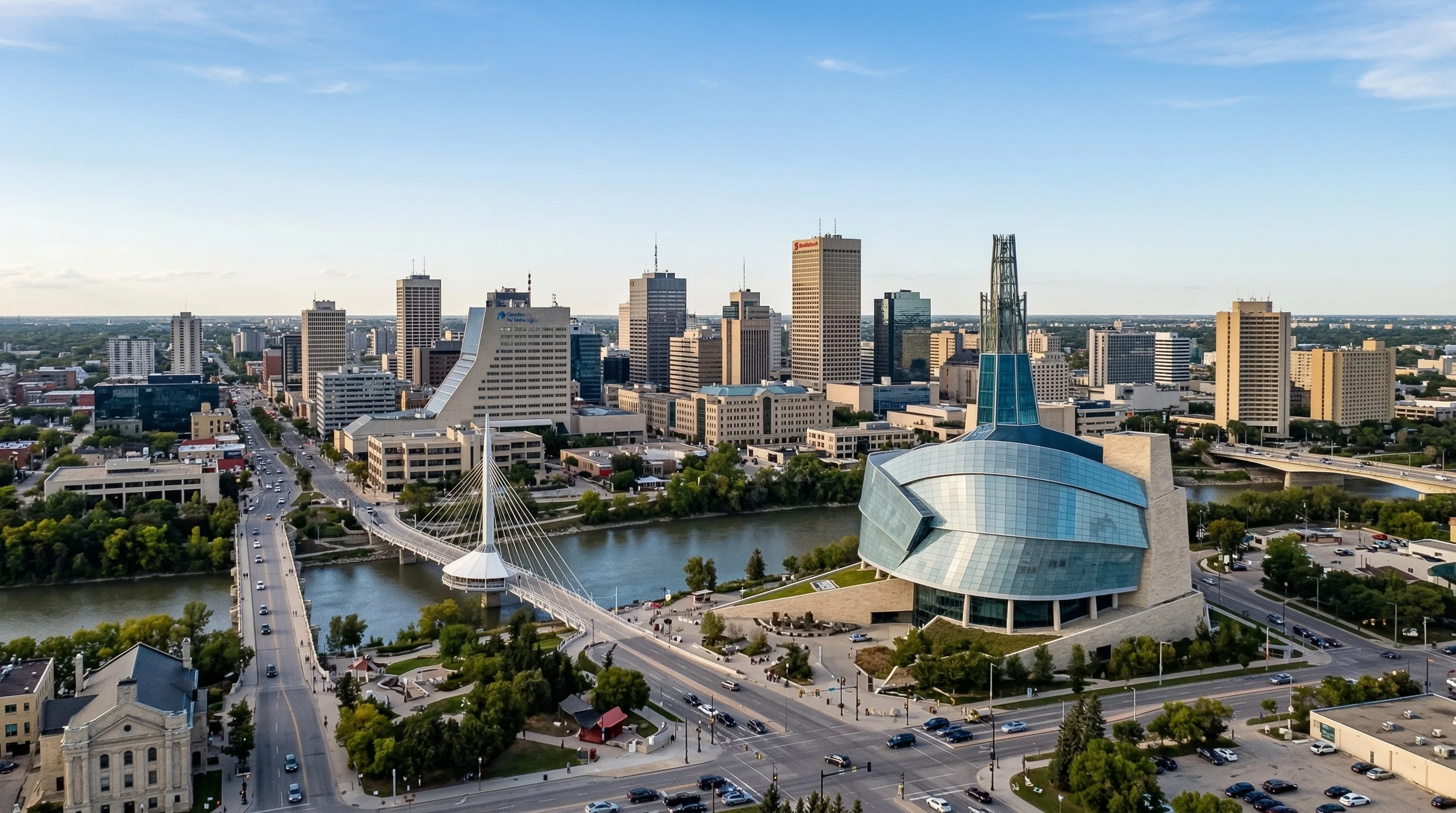
Winnipeg, Manitoba stands as a pivotal logistics hub in central Canada, strategically positioned at the confluence of the Red and Assiniboine Rivers. Known as the 'Gateway to the West,' Winnipeg's geographic location makes it a natural distribution center for goods moving throughout Western Canada and into the northern United States. The city's well-developed infrastructure includes extensive highway networks, rail connections, and an international airport, all supporting its role as a major commercial center.
The economic landscape of Winnipeg is characterized by diverse industries including manufacturing, agriculture, aerospace, and transportation. The city's Exchange District and surrounding industrial areas house numerous warehouses and distribution centers that facilitate the efficient movement of goods. Winnipeg's status as Manitoba's capital also ensures strong governmental support for trade and commerce, while its position as a border city enhances its importance in cross-border logistics operations. The city's cold climate has also fostered expertise in temperature-controlled logistics, making it particularly adept at handling refrigerated and frozen goods.










