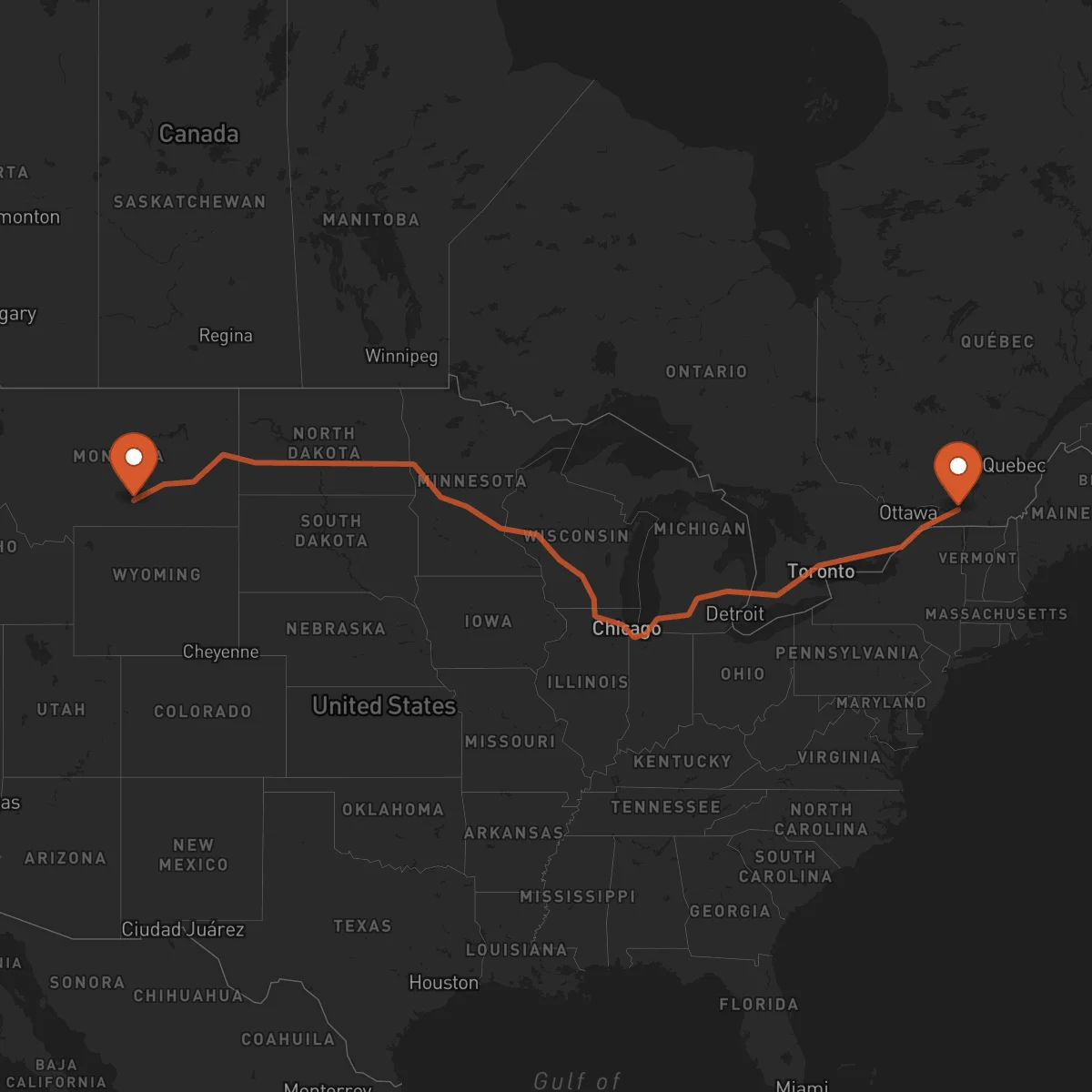
Billings to Montreal
Montreal → BillingsFTL freight transportation service between Billings and Montreal. Reliable logistics solutions for your business.
Route Description
Everything you need to know about the corridor Billings - Montreal
The logistics corridor between Billings, Montana, and Montreal, Quebec, represents a vital cross-border transportation route connecting the interior of the United States with Canada's largest port city. This 2,694-kilometer route traverses diverse terrain and crosses multiple state and provincial borders, making it a strategic artery for freight movement between the American Midwest and Eastern Canada.
The corridor's significance stems from its ability to link Montana's energy and agricultural sectors with Montreal's industrial and commercial hub. Billings serves as a gateway to the Northern Plains, while Montreal provides access to the St. Lawrence Seaway and international markets. This route facilitates the movement of goods between major economic regions, supporting trade relationships and supply chain efficiency.
Key industries utilizing this corridor include energy products, agricultural commodities, manufacturing components, and consumer goods. The route accommodates various freight types, from raw materials to finished products, serving sectors such as automotive, aerospace, and retail distribution. Companies operating along this corridor benefit from the complementary economic strengths of both regions.
Transportation infrastructure along this route includes major highways such as I-94 and I-90 in the United States, transitioning to Canadian routes like Autoroute 20 and Autoroute 40. The primary border crossing at Alexandria Bay provides efficient customs processing for commercial vehicles. Control Terrestre's expertise in cross-border operations ensures seamless freight movement, handling customs documentation, regulatory compliance, and coordination with trusted carriers to maintain reliable service across this extensive corridor.
Services for this Route
Available services for the corridor Billings - Montreal
 Origin
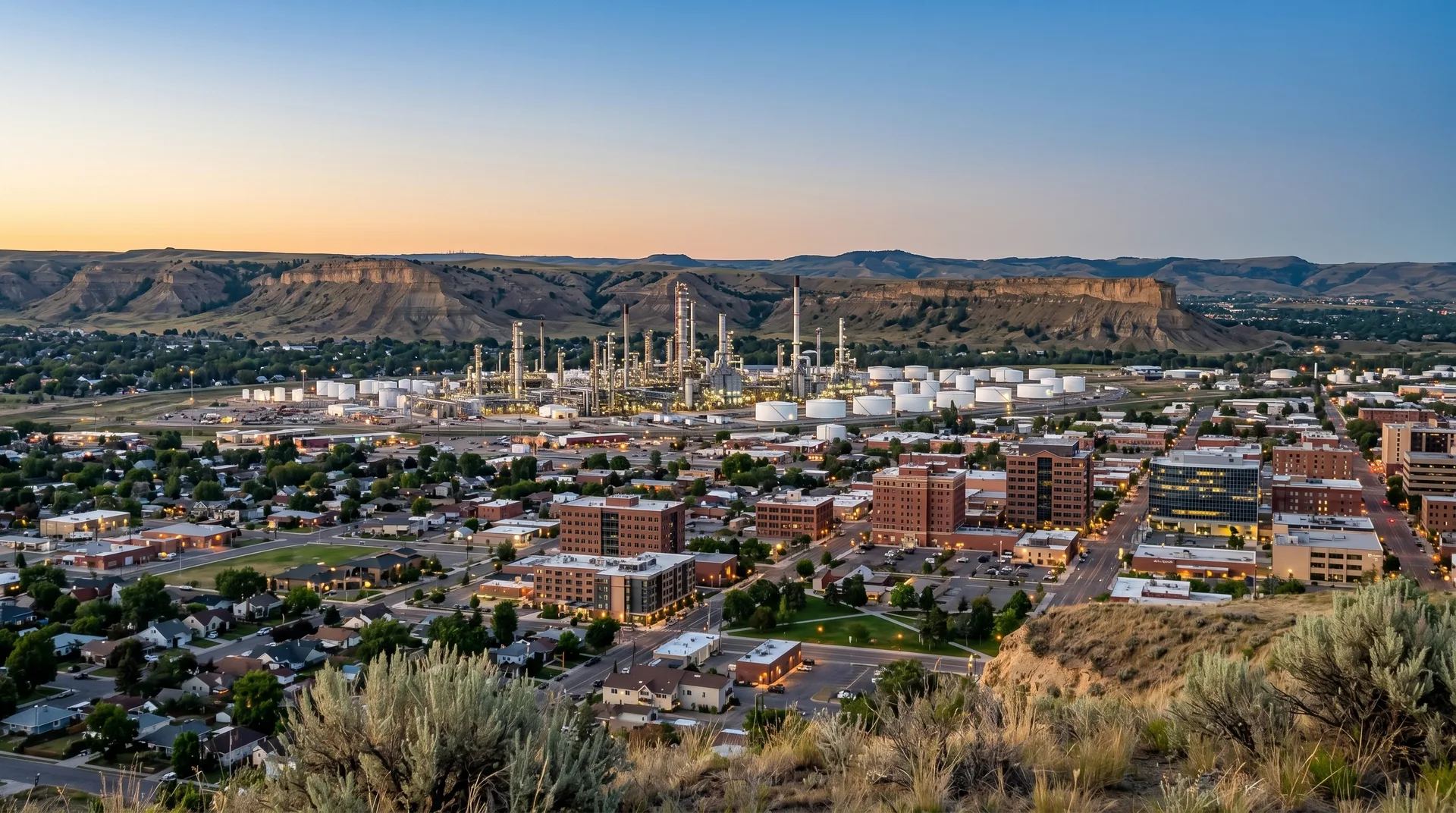
Billings
Billings, Montana, serves as a strategic logistics hub in the Northern Plains region, positioned at the intersection of major transportation routes. The city's location provides access to the Bakken oil fields, agricultural heartland, and mountain states, making it an ideal origin point for freight distribution. Billings benefits from its proximity to major rail lines and interstate highways, creating a multimodal transportation network that supports efficient cargo movement.
The economic base of Billings centers on energy production, agriculture, and healthcare services. The region is a significant producer of oil, natural gas, and coal, alongside vast agricultural operations producing wheat, barley, and cattle products. Manufacturing sectors include agricultural equipment, food processing, and energy-related services. The city's infrastructure includes Billings Logan International Airport, extensive rail connections through BNSF and Montana Rail Link, and highway access via I-90 and I-94, providing multiple options for freight transportation.
 Destination
Montreal, Quebec, stands as a premier logistics destination in Eastern Canada, leveraging its strategic location along the St. Lawrence River. As Canada's second-largest city and a major port facility, Montreal offers unparalleled access to international shipping routes and serves as a gateway to North American markets. The city's position at the confluence of major transportation networks makes it an ideal endpoint for cross-border freight operations.
The Montreal metropolitan area hosts diverse economic sectors including aerospace, technology, pharmaceuticals, and advanced manufacturing. The city is home to major corporations and research institutions, driving demand for sophisticated logistics solutions. Transportation infrastructure in Montreal includes the Port of Montreal, one of Canada's busiest ports, extensive rail networks operated by CN and CP, and comprehensive highway systems connecting to the U.S. border. The city's international airport and intermodal facilities provide additional options for freight movement, supporting complex supply chain requirements.










