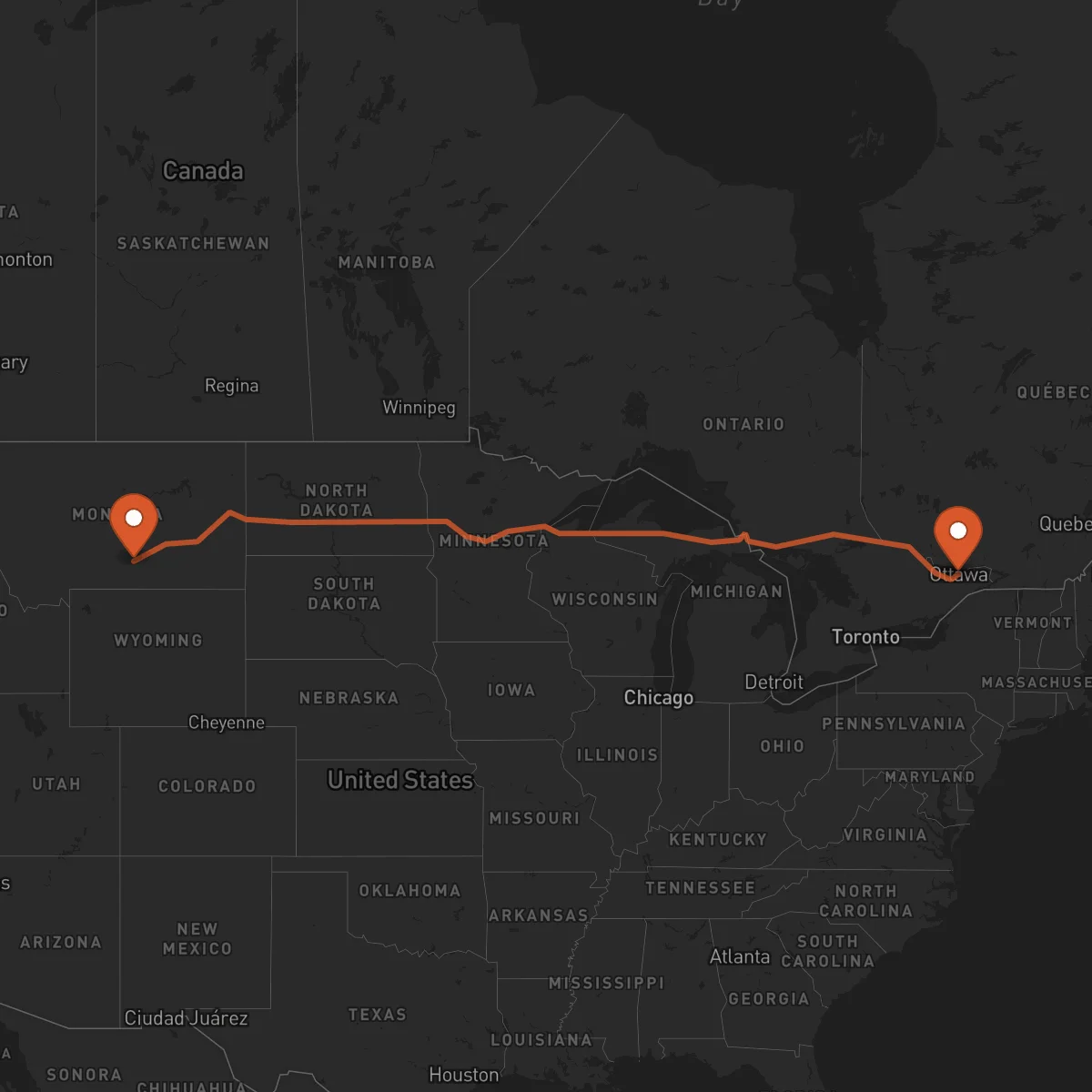
Billings to Ottawa
Ottawa → BillingsFTL freight transportation service between Billings and Ottawa. Reliable logistics solutions for your business.
Route Description
Everything you need to know about the corridor Billings - Ottawa
The Billings to Ottawa corridor represents a vital cross-border freight transportation route connecting the industrial heart of Montana with Canada's capital region. This 2,534 km corridor traverses diverse terrain and crosses the international border at key points, facilitating the movement of goods between the United States and Canada. The route serves as a critical link in the North American supply chain, enabling seamless freight movement between these two major economic regions.
The economic significance of this corridor extends beyond simple transportation, as it connects Montana's energy, agriculture, and manufacturing sectors with Ottawa's government services, technology, and research industries. Major highways along this route include Interstate 15 and Interstate 94 through Montana, connecting to Canadian highways that lead to Ottawa. The corridor passes through strategic border crossings where Control Terrestre's C-TPAT and FAST-certified providers ensure expedited customs clearance and efficient cross-border operations.
Control Terrestre facilitates smooth operations on this corridor through our network of experienced transportation providers who understand the complexities of cross-border freight movement. Our team manages all aspects of the journey, from initial pickup in Billings to final delivery in Ottawa, ensuring compliance with both US and Canadian regulations. We provide dedicated FTL services that maintain cargo integrity throughout the entire transit, offering real-time tracking and proactive communication to keep your supply chain moving efficiently across international borders.
Services for this Route
Available services for the corridor Billings - Ottawa
 Origin
Billings
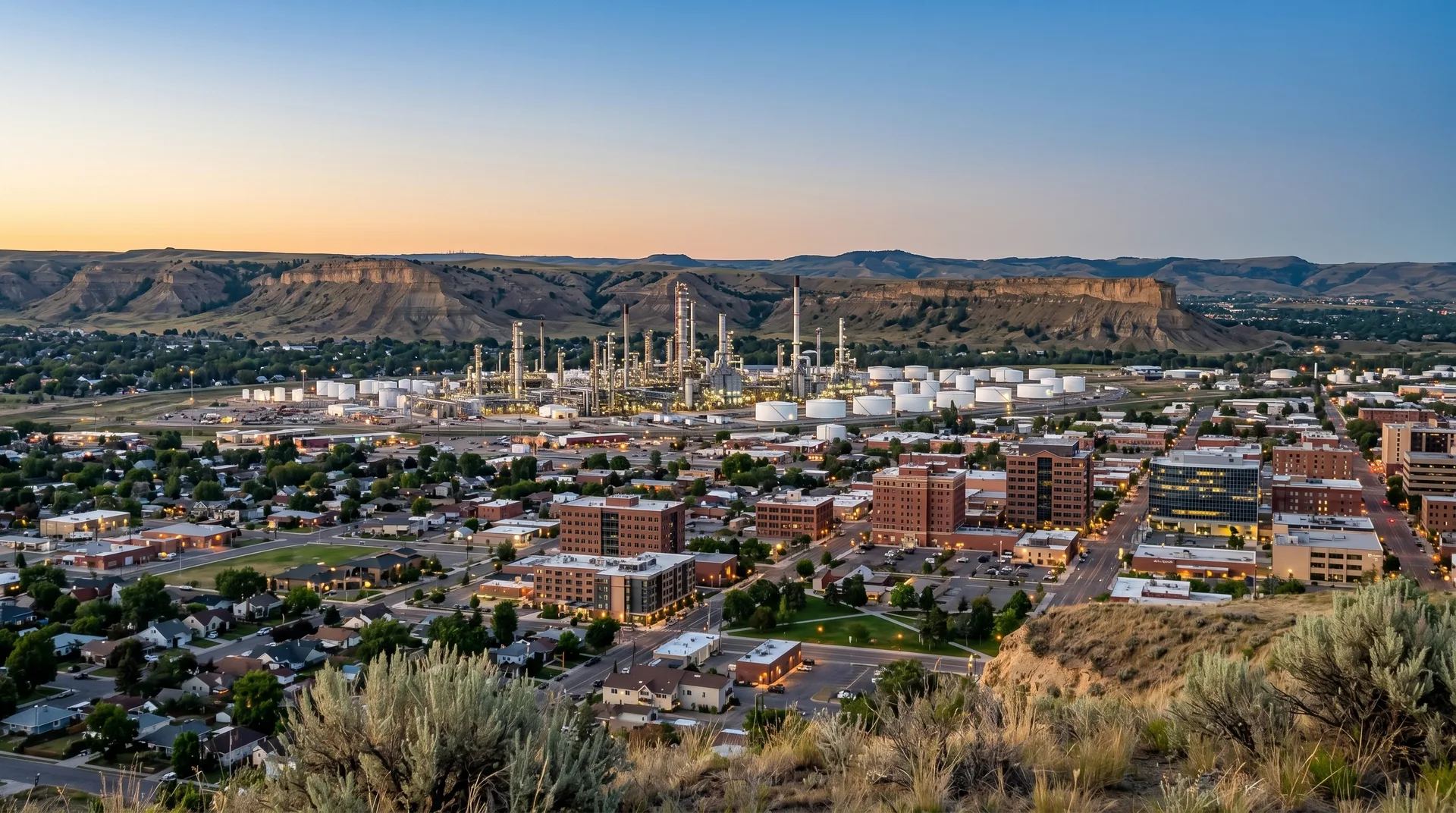
Billings, Montana serves as a strategic logistics hub in the northwestern United States, positioned at the crossroads of major transportation networks. The city's location provides access to Interstate 90 and Interstate 94, offering direct routes to both coastal ports and inland destinations. Billings is the largest city in Montana and acts as a regional distribution center for the surrounding agricultural and energy-producing areas. The city's infrastructure includes the Billings Logan International Airport and extensive rail connections through BNSF Railway, complementing its robust trucking capabilities.
The economic landscape of Billings is diverse, with strong presence in energy production, particularly oil and natural gas from the Bakken formation. Agriculture plays a significant role, with the region producing wheat, barley, and other grains that require efficient transportation to markets. Manufacturing and healthcare also contribute to the local economy, creating consistent freight movement demands. The city's logistics infrastructure is well-developed, featuring numerous warehousing facilities and a concentration of transportation providers who specialize in regional and long-haul freight services.
 Destination
Ottawa, Ontario represents a strategic logistics destination as Canada's capital city and a major economic center in the eastern part of the country. Located at the confluence of the Ottawa, Gatineau, and Rideau rivers, the city benefits from excellent transportation connectivity through major highways including the Trans-Canada Highway (Highway 417) and connections to Highway 401. Ottawa's Macdonald-Cartier International Airport and extensive rail networks through VIA Rail and freight services provide multiple transportation options for inbound and outbound freight.
The economic profile of Ottawa is characterized by its role as the seat of the Canadian federal government, which drives demand for specialized logistics services and creates a stable economic base. The city has also developed strong technology and research sectors, often referred to as 'Silicon Valley North,' along with significant presence in healthcare, education, and tourism industries. These diverse economic activities generate consistent freight transportation needs, from office supplies and equipment for government operations to high-tech components for the technology sector. Ottawa's strategic location near the US border and its position within the Quebec-Windsor Corridor makes it an important node in Canada's freight transportation network.










