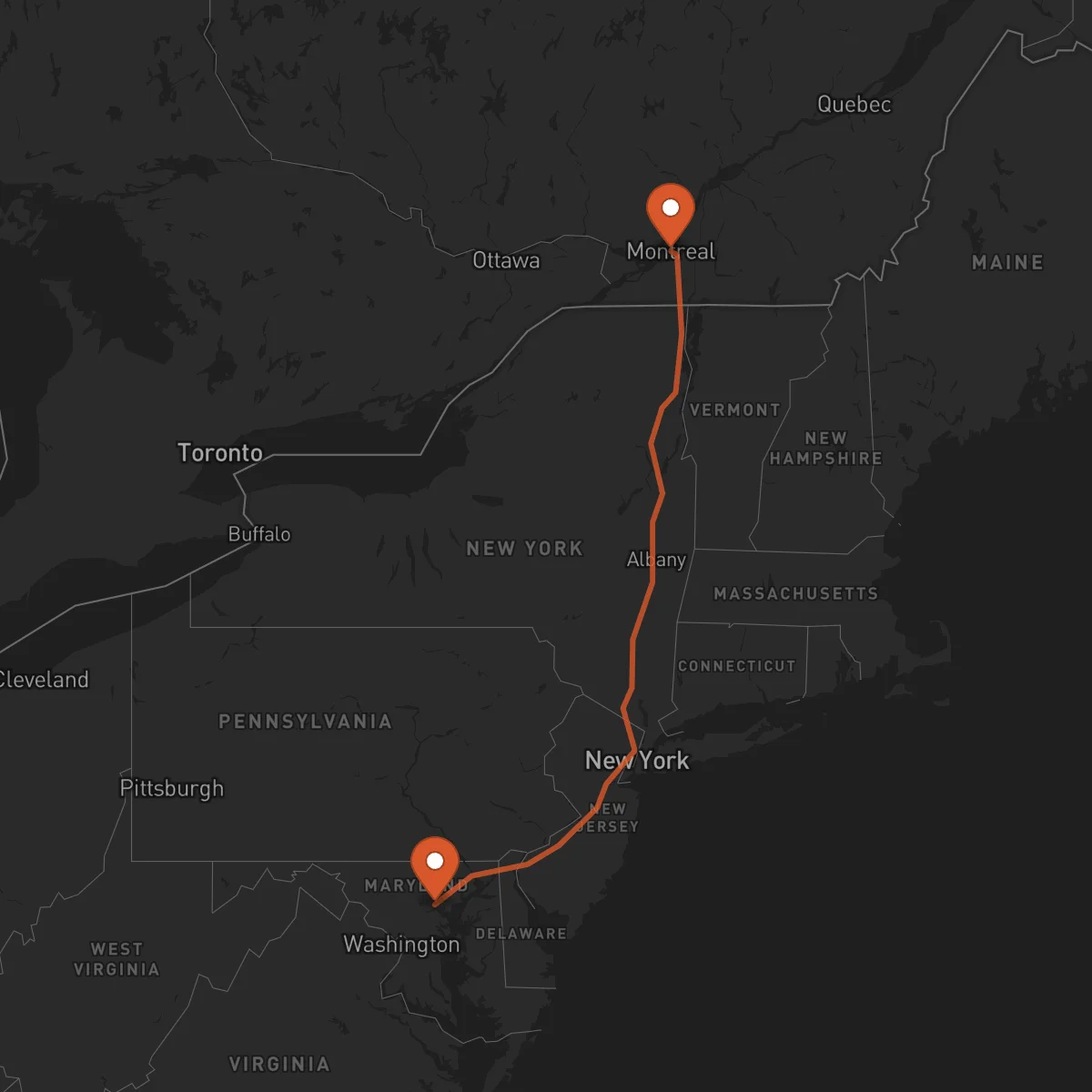
Baltimore to Montreal
Montreal → BaltimoreFTL freight transportation service between Baltimore and Montreal. Reliable logistics solutions for your business.
Route Description
Everything you need to know about the corridor Baltimore - Montreal
The Baltimore-Montreal corridor represents a vital trade link between the United States and Canada, spanning approximately 734 kilometers through the northeastern corridor of North America. This route connects the bustling port city of Baltimore with Montreal, Canada's major inland port and industrial hub. The corridor traverses key states including Maryland, Pennsylvania, New York, and enters Canada through Quebec, utilizing major transportation arteries such as I-95, I-81, and Autoroute 15. Control Terrestre facilitates seamless cross-border operations along this corridor, managing the complexities of customs clearance and ensuring efficient freight movement between these two important economic centers.
Services for this Route
Available services for the corridor Baltimore - Montreal
 Origin
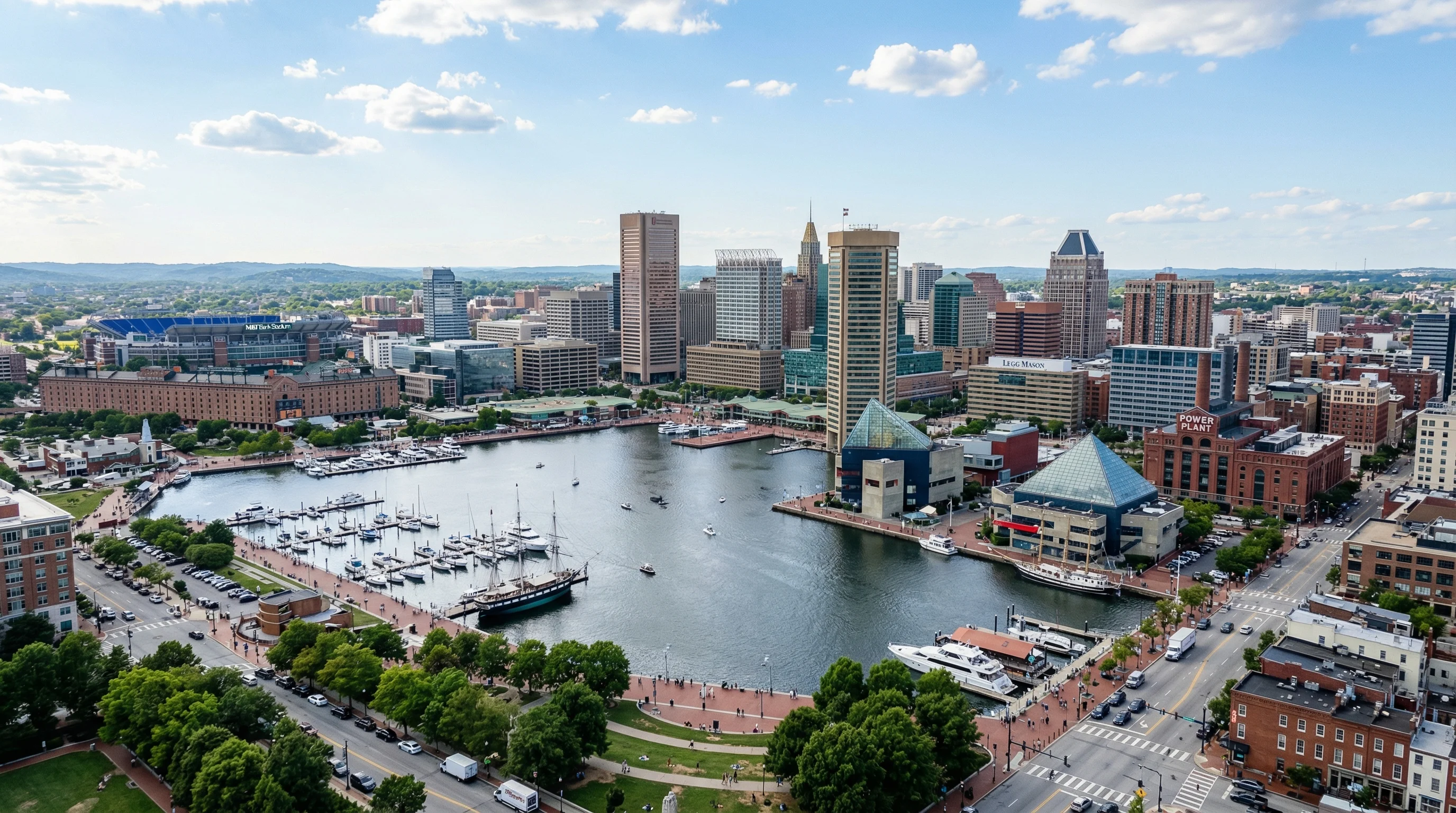
Baltimore
Baltimore, Maryland serves as a strategic logistics hub on the East Coast of the United States. The city's port is one of the busiest in the nation, specializing in roll-on/roll-off cargo, automobiles, and container traffic. Baltimore's economy is diverse, with strong presence in healthcare, education, finance, and technology sectors. The city boasts excellent transportation infrastructure, including the Port of Baltimore, Baltimore/Washington International Airport, and extensive highway networks connecting to major interstates. Its proximity to the nation's capital and central location on the East Coast make it an ideal origin point for freight transportation to both domestic and international destinations.
 Destination
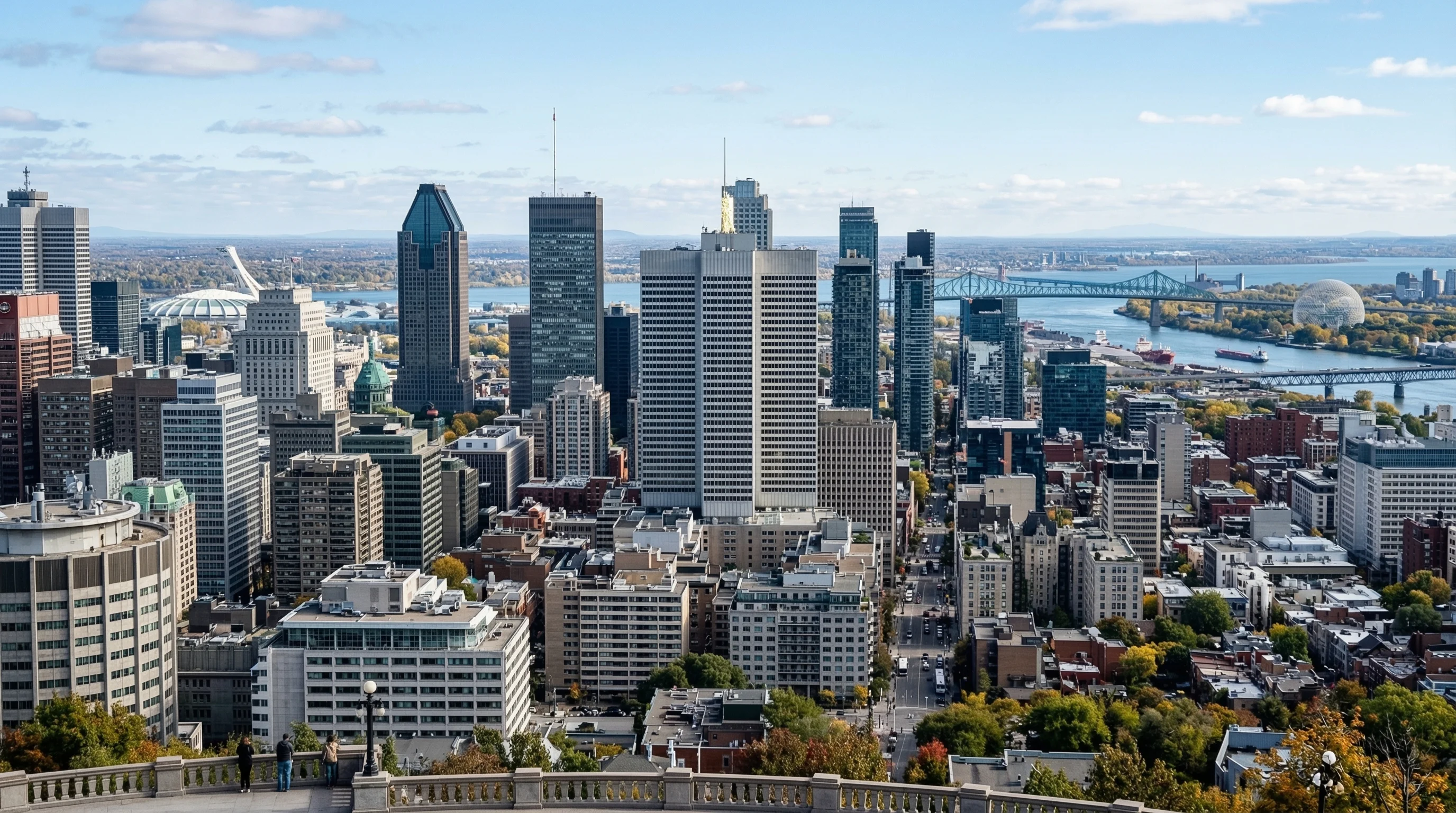
Montreal, Quebec stands as Canada's largest inland port and a major economic powerhouse in North America. The city's strategic location on the St. Lawrence River has established it as a key gateway for international trade, particularly with Europe and Asia. Montreal's economy is characterized by aerospace, pharmaceuticals, software engineering, telecommunications, and tourism industries. The city features world-class transportation infrastructure, including the Port of Montreal, Pierre Elliott Trudeau International Airport, and an extensive network of highways and railways. As a bilingual city with strong connections to both North American and European markets, Montreal serves as an ideal destination for cross-border freight operations.










