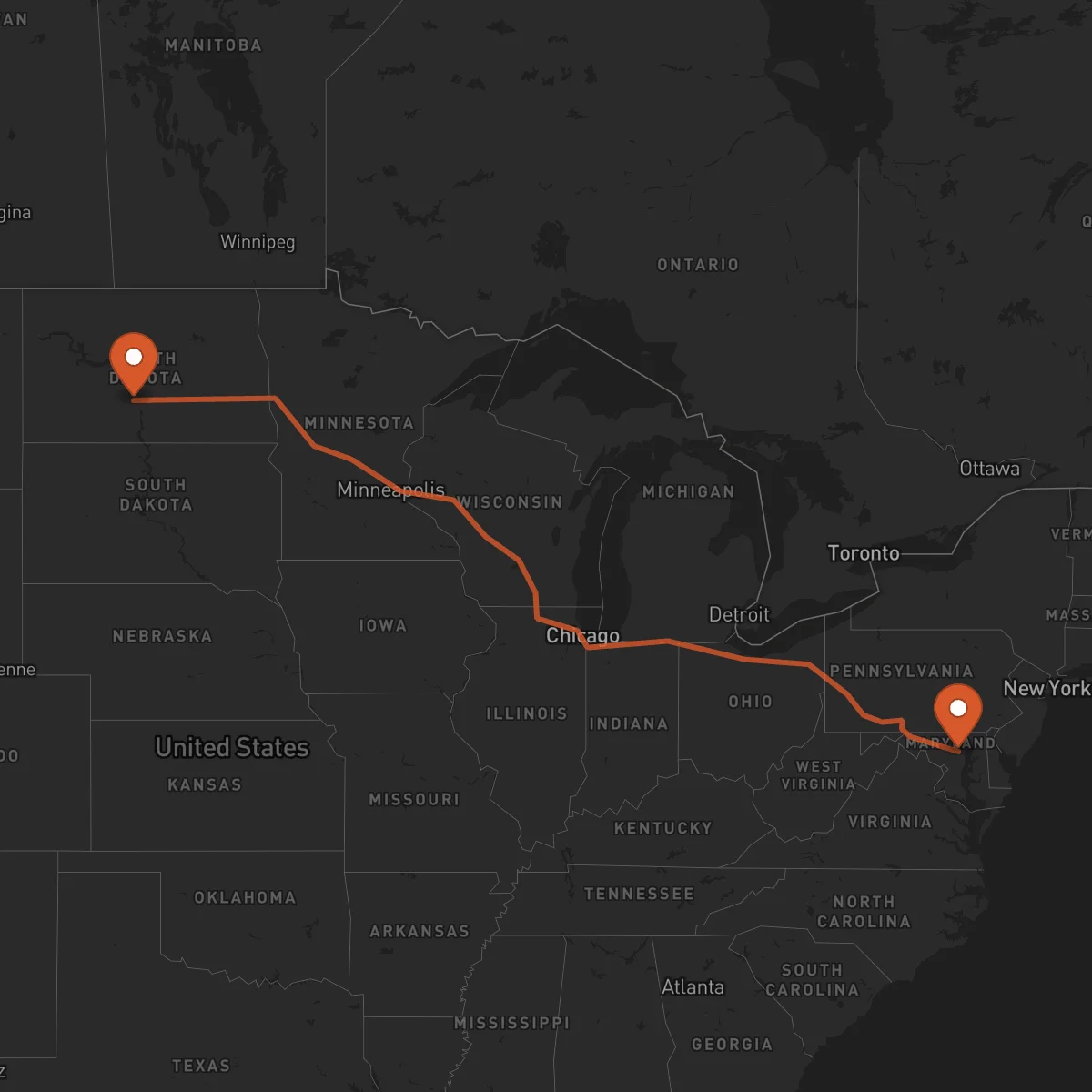
Baltimore to Bismarck
Bismarck → BaltimoreFTL freight transportation service between Baltimore and Bismarck. Reliable logistics solutions for your business.
Route Description
Everything you need to know about the corridor Baltimore - Bismarck
The logistics corridor connecting Baltimore, Maryland, to Bismarck, North Dakota, represents a crucial transportation route spanning approximately 2,124 kilometers across the United States. This east-west corridor traverses diverse geographical regions and connects two distinct economic centers, facilitating the movement of goods between the bustling port city of Baltimore and the capital of North Dakota. The route primarily follows major interstate highways including I-70 and I-94, providing reliable access through key states such as Pennsylvania, Ohio, Indiana, Illinois, Wisconsin, and Minnesota before reaching North Dakota.
The economic significance of this corridor lies in its ability to bridge the manufacturing and port activities of the East Coast with the agricultural, energy, and industrial sectors of the Northern Plains. Baltimore serves as a major East Coast port with extensive rail and highway connections, while Bismarck anchors a region known for its energy production, agriculture, and government services. This corridor supports industries ranging from manufacturing and automotive to agricultural products and energy equipment, making it essential for businesses operating across these diverse economic zones.
Control Terrestre specializes in providing full truckload (FTL) transportation services along this corridor, ensuring reliable and efficient freight movement between these strategic locations. Our experienced network of transportation providers offers dedicated services with various equipment options including dry vans and refrigerated units to accommodate different cargo types. We understand the unique requirements of long-haul transportation and provide professional logistics solutions that help businesses maintain their supply chains across this extensive route.
Services for this Route
Available services for the corridor Baltimore - Bismarck
 Origin
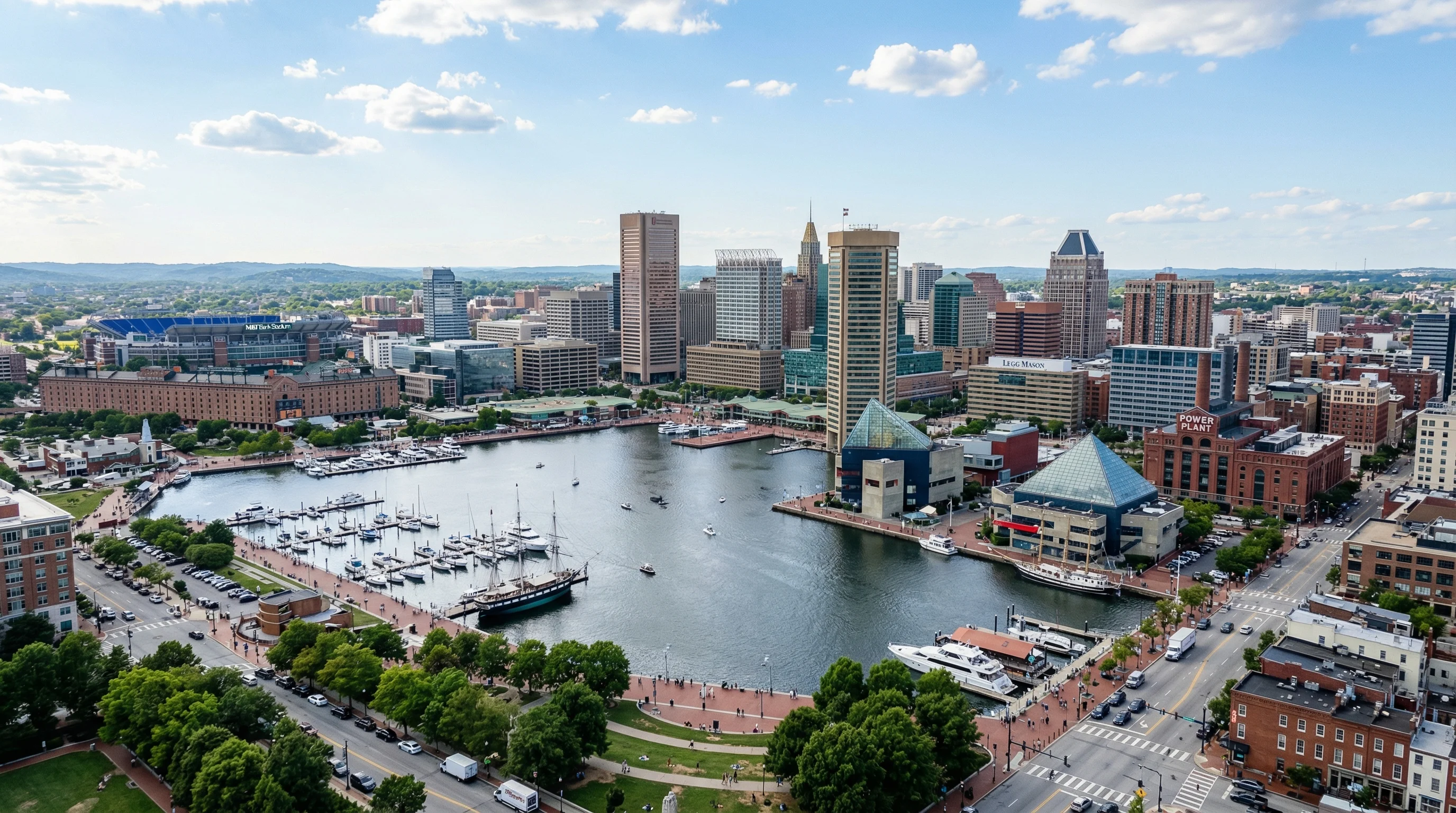
Baltimore
Baltimore, Maryland, stands as a strategic logistics hub on the East Coast of the United States, offering exceptional connectivity through its world-class port facilities, extensive highway network, and proximity to major metropolitan areas. The Port of Baltimore ranks among the busiest ports in the nation, handling a diverse range of cargo including automobiles, containers, and bulk commodities. The city's location provides direct access to I-95, I-70, and I-83, creating multiple transportation corridors that connect to regional and national markets. Baltimore's logistics infrastructure includes the Baltimore/Washington International Thurgood Marshall Airport and robust rail connections through CSX Transportation and Norfolk Southern.
The economic landscape of Baltimore encompasses manufacturing, healthcare, education, and technology sectors, with a strong presence of federal government agencies and defense contractors. The city's strategic position within the Northeast megalopolis and its comprehensive transportation infrastructure make it an ideal origin point for freight distribution across the United States. Baltimore's logistics ecosystem benefits from its status as a major East Coast gateway, supporting both domestic and international trade flows.
 Destination
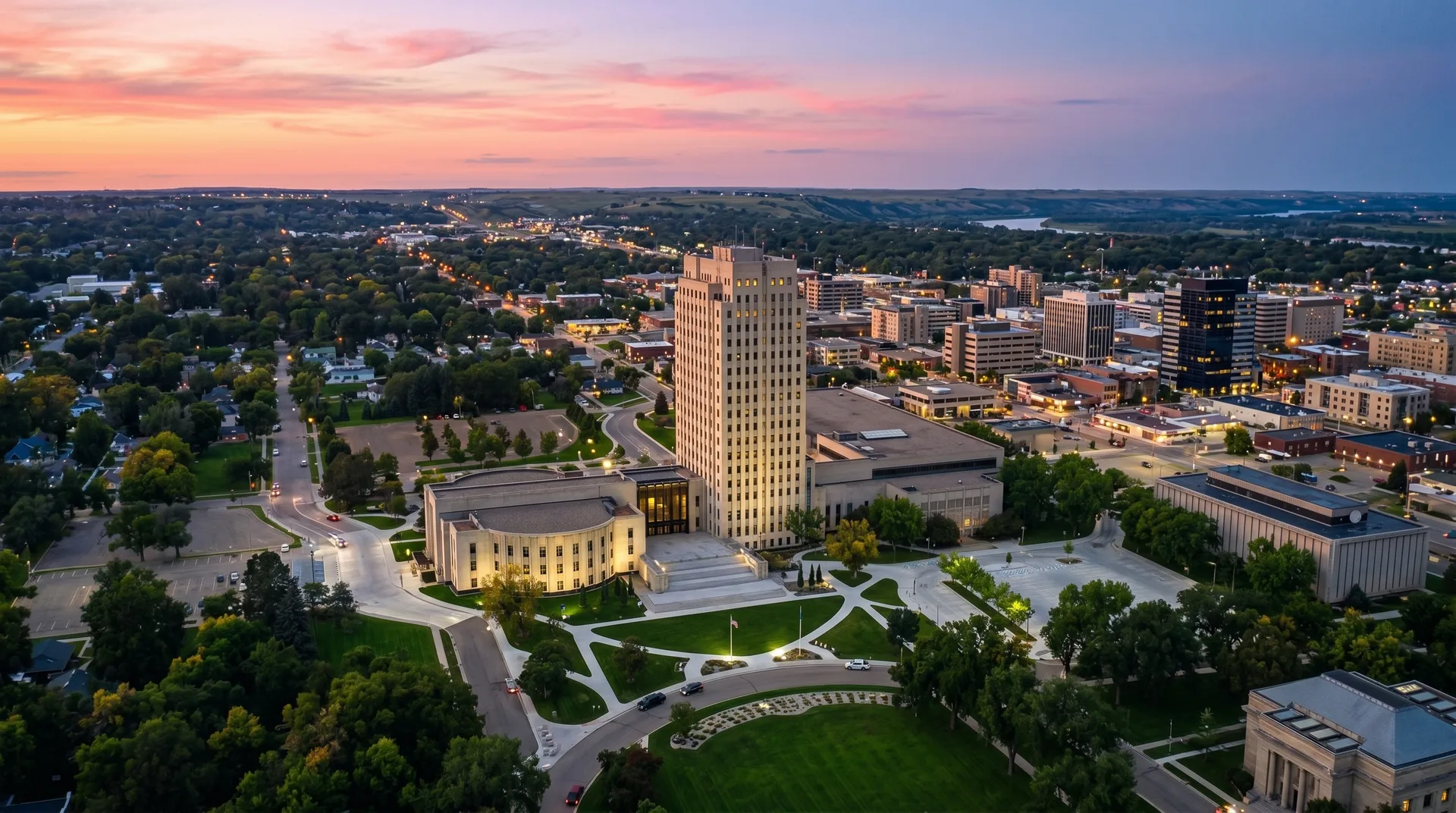
Bismarck
Bismarck, North Dakota, serves as the capital city and a key logistics center in the Northern Plains region, strategically positioned along the Missouri River. The city's location provides access to major transportation routes including I-94, which connects to the broader national highway network, and rail services through BNSF Railway and Canadian Pacific. Bismarck's infrastructure supports the region's economic activities, which are heavily focused on energy production, agriculture, healthcare, and government services. The city's proximity to the Bakken oil formation and its role as the state capital make it a critical distribution point for specialized equipment and supplies.
The economic profile of Bismarck reflects the broader North Dakota economy, with strong emphasis on energy (particularly oil and natural gas), agriculture (including wheat, soybeans, and livestock), and government operations. The region's logistics needs often involve transporting heavy equipment, agricultural products, and industrial materials, requiring specialized transportation solutions. Bismarck's role as a regional hub for western North Dakota and eastern Montana creates consistent freight demand, making it an important destination for long-haul transportation services.










