Austin to Tulsa
Tulsa → AustinFTL freight transportation service between Austin and Tulsa. Reliable logistics solutions for your business.
Route Description
Everything you need to know about the corridor Austin - Tulsa
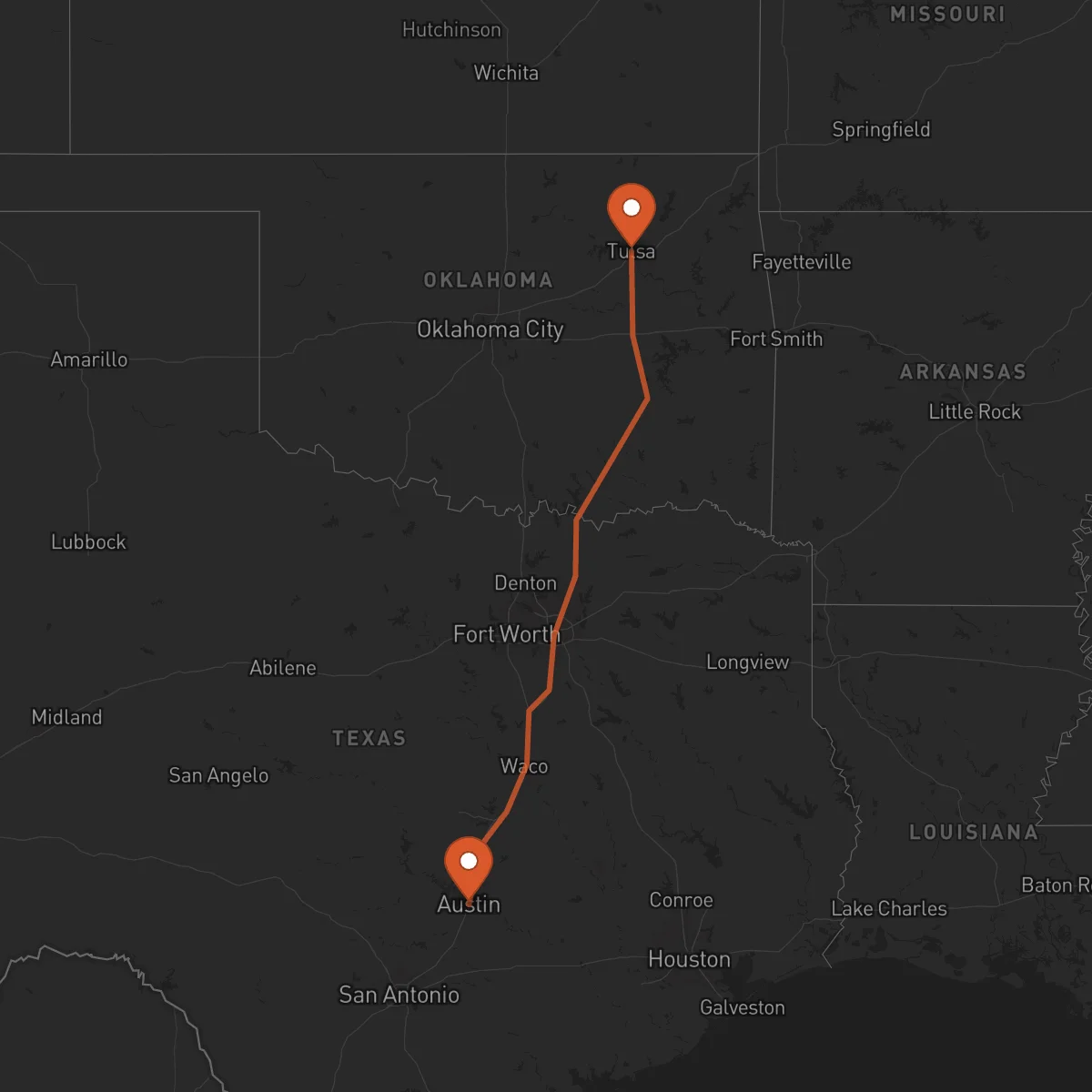
The Austin-Tulsa corridor represents a vital logistics connection between two dynamic economic centers in the central United States. This 675 km route traverses the heart of America's industrial and energy landscape, connecting Texas's technology hub with Oklahoma's energy capital. The corridor serves as a crucial link for businesses operating across multiple states, facilitating the movement of goods between the southern and central regions of the country.
The economic significance of this route is underscored by the complementary industrial profiles of both cities. Austin, known for its booming technology sector and growing manufacturing base, pairs with Tulsa's established energy industry and logistics infrastructure. This combination creates diverse freight opportunities, from high-tech equipment and electronics to energy-related machinery and industrial supplies. The corridor also supports the agricultural and automotive sectors that are prominent in both states.
Transportation infrastructure along this route is robust, primarily utilizing major highways including I-35 North and I-44 East. These well-maintained interstate highways provide reliable and efficient freight movement, with multiple lanes supporting heavy commercial traffic. The route passes through key logistics hubs in Texas, Oklahoma, and Missouri, offering strategic access points for distribution and cross-docking operations.
At Control Terrestre, we leverage our extensive network of certified carriers to provide seamless FTL transportation along this corridor. Our specialized equipment options and experienced logistics team ensure that your freight moves efficiently between Austin and Tulsa, whether you're shipping time-sensitive technology products, industrial equipment, or any other cargo requiring dedicated truckload service.
Services for this Route
Available services for the corridor Austin - Tulsa
 Origin
Austin
Austin, Texas serves as a strategic logistics hub in the southern United States, combining its role as a technology powerhouse with growing manufacturing and distribution capabilities. The city's location provides excellent access to major transportation networks, including Interstate 35, which connects directly to the corridor toward Tulsa. Austin's economic landscape is dominated by technology companies, semiconductor manufacturing, and a rapidly expanding industrial base, creating consistent demand for reliable freight transportation services.
The city's transportation infrastructure includes Austin-Bergstrom International Airport, multiple rail connections, and an extensive highway system that facilitates efficient cargo movement. The Port of Houston, though several hours away, provides Austin with access to international shipping routes, while the city's central Texas location makes it an ideal distribution point for regional operations. Austin's growing population and business community generate substantial freight volume, particularly in specialized equipment, electronics, and industrial supplies that benefit from dedicated FTL transportation.
 Destination
Tulsa
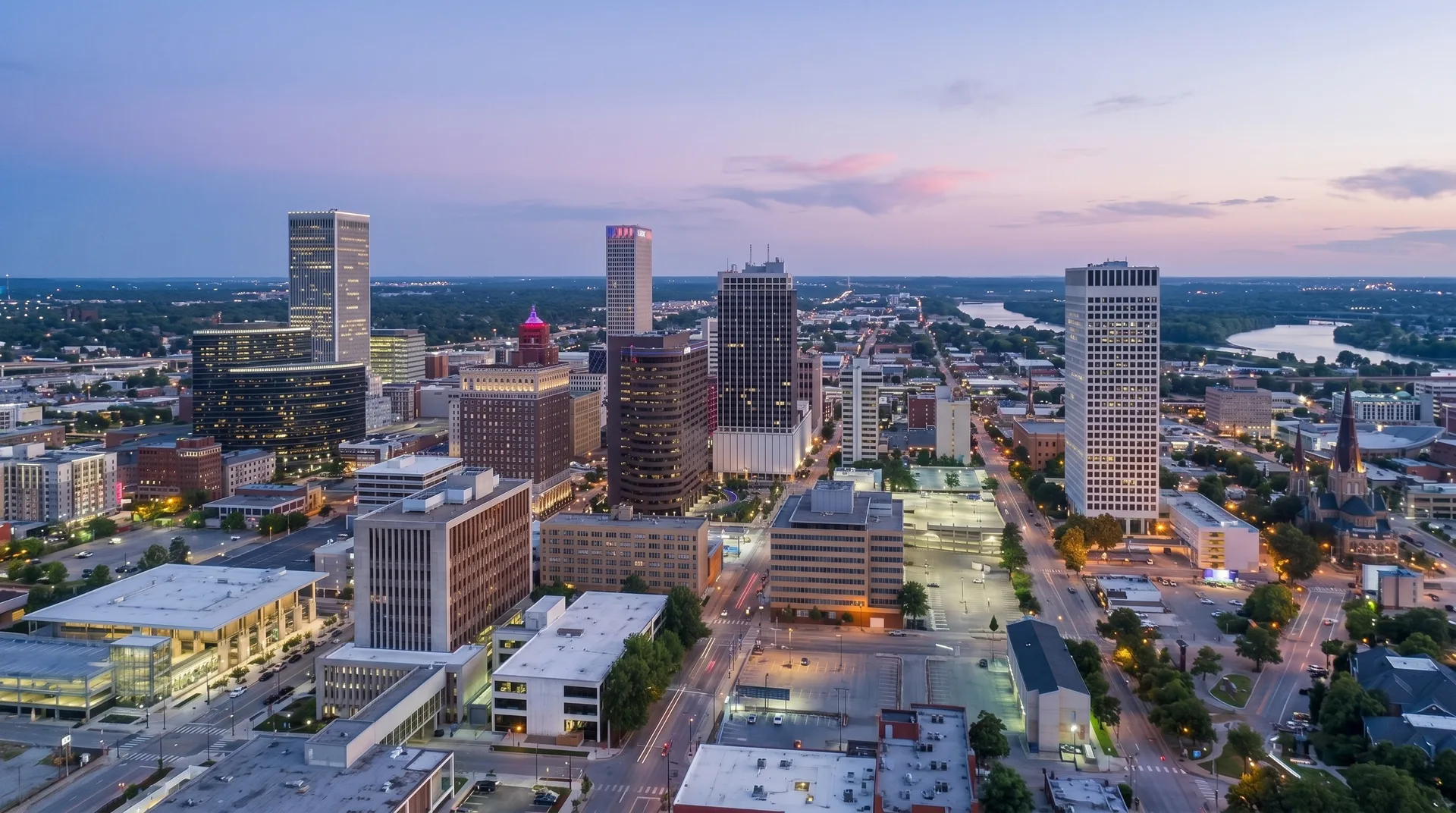
Tulsa, Oklahoma stands as a premier logistics and distribution center in the central United States, earning its reputation as the "Oil Capital of the World" while evolving into a diverse economic powerhouse. The city's strategic location at the intersection of major transportation corridors makes it an ideal destination for freight movement. Tulsa's economy is anchored by the energy sector, aerospace manufacturing, and logistics services, creating consistent demand for efficient freight transportation solutions.
The city boasts exceptional transportation infrastructure, including the Tulsa Port of Catoosa, which provides inland waterway access to the Arkansas River and beyond. Tulsa International Airport and multiple rail terminals complement the highway network, with Interstate 44 serving as a primary freight artery. The city's central location in the United States makes it an optimal distribution point for companies serving the Midwest and beyond. Tulsa's concentration of logistics companies and warehousing facilities creates a supportive ecosystem for freight operations, particularly for specialized cargo and time-sensitive shipments that benefit from dedicated truckload service.










