Austin to Tucson
Tucson → AustinFTL freight transportation service between Austin and Tucson. Reliable logistics solutions for your business.
Route Description
Everything you need to know about the corridor Austin - Tucson
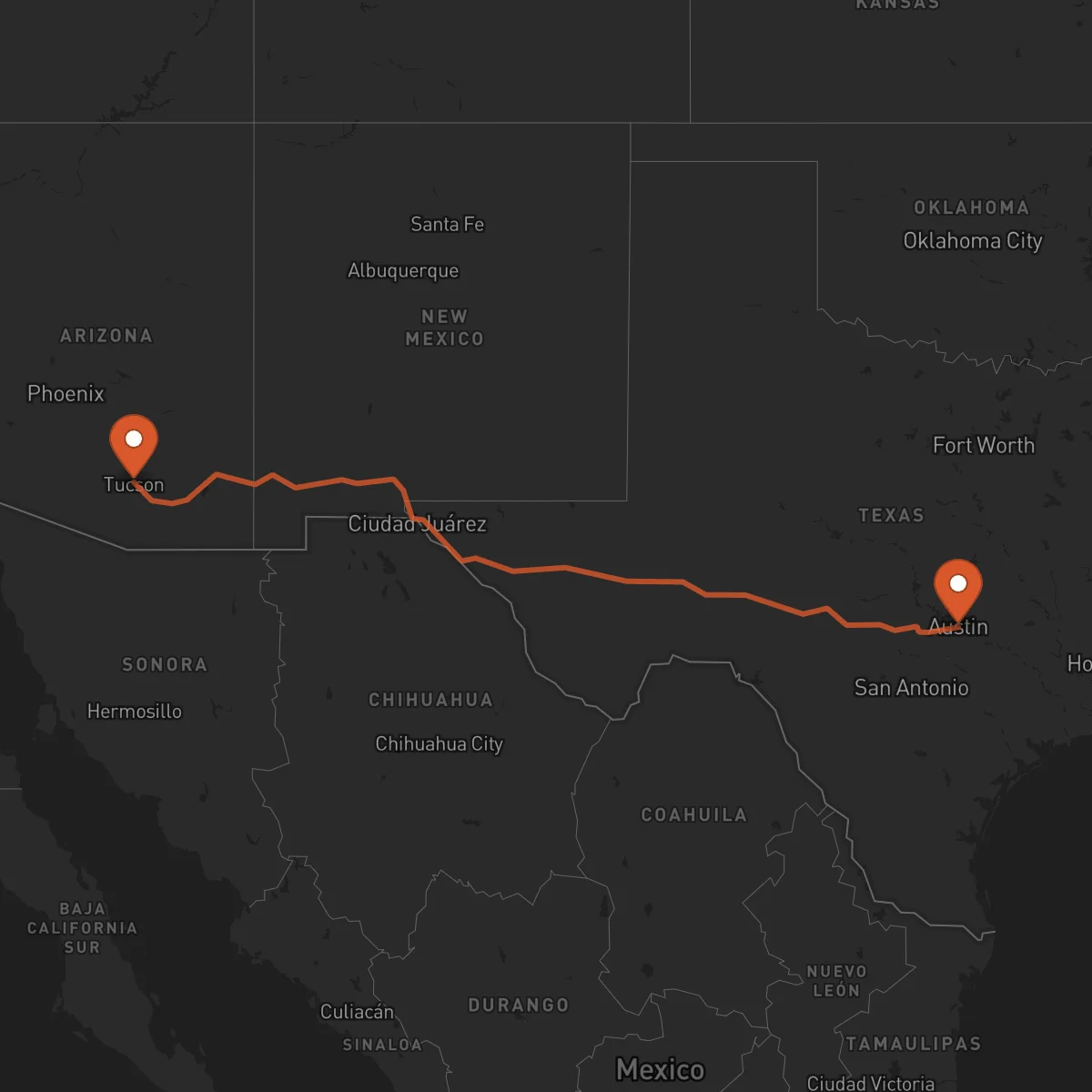
The Austin to Tucson corridor represents a vital logistics connection between two key economic centers in the southwestern United States. This route spans approximately 1,276 kilometers through Texas, New Mexico, and Arizona, linking Texas's technology and manufacturing hub with Arizona's growing logistics and aerospace industries. The corridor traverses diverse terrain and crosses multiple state lines, making it a strategic pathway for freight movement across the Southwest.
The region's economic landscape is characterized by Austin's booming technology sector, known as "Silicon Hills," alongside its robust manufacturing base. Tucson complements this with its strong aerospace and defense industries, logistics operations, and growing technology presence. The corridor serves as a crucial link for industries including electronics, automotive parts, aerospace components, and general manufacturing goods. Major highways facilitating this connection include I-10, which provides the most direct route, along with I-35 and US-290 for regional access.
Control Terrestre specializes in full truckload (FTL) freight transportation along this corridor, offering dedicated services that ensure your cargo moves efficiently and securely between Austin and Tucson. Our experienced network of carriers understands the unique requirements of cross-state transportation, including compliance with varying state regulations and optimal routing for time-sensitive shipments. We provide door-to-door service with real-time tracking capabilities, ensuring your freight arrives at its destination with the reliability and professionalism your business demands.
Services for this Route
Available services for the corridor Austin - Tucson
 Origin
Austin
Austin, Texas stands as a major logistics hub in the heart of Texas, strategically positioned at the intersection of major transportation networks. The city's location provides excellent connectivity to both coastal ports and inland destinations, making it an ideal origin point for freight distribution. Austin's robust infrastructure includes multiple interstate highways, including I-35 running north-south and US-290 running east-west, facilitating efficient cargo movement in all directions.
The city's diverse economic base drives significant freight demand, with technology companies, manufacturing facilities, and distribution centers requiring reliable transportation solutions. Austin's proximity to major Texas markets and its growing population create consistent freight volume, while its status as a state capital ensures stable economic activity. The city's international airport and rail connections complement its highway network, providing multimodal options for logistics operations.
 Destination
Tucson
Tucson, Arizona serves as a critical logistics gateway to the southwestern United States and Mexico, offering unique advantages for freight operations. The city's location in southern Arizona provides access to major cross-border trade routes while maintaining strong connections to domestic markets throughout the West. Tucson's transportation infrastructure includes I-10, I-19, and multiple state highways, creating efficient pathways for freight movement in all directions.
The city's economy is anchored by aerospace and defense industries, logistics operations, and growing technology sectors. Tucson's proximity to the U.S.-Mexico border creates opportunities for international trade, while its desert location makes it an ideal distribution point for southwestern states. The city's Sky Harbor International Airport and Union Pacific rail facilities complement its highway network, providing comprehensive logistics solutions for businesses operating in the region.










