Austin to Little Rock
Little Rock → AustinFTL freight transportation service between Austin and Little Rock. Reliable logistics solutions for your business.
Route Description
Everything you need to know about the corridor Austin - Little Rock
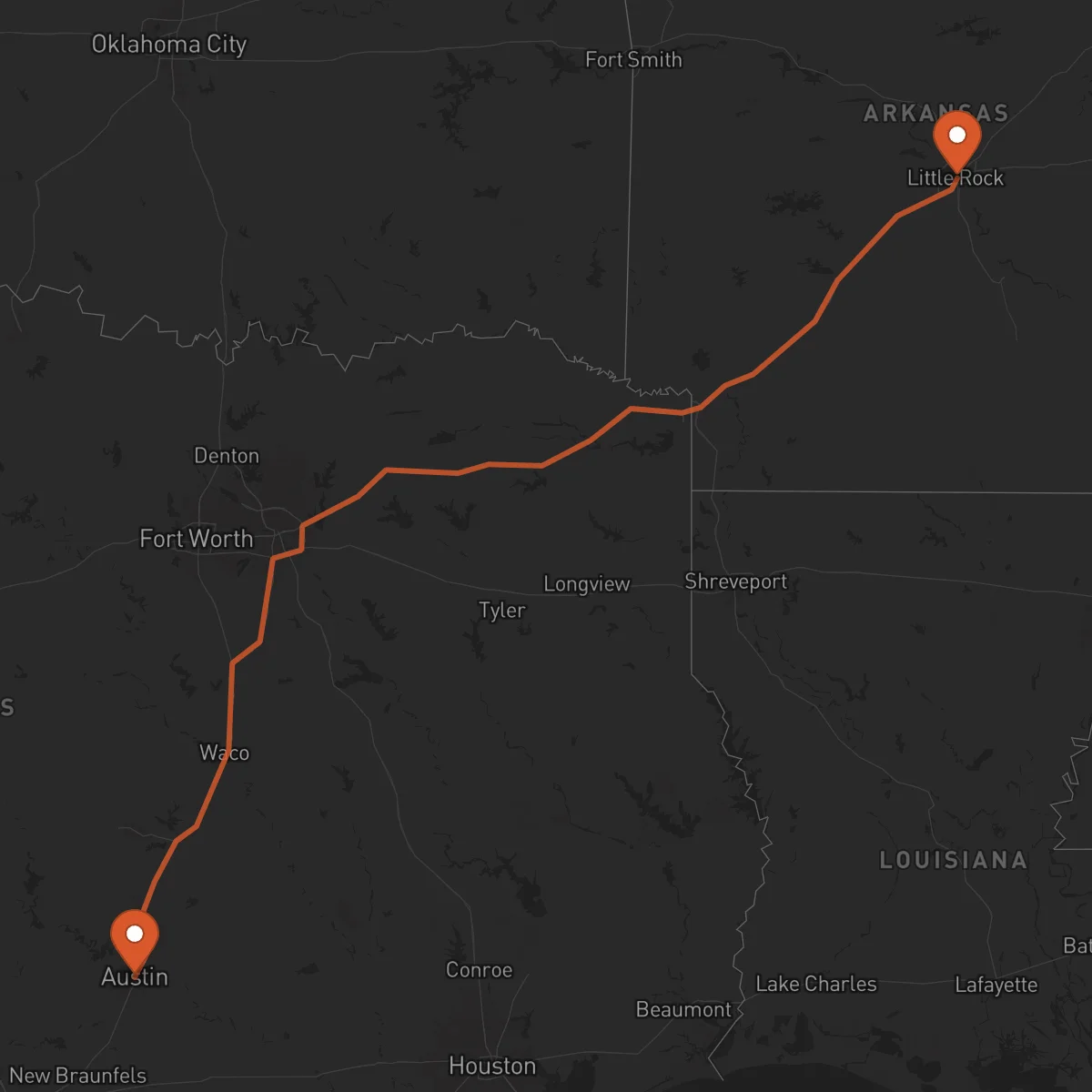
The Austin to Little Rock corridor represents a vital freight transportation link between two key economic centers in the South-Central United States. This 714 km domestic route connects the thriving technology and innovation hub of Austin, Texas, with the industrial and commercial center of Little Rock, Arkansas. The corridor serves as a critical supply chain artery for numerous industries, facilitating the movement of goods between Texas's major manufacturing and technology sectors and Arkansas's diverse industrial base.
The route primarily utilizes Interstate 30 and Interstate 40, providing reliable access through major metropolitan areas including Dallas-Fort Worth and Texarkana. This well-established infrastructure ensures consistent transit times and supports the growing freight demands of the region. The corridor's strategic importance continues to increase as both Austin and Little Rock experience significant economic growth and industrial expansion.
Control Terrestre provides comprehensive FTL transportation solutions along this corridor, leveraging our network of certified carriers and specialized equipment. Our services are particularly valuable for industries requiring dedicated transportation, including technology equipment, industrial machinery, automotive parts, and consumer goods. We understand the specific requirements of this route and maintain the expertise to handle time-sensitive and specialized freight shipments between these markets.
Services for this Route
Available services for the corridor Austin - Little Rock
 Origin
Austin
Austin, Texas, serves as a major logistics hub in the South-Central United States, offering strategic advantages for freight transportation. The city's location provides excellent access to major highways including I-35, which connects to the NAFTA corridor extending to Laredo and the Mexican border. Austin's robust transportation infrastructure includes Austin-Bergstrom International Airport and the Port of Houston within reasonable driving distance, creating multiple multimodal options for shippers.
The city's economy is anchored by the technology sector, with major employers including Dell, IBM, Apple, and numerous tech startups. Additionally, Austin has a strong presence in manufacturing, particularly in semiconductors and electronics, as well as a growing healthcare and life sciences industry. These diverse economic sectors generate substantial freight volumes requiring reliable transportation services to destinations throughout the United States.
 Destination
Little Rock
Little Rock, Arkansas, occupies a strategic position in the South-Central United States, making it an important logistics and distribution center. The city benefits from its location at the intersection of major transportation routes, including I-30 and I-40, providing excellent connectivity to regional markets. Little Rock National Airport and the McClellan-Kerr Arkansas River Navigation System offer additional transportation options, supporting multimodal freight operations.
The Little Rock metropolitan area hosts a diverse industrial base, including aerospace manufacturing, with companies like Dassault Falcon Jet and Raytheon having significant operations. The region also features strong healthcare, retail distribution, and agricultural processing sectors. These industries create consistent demand for freight transportation services, particularly for time-sensitive and specialized cargo moving between major Southern markets.










