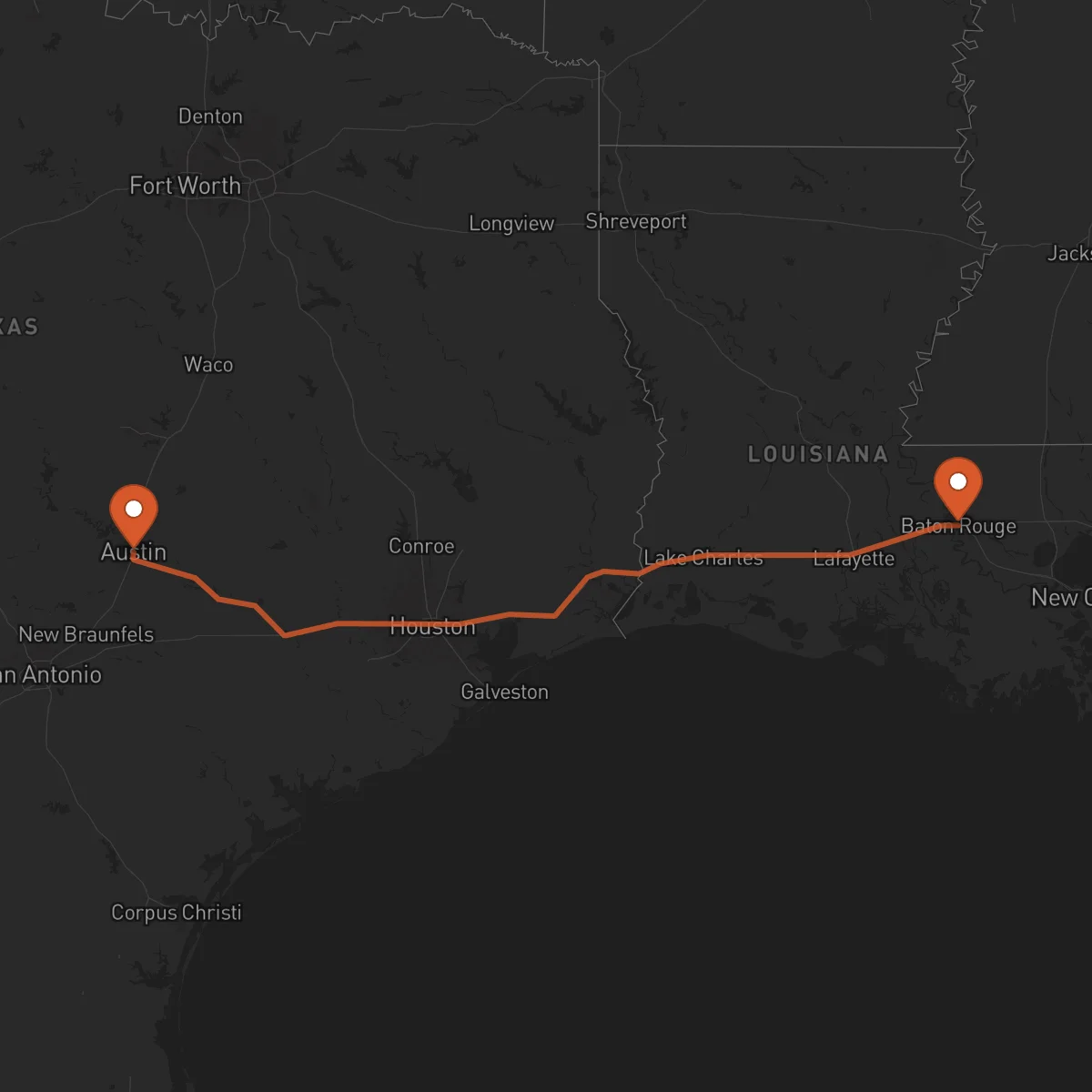
Austin to Baton Rouge
Baton Rouge → AustinFTL freight transportation service between Austin and Baton Rouge. Reliable logistics solutions for your business.
Route Description
Everything you need to know about the corridor Austin - Baton Rouge
The Austin to Baton Rouge corridor represents a vital logistics connection between Texas and Louisiana, spanning approximately 629 kilometers through the heart of the southern United States. This domestic route links two dynamic economic centers, facilitating the movement of goods across state lines and supporting the robust industrial activity in both regions. The corridor traverses diverse terrain and crosses key transportation hubs, making it an essential pathway for businesses operating in the central southern corridor of the country.
The economic significance of this route is underscored by the complementary industrial strengths of both cities. Austin, as a major technology and innovation hub, generates high-value shipments requiring specialized handling, while Baton Rouge's strong presence in petrochemical, manufacturing, and energy sectors creates substantial outbound freight volume. This creates a balanced flow of goods moving in both directions, with numerous industries relying on consistent, reliable transportation services to maintain their supply chains and distribution networks.
Key industries utilizing this corridor include technology and electronics from the Austin area, agricultural products, automotive components, and manufactured goods. The route also serves the petrochemical industry, with Baton Rouge's refineries and chemical plants requiring regular shipments of raw materials and specialized equipment. Construction materials, industrial machinery, and consumer goods represent significant freight categories moving through this corridor, supporting the ongoing development and commerce in both metropolitan areas.
Control Terrestre provides comprehensive FTL transportation solutions along the Austin-Baton Rouge corridor, leveraging our network of certified carriers and specialized equipment. Our services ensure that businesses can move their freight efficiently, whether shipping time-sensitive technology products from Austin or industrial equipment to Baton Rouge's manufacturing facilities. With our commitment to safety, reliability, and customer service, we help companies optimize their supply chain operations across this important southern U.S. route.
Services for this Route
Available services for the corridor Austin - Baton Rouge
 Origin
Austin
Austin, Texas serves as a strategic logistics hub in the central southern United States, combining its position as a technology center with excellent transportation connectivity. The city's location in central Texas provides access to major interstate highways, including I-35 running north-south and connections to I-10 heading west toward California. Austin-Bergstrom International Airport supports air cargo operations, while the Port of Houston's proximity (approximately 200 miles southeast) provides ocean freight connectivity for international shipments. The city's growing infrastructure includes modern warehousing facilities and distribution centers catering to the technology and e-commerce sectors.
The economic landscape of Austin is dominated by technology, software development, and innovation, earning it the nickname "Silicon Hills." Major employers include tech giants, semiconductor manufacturers, and numerous startups, creating substantial demand for specialized freight transportation. The city also has significant healthcare, education, and government sectors, along with a growing manufacturing presence in electronics and advanced materials. This diverse industrial base generates consistent freight volume requiring reliable transportation services, from high-value technology equipment to standard commercial goods.
 Destination
Baton Rouge
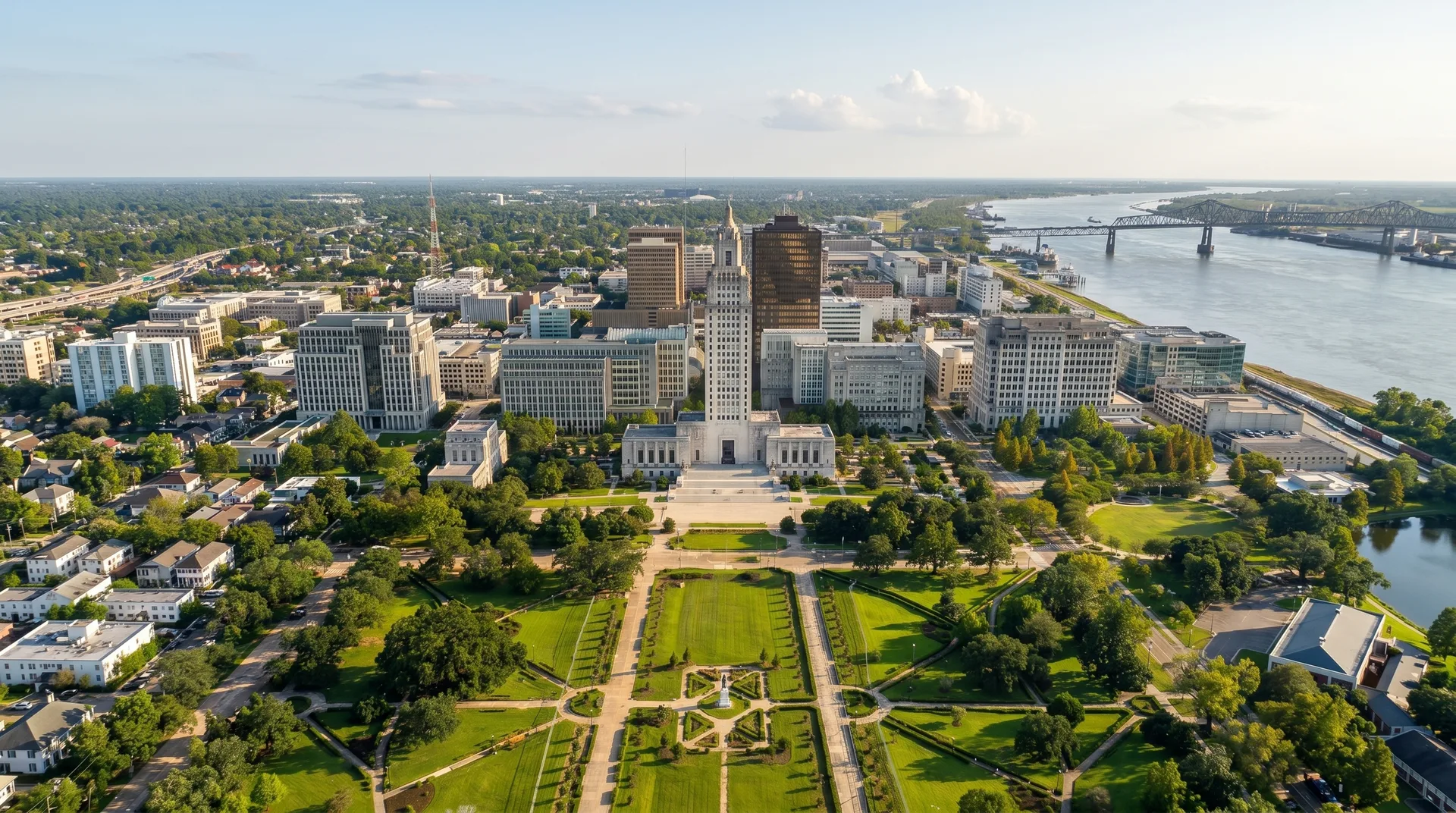
Baton Rouge, Louisiana occupies a strategic position along the Mississippi River, providing crucial access to one of America's most important commercial waterways. The city's location at the intersection of major transportation routes, including I-10 and I-12, creates excellent ground transportation connectivity throughout the Gulf Coast region and beyond. The Port of Greater Baton Rouge offers deep-water port facilities, while the nearby Port of New Orleans provides additional maritime options. Baton Rouge Metropolitan Airport supports air cargo operations, creating a multimodal transportation environment that facilitates efficient freight movement.
The industrial base of Baton Rouge is heavily concentrated in the petrochemical and energy sectors, with numerous refineries and chemical plants operating along the Mississippi River. ExxonMobil, Dow Chemical, and other major companies maintain significant operations in the area, generating substantial industrial freight volume. The city also has growing healthcare, education, and government sectors, along with manufacturing activities in plastics, chemicals, and agricultural products. This industrial diversity creates consistent demand for various freight transportation services, from specialized hazardous materials handling to standard commercial shipments.










