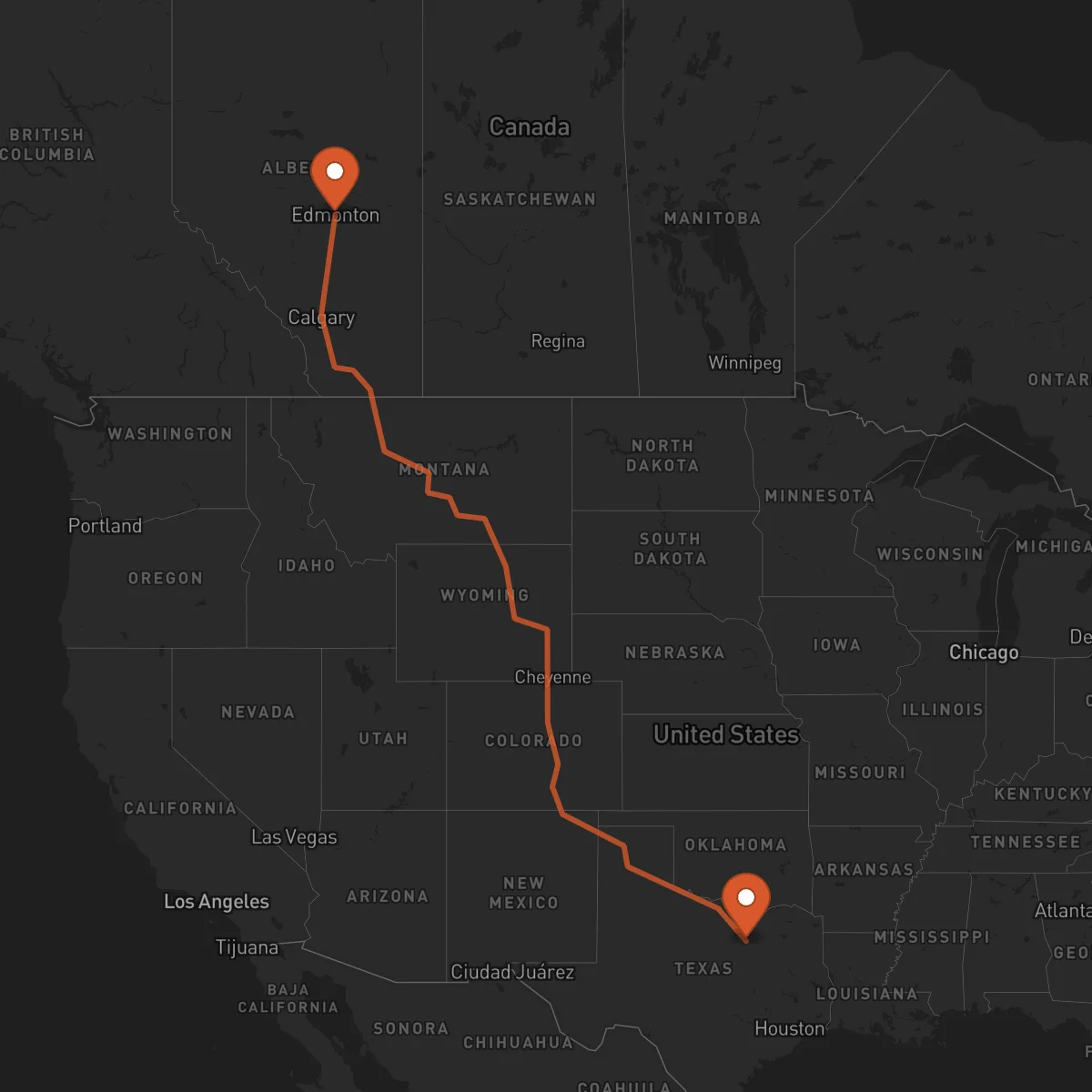
Arlington to Edmonton
Edmonton → ArlingtonFTL freight transportation service between Arlington and Edmonton. Reliable logistics solutions for your business.
Route Description
Everything you need to know about the corridor Arlington - Edmonton
The logistics corridor between Arlington, Texas and Edmonton, Alberta represents a critical north-south connection spanning approximately 2,654 kilometers across the North American continent. This cross-border route links the industrial heartland of Texas with Canada's gateway to the north, traversing diverse terrain and multiple jurisdictions. The corridor connects two major economic regions, facilitating the movement of goods between the United States and Canada through a network of interstate highways and provincial roads.
The economic significance of this corridor cannot be overstated. Arlington serves as a strategic logistics hub in the Dallas-Fort Worth metroplex, while Edmonton functions as Alberta's capital and a major center for Canada's energy sector. This route supports the flow of industrial equipment, automotive parts, consumer goods, and energy-related materials between these two economic powerhouses. The corridor particularly benefits from the strong trade relationship between Texas and Alberta, both major energy-producing regions.
Key transportation infrastructure along this corridor includes major highways such as I-35 North from Arlington, transitioning to various routes through the central United States before crossing into Canada. The journey continues through provinces like Saskatchewan and Alberta, utilizing the Trans-Canada Highway network. Border crossings, particularly at major points like the Coutts-Sweetgrass crossing or other Alberta-Montana entry points, require careful coordination to ensure smooth customs clearance and compliance with both USMCA and Canadian import regulations.
Control Terrestre facilitates seamless operations on this corridor through our extensive network of certified carriers and our expertise in cross-border logistics. Our C-TPAT and FAST-certified partners ensure expedited processing at border crossings, while our real-time tracking capabilities provide visibility throughout the journey. We handle all necessary documentation, customs compliance, and coordination with authorities to ensure your freight moves efficiently from Arlington to Edmonton, regardless of seasonal weather challenges or regulatory requirements.
Services for this Route
Available services for the corridor Arlington - Edmonton
 Origin
Arlington
Arlington, Texas occupies a strategic position in the Dallas-Fort Worth metroplex, one of the largest metropolitan areas in the United States. Located approximately 20 miles west of Dallas and 20 miles east of Fort Worth, Arlington benefits from exceptional transportation connectivity. The city is served by major highways including I-20, I-30, and State Highway 360, providing direct access to regional, national, and international freight networks. Arlington's proximity to the Dallas/Fort Worth International Airport and the Alliance Texas inland port further enhances its logistics capabilities.
The local economy is diverse and robust, with major industries including automotive manufacturing, aerospace and defense, healthcare, and technology. Arlington is home to the General Motors Arlington Assembly plant, a significant manufacturing facility that produces SUVs and contributes to the industrial freight volume in the region. The presence of the University of Texas at Arlington also supports a knowledge-based economy and technology sector, creating demand for specialized freight services.
 Destination
Edmonton, Alberta serves as a critical logistics hub in western Canada, strategically positioned as the northernmost major city in North America with a metropolitan population exceeding one million. The city's location provides access to northern resources and serves as a gateway to the Arctic, making it essential for industries involved in energy, mining, and natural resource extraction. Edmonton's Yellowhead Highway (Highway 16) provides east-west connectivity across Canada, while Highway 2 (QEII) connects south to Calgary and the US border.
The Edmonton economy is heavily influenced by the energy sector, with Alberta's oil sands operations creating substantial freight demand for heavy equipment, industrial materials, and specialized cargo. The city also hosts major distribution centers, benefiting from its central location in western Canada. Edmonton's port on the North Saskatchewan River, though frozen in winter, provides unique inland waterway access during warmer months. The presence of major employers in healthcare, education, and government services creates a diverse economic base that generates consistent freight movement throughout the year.










