Annapolis to Regina
Regina → AnnapolisFTL freight transportation service between Annapolis and Regina. Reliable logistics solutions for your business.
Route Description
Everything you need to know about the corridor Annapolis - Regina
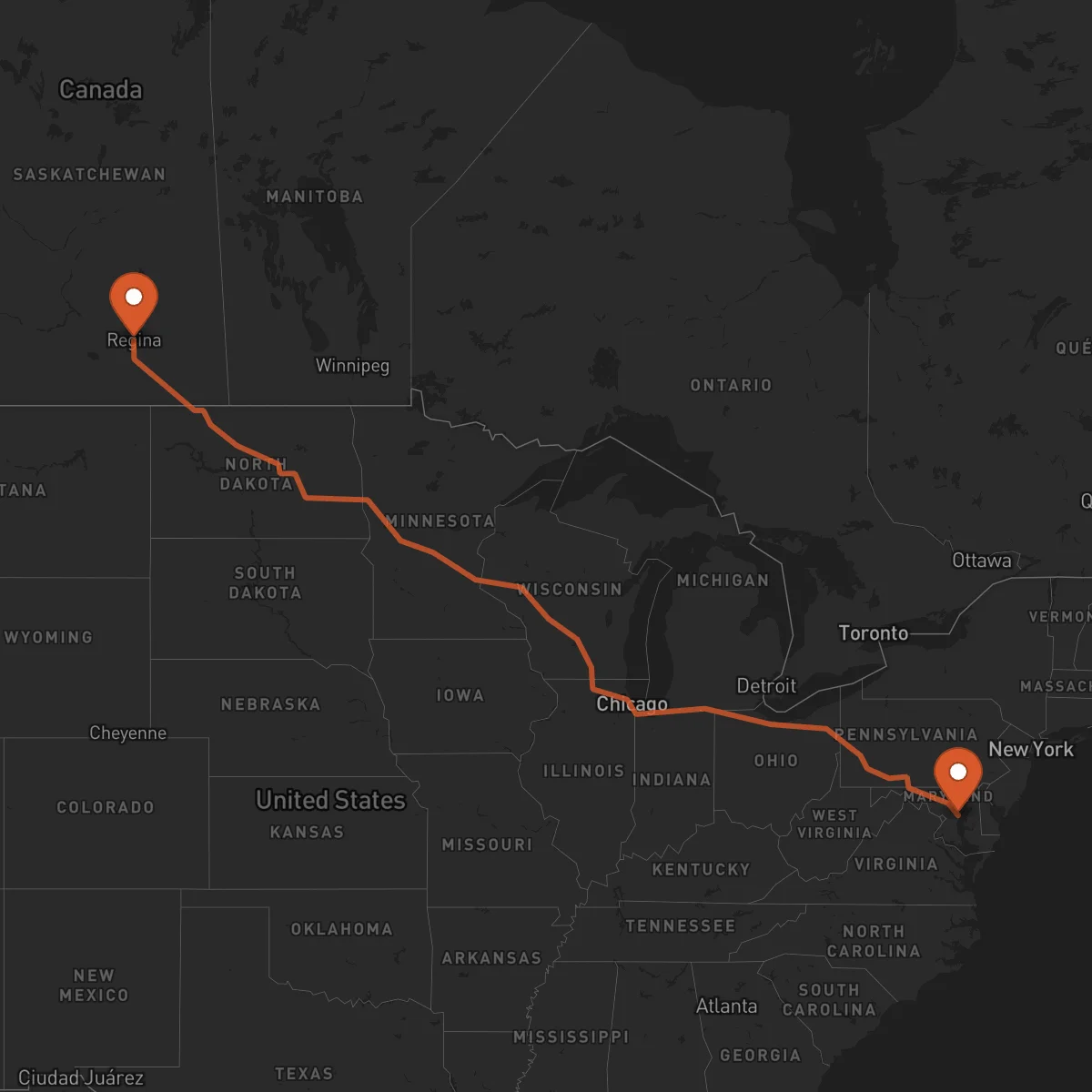
The Annapolis to Regina corridor represents a vital cross-border freight route connecting the Mid-Atlantic region of the United States with the Canadian Prairies. This 2,540-kilometer journey traverses diverse terrain and crosses international borders, making it a strategic link for businesses operating between these two important economic regions. The corridor facilitates the movement of goods between Annapolis, Maryland's historic port city and state capital, and Regina, Saskatchewan's provincial capital known as the "Queen City" and a major economic hub in Western Canada.
The economic significance of this route cannot be overstated. Annapolis serves as a gateway to the Washington-Baltimore metropolitan area, one of the most affluent and industrially diverse regions in North America. Regina, positioned at the heart of Canada's agricultural belt, is a center for energy, mining, and agricultural industries. This corridor enables the seamless flow of industrial equipment, agricultural products, consumer goods, and specialized cargo between these complementary markets.
Transportation along this route primarily utilizes Interstate 70 and Interstate 90 in the United States, connecting to Canadian Highway 1 through the Windsor-Detroit or Sarnia-Port Huron border crossings. These major arteries provide reliable infrastructure for full truckload (FTL) freight movements. Control Terrestre's expertise in cross-border operations ensures smooth customs clearance and compliance with both US and Canadian regulations, minimizing delays and optimizing transit times for our clients' critical shipments.
Services for this Route
Available services for the corridor Annapolis - Regina
 Origin
Annapolis
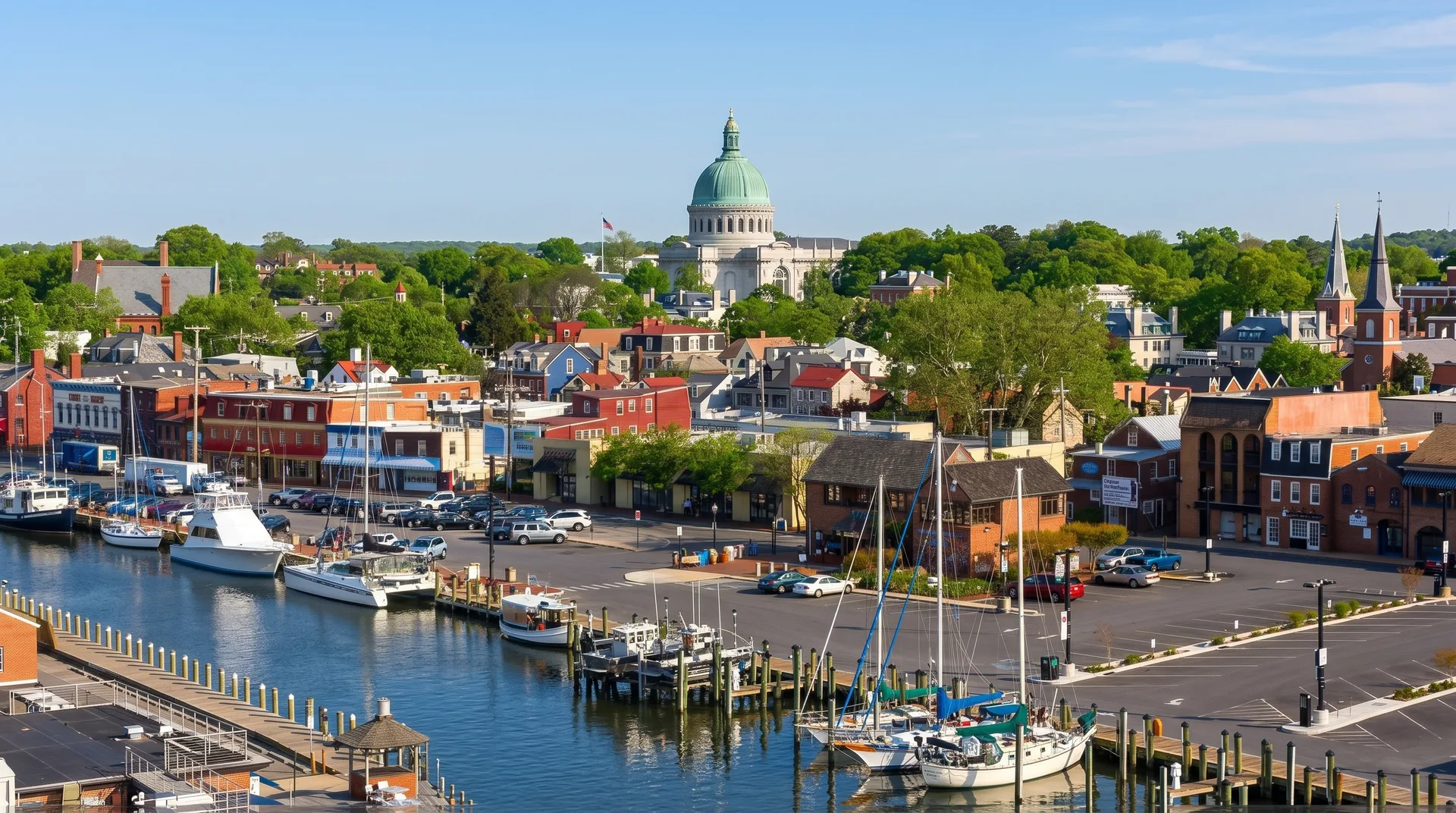
Annapolis, Maryland, strategically positioned along the Chesapeake Bay, serves as a crucial logistics hub for the Mid-Atlantic region. As Maryland's capital and home to the United States Naval Academy, Annapolis combines governmental significance with robust commercial activity. The city's proximity to major metropolitan areas like Washington D.C. (32 miles) and Baltimore (26 miles) provides unparalleled access to a vast consumer market and numerous industrial centers.
The region's economy is diverse, with strong sectors in government services, defense contracting, healthcare, and technology. Annapolis benefits from the Port of Baltimore, one of the busiest ports on the East Coast, facilitating international trade. The area's manufacturing sector produces everything from aerospace components to medical devices, while the agricultural sector contributes with Chesapeake Bay seafood and Eastern Shore produce. Transportation infrastructure includes access to I-97, I-695, and I-95, connecting Annapolis to national freight networks and international trade routes.
 Destination
Regina
Regina, Saskatchewan, known as the "Queen City," stands as a strategic logistics center in the heart of Western Canada's prairie region. Located at the junction of the Trans-Canada Highway and the CPR main line, Regina serves as a critical distribution point for goods moving throughout the Canadian Prairies and beyond. The city's central location in Saskatchewan makes it an ideal hub for reaching major markets in Alberta, Manitoba, and the northern United States.
The Regina economy is anchored by agriculture, energy, and mining industries, with Saskatchewan being a global leader in potash and uranium production. The city's economic base also includes manufacturing, particularly in agricultural equipment and food processing. Regina's Wascana Lake and Wascana Centre provide a unique urban park setting, while the city's infrastructure includes the Regina International Airport and extensive rail connections. The city's role as Saskatchewan's provincial capital ensures a stable economic foundation and continuous investment in transportation and logistics infrastructure, making it an essential node in Canada's freight transportation network.










