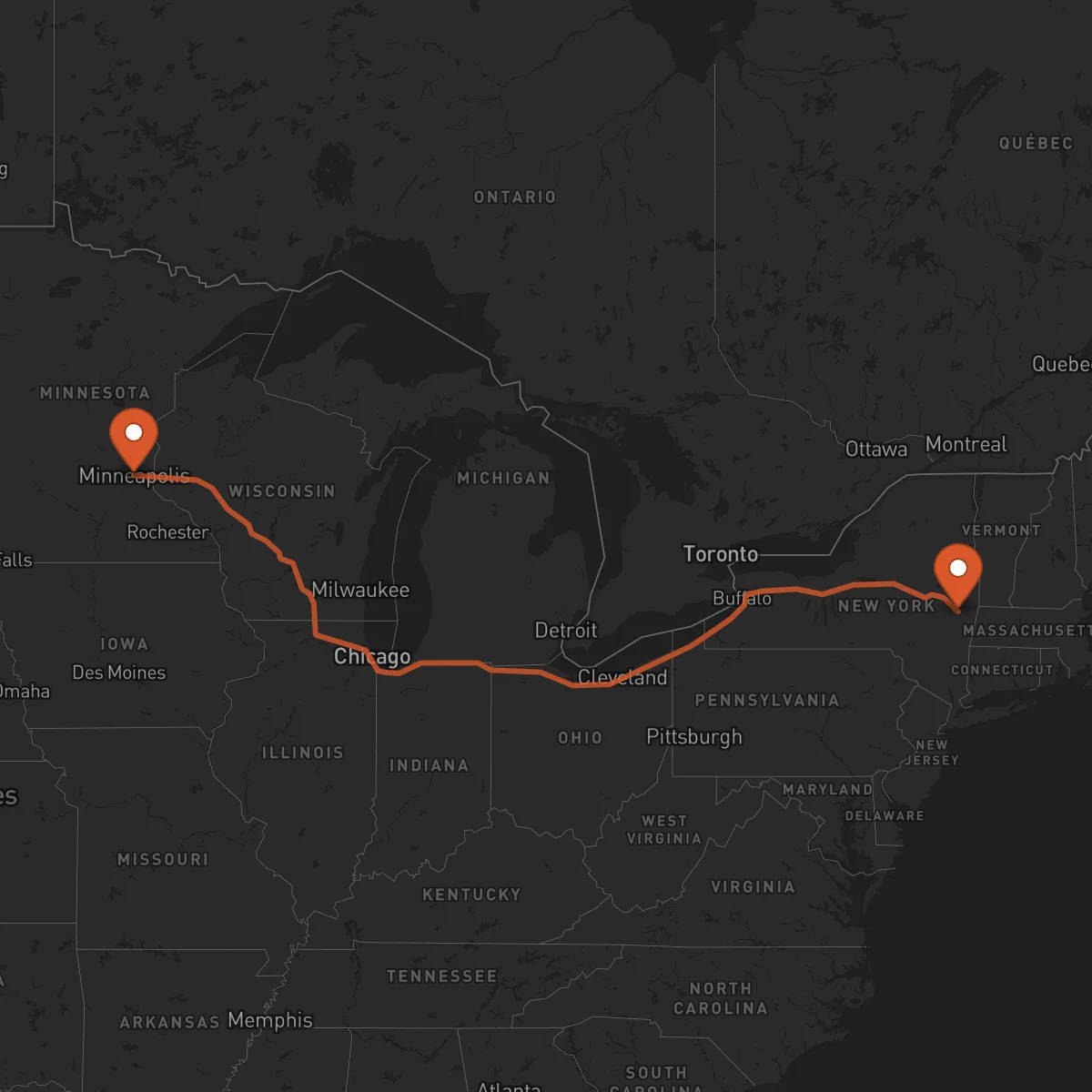
Albany to Minneapolis
Minneapolis → AlbanyFTL freight transportation service between Albany and Minneapolis. Reliable logistics solutions for your business.
Route Description
Everything you need to know about the corridor Albany - Minneapolis
The logistics corridor connecting Albany, New York to Minneapolis, Minnesota spans approximately 1,583 kilometers across the northeastern United States, representing a vital transportation link between the East Coast and the Upper Midwest. This route traverses diverse terrain and connects major industrial centers, facilitating the movement of goods between two strategically important economic regions. The corridor passes through key states including New York, Pennsylvania, Ohio, Indiana, Illinois, and Wisconsin, utilizing major interstate highways such as I-90 and I-80 that form the backbone of freight transportation in this region.
The Albany-Minneapolis corridor serves as a critical artery for numerous industries, with manufacturing, technology, healthcare, and agricultural sectors relying on efficient transportation services. Albany, as the capital of New York, hosts significant government operations and educational institutions, while Minneapolis stands as a major financial and distribution hub for the Upper Midwest. The region's manufacturing base, particularly in automotive, machinery, and food processing, creates substantial freight demand along this route. Additionally, the corridor facilitates the movement of raw materials from the Great Lakes region to the Northeast, and finished goods in the opposite direction.
Control Terrestre provides comprehensive FTL transportation solutions along this corridor, leveraging our network of certified carriers to ensure reliable, timely delivery of your freight. Our dedicated service model means your cargo travels directly from origin to destination without intermediate stops or handling. With our commitment to safety, compliance with all regulatory requirements, and focus on customer satisfaction, we help businesses optimize their supply chain operations between these two important markets. Our team coordinates every aspect of the journey, providing real-time tracking and communication throughout the transportation process.
Services for this Route
Available services for the corridor Albany - Minneapolis
 Origin
Albany
Albany, New York serves as a strategic logistics hub in the northeastern United States, positioned at the confluence of major transportation routes. Located on the west bank of the Hudson River, Albany provides access to both inland and maritime shipping options, with the Port of Albany offering connections to global markets. The city's proximity to major metropolitan areas like New York City, Boston, and Montreal enhances its importance as a distribution center. Albany's transportation infrastructure includes the Albany International Airport, extensive rail connections through CSX and Canadian Pacific lines, and a comprehensive highway network featuring I-90, I-87, and I-787, making it an ideal origin point for freight shipments heading west.
The Albany metropolitan area hosts a diverse economic base, with government operations as the largest employer due to the presence of the New York State Capitol. The region has developed significant strengths in nanotechnology, information technology, and healthcare, with institutions like the University at Albany's College of Nanoscale Science and Engineering driving innovation. Manufacturing remains important, particularly in the production of computer chips, pharmaceuticals, and specialized equipment. The area's agricultural sector, including dairy and apple production from the surrounding Hudson Valley, also generates substantial freight volume, creating a robust demand for reliable transportation services to major markets across the country.
 Destination
Minneapolis
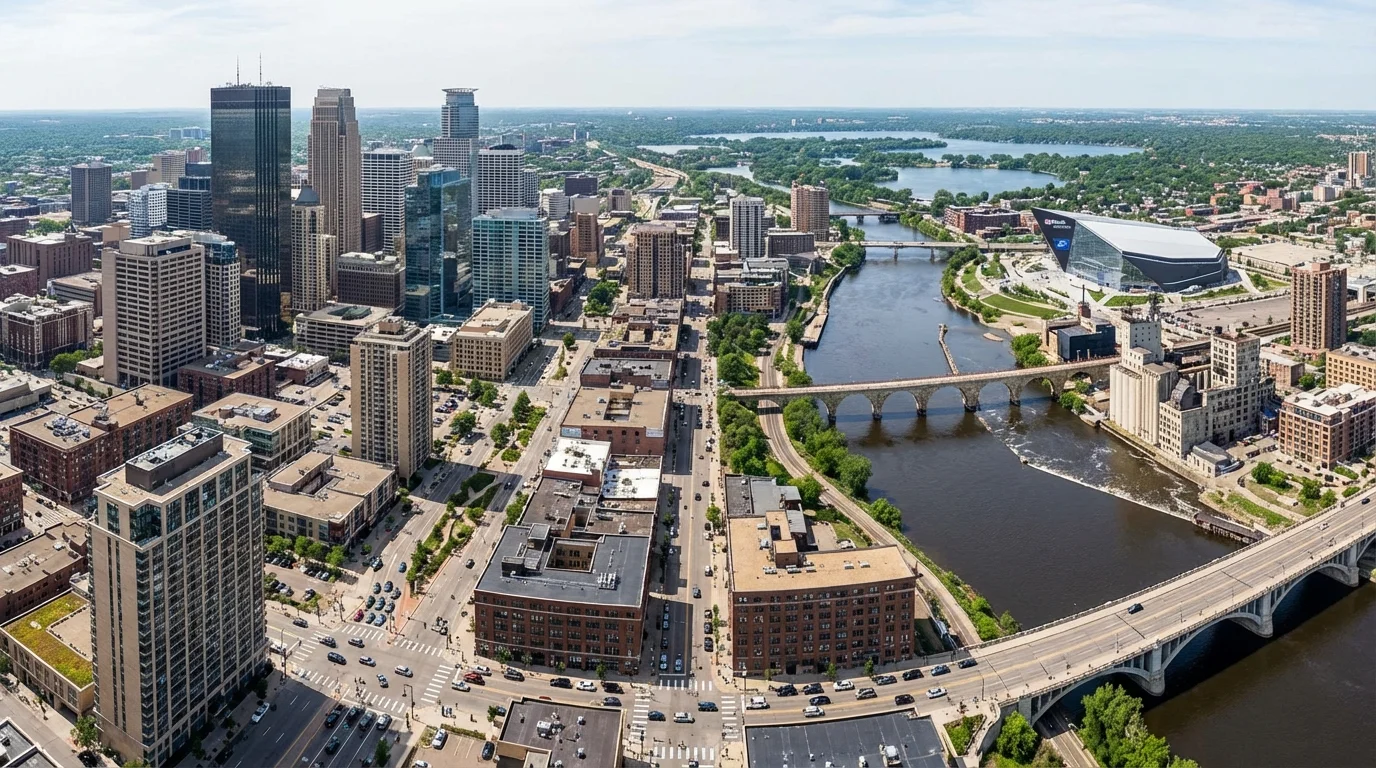
Minneapolis, Minnesota stands as a premier logistics and distribution center in the Upper Midwest, strategically positioned at the crossroads of major transportation networks. The city's location on the Mississippi River provides waterway access to the Gulf of Mexico, while its extensive highway system, including I-35, I-94, and I-494, connects it to regional and national markets. Minneapolis-Saint Paul International Airport offers air cargo capabilities, and the presence of multiple Class I railroads ensures robust rail freight options. This multimodal infrastructure makes Minneapolis an ideal destination for freight shipments, capable of efficiently distributing goods throughout the northern United States and beyond.
The Minneapolis economy is characterized by its diversity and strength in several key sectors. The city serves as a major financial center, hosting the headquarters of numerous Fortune 500 companies, particularly in retail, agriculture, and food processing. The region's manufacturing base includes medical devices, machinery, and food products, while the technology sector continues to grow, with significant activity in software development and healthcare IT. Minneapolis is also a critical hub for agricultural commodities, with the surrounding states of Minnesota, Iowa, and the Dakotas producing substantial volumes of grain, soybeans, and livestock products that require efficient transportation to processing facilities and export markets.










