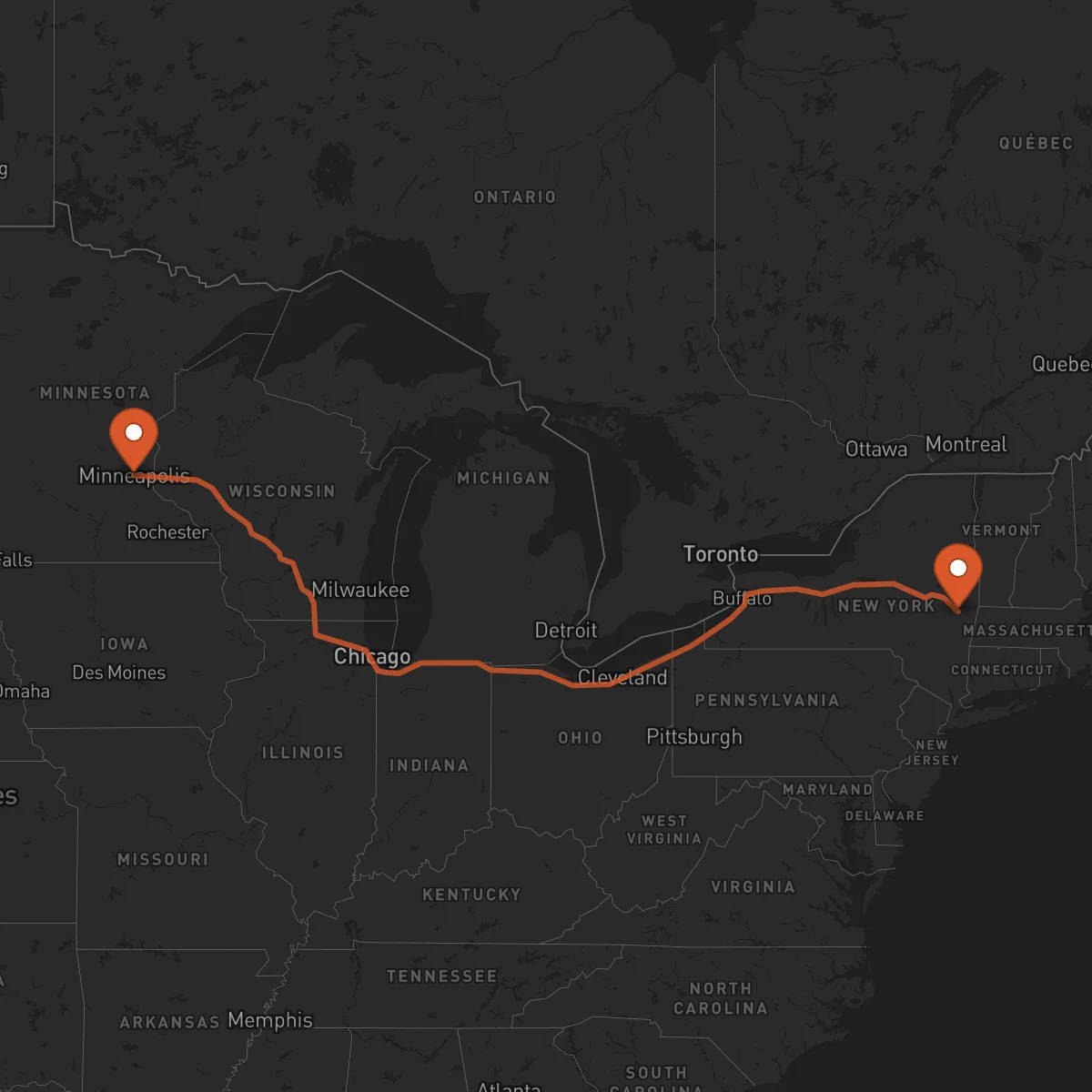
Minneapolis to Albany
Albany → MinneapolisFTL freight transportation service between Minneapolis and Albany. Reliable logistics solutions for your business.
Route Description
Everything you need to know about the corridor Minneapolis - Albany
The Minneapolis to Albany corridor represents a vital freight transportation route connecting the Upper Midwest with the Northeast United States. This 1,583-kilometer journey traverses diverse economic regions, linking Minnesota's industrial heartland with New York's capital region. The route serves as a critical supply chain artery for businesses operating across the Great Lakes and Northeastern markets.
The corridor passes through major industrial and agricultural states, facilitating the movement of goods between the manufacturing centers of the Midwest and the densely populated Northeast corridor. This route is particularly significant for companies that need to transport goods between the agricultural and manufacturing powerhouse of Minnesota and the commercial and governmental hub of Albany.
Key industries utilizing this corridor include manufacturing, agriculture, food processing, automotive parts, and technology sectors. The route supports the movement of both raw materials and finished goods, with particular emphasis on time-sensitive shipments that require dedicated transportation solutions.
Control Terrestre facilitates seamless operations on this corridor through our network of certified transportation providers. We offer dedicated full truckload (FTL) services with real-time tracking, ensuring your cargo moves efficiently from Minneapolis to Albany. Our strategic partnerships with carriers along this route guarantee capacity availability and reliable service, regardless of seasonal demand fluctuations or weather conditions.
Services for this Route
Available services for the corridor Minneapolis - Albany
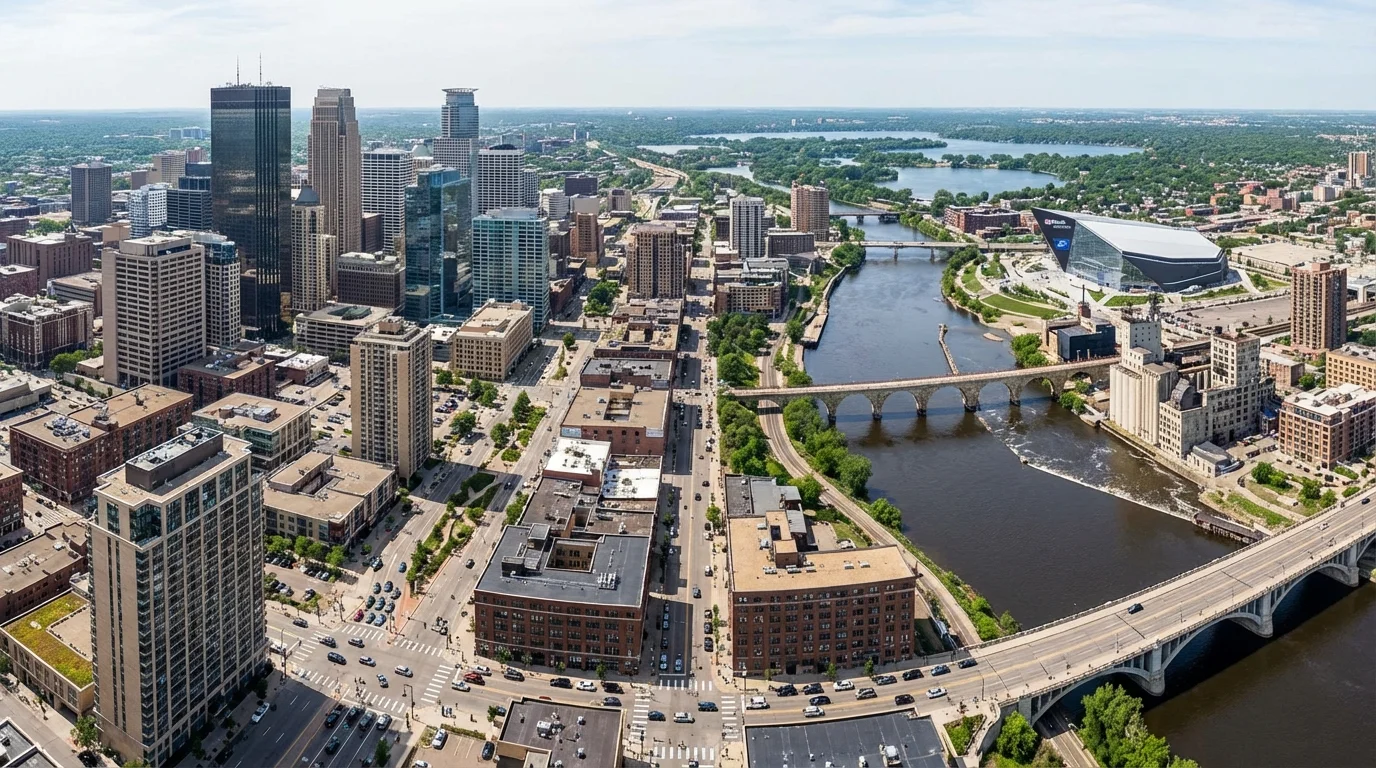 Origin
Minneapolis
Minneapolis serves as a strategic logistics hub in the Upper Midwest, offering exceptional connectivity for freight transportation. The city's location at the intersection of major interstate highways (I-35, I-94, and I-90) provides direct access to both East-West and North-South corridors. Minneapolis benefits from its proximity to the Port of Duluth, one of the largest inland ports in the United States, expanding its reach to international markets through Great Lakes shipping.
The Minneapolis metropolitan area is a major center for food processing, medical technology, retail (home to several Fortune 500 companies), and advanced manufacturing. The region's strong agricultural base, combined with its industrial diversity, creates consistent freight demand across multiple sectors. The city's robust transportation infrastructure includes multiple intermodal facilities, warehousing centers, and direct rail connections, making it an ideal origin point for long-haul freight movements to the East Coast.
 Destination
Albany
Albany's strategic location in upstate New York makes it a crucial logistics center for the Northeast region. Situated at the crossroads of I-90 and I-87, Albany provides excellent connectivity to major markets including New York City, Boston, and Montreal. The city's proximity to the Hudson River and its access to the Port of Albany expand its capabilities for both domestic and international freight movements.
The Albany area is home to government institutions, educational facilities, healthcare providers, and emerging technology companies. The region's economy is supported by nanotechnology research, green energy initiatives, and advanced manufacturing. Albany's transportation infrastructure includes the Albany International Airport, extensive rail networks, and a growing network of distribution centers that support the region's logistics needs. The city's location makes it an ideal destination for freight originating from the Midwest, serving as a gateway to the Northeastern United States.










