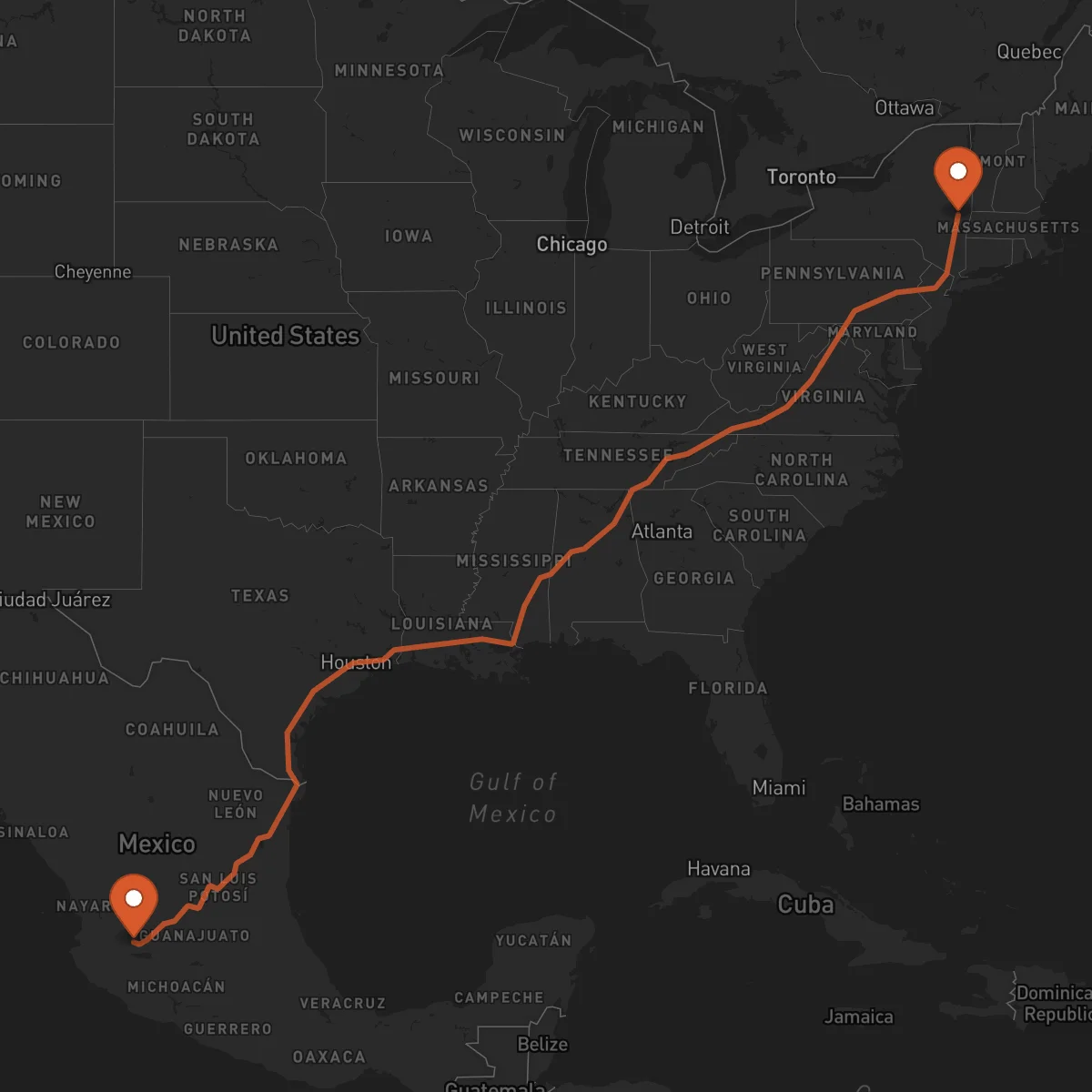
Albany to Guadalajara
Guadalajara → AlbanyFTL freight transportation service between Albany and Guadalajara. Reliable logistics solutions for your business.
Route Description
Everything you need to know about the corridor Albany - Guadalajara
The Albany-Guadalajara corridor represents a vital trade connection between the northeastern United States and Mexico's second-largest metropolitan area. This 3,682 km cross-border route traverses diverse landscapes and economic zones, facilitating the movement of goods between two major industrial regions. The corridor's strategic importance lies in connecting New York's manufacturing and distribution centers with Jalisco's robust industrial base, creating a seamless supply chain for businesses operating across North America.
The transportation infrastructure along this route includes major interstate highways such as I-90, I-80, and I-35, providing reliable and efficient freight movement. Key border crossing points, particularly Laredo-Nuevo Laredo, serve as critical gateways where Control Terrestre's expertise in cross-border operations ensures smooth customs clearance and documentation handling. Our team's familiarity with both USMCA regulations and Mexican customs procedures minimizes delays and optimizes transit times for our clients.
This corridor serves a diverse range of industries, including automotive manufacturing, electronics, aerospace components, and agricultural products. Guadalajara's status as Mexico's Silicon Valley attracts technology companies requiring specialized freight services, while Albany's position in the northeastern supply chain makes it a crucial origin point for various industrial goods. Control Terrestre's dedicated fleet and experienced drivers ensure that temperature-sensitive and time-critical shipments maintain their integrity throughout the journey, regardless of seasonal weather conditions along the route.
Services for this Route
Available services for the corridor Albany - Guadalajara
 Origin
Albany
Albany, New York, serves as a strategic logistics hub in the northeastern United States, positioned at the intersection of major transportation networks. The city's proximity to the Port of Albany and its connection to the New York State Thruway system make it an ideal origin point for freight distribution across the eastern seaboard and beyond. Albany's economy is anchored by government services, healthcare, and education, but its logistics sector has grown significantly due to its strategic location and infrastructure investments.
The region benefits from a well-developed transportation infrastructure, including the Albany International Airport, extensive rail connections through CSX and Canadian Pacific railways, and a network of highways facilitating efficient freight movement. The Port of Albany provides maritime access for international cargo, while the city's central location in New York State offers convenient access to major markets in the Northeast. These factors combine to make Albany an excellent starting point for cross-border freight operations to Mexico.
 Destination
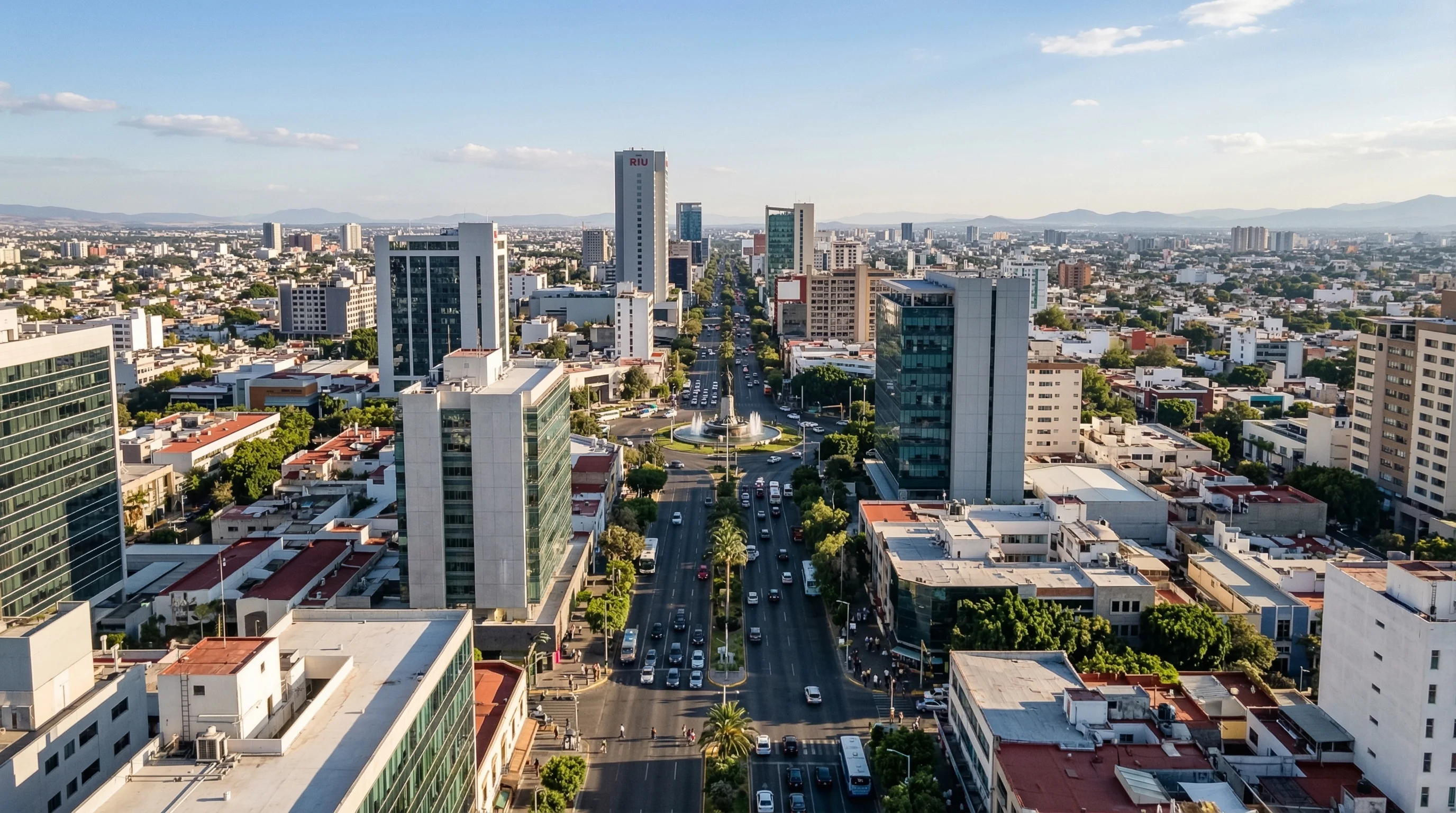
Guadalajara, Jalisco, stands as a major industrial and technological powerhouse in Mexico, earning its reputation as the country's Silicon Valley. The city and its surrounding metropolitan area host a diverse industrial base, including electronics manufacturing, automotive production, aerospace components, and information technology services. Guadalajara's strategic location in western Mexico provides excellent connectivity to both Pacific ports and inland markets, making it a crucial node in North American supply chains.
The city boasts a sophisticated transportation infrastructure, including the Miguel Hidalgo y Costilla Guadalajara International Airport, extensive highway networks connecting to major Mexican cities, and rail connections through Ferromex. Guadalajara's industrial parks are equipped with modern facilities designed to support just-in-time manufacturing and international trade. The region's economic development has been further enhanced by its skilled workforce and strong educational institutions, creating an ecosystem that attracts multinational corporations and supports complex logistics operations.










