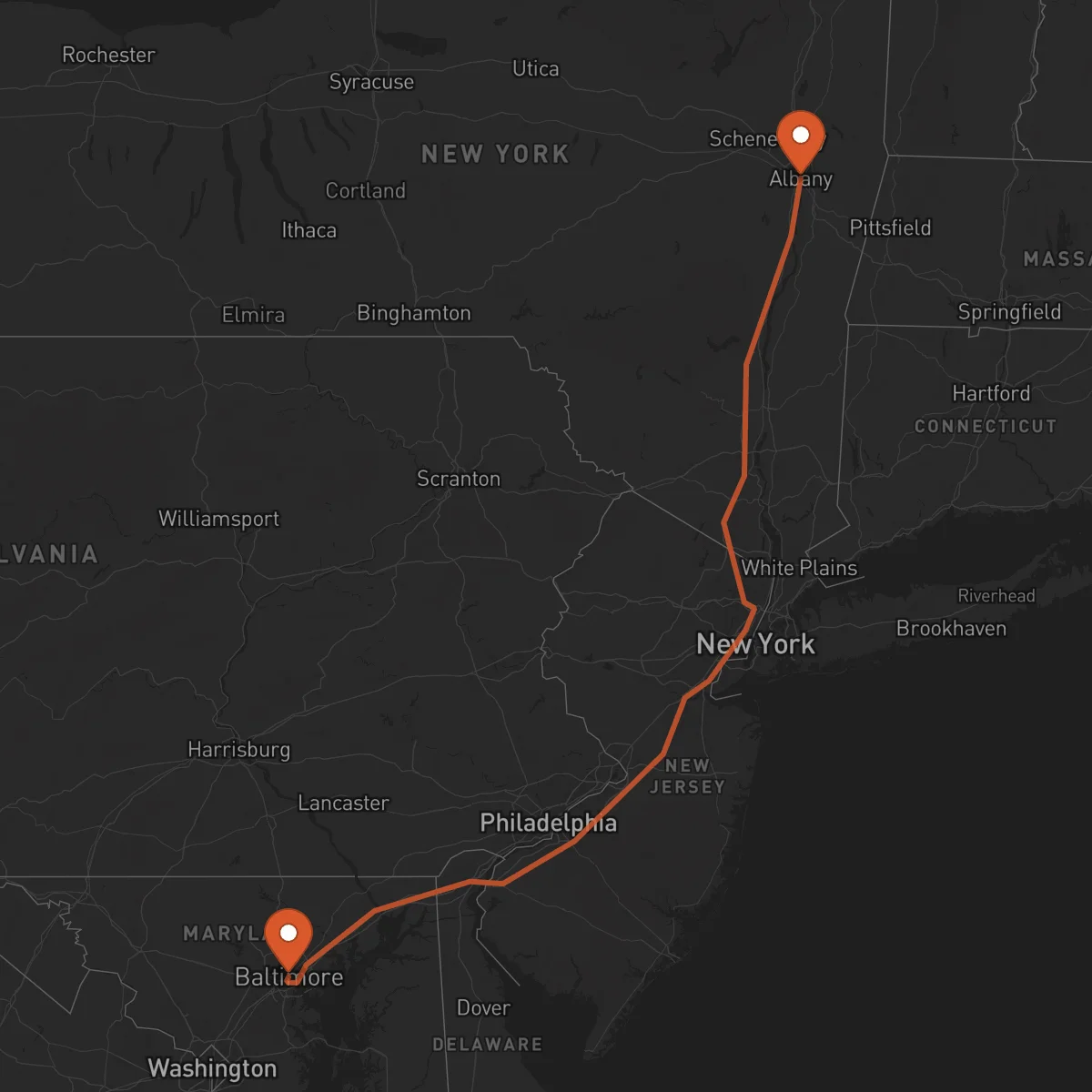
Albany to Baltimore
Baltimore → AlbanyFTL freight transportation service between Albany and Baltimore. Reliable logistics solutions for your business.
Route Description
Everything you need to know about the corridor Albany - Baltimore
The Albany to Baltimore corridor represents a vital logistics connection between New York's capital region and Maryland's largest city. This 444 km route traverses the northeastern United States, linking two significant economic hubs along the I-95 corridor. The journey connects the Hudson Valley region with the Chesapeake Bay area, facilitating the movement of goods between these complementary markets.
The corridor serves as a crucial link for businesses operating in both states, enabling efficient distribution of products across the mid-Atlantic region. The route passes through several states, connecting major metropolitan areas and industrial zones. This transportation artery supports the economic integration of the northeastern United States, providing businesses with reliable access to diverse markets and supply chains.
Key industries utilizing this corridor include manufacturing, pharmaceuticals, technology, and food processing. Albany's growing tech sector and Baltimore's established port facilities create a symbiotic relationship, with companies requiring reliable freight transportation to move goods between these strategic locations. The corridor also supports the automotive industry, with several major manufacturers and suppliers operating in both regions.
Control Terrestre optimizes operations on this corridor through our network of certified transportation providers. We ensure that your full truckload shipments move efficiently between Albany and Baltimore, leveraging our expertise in route planning and our commitment to timely deliveries. Our dedicated services provide the reliability and consistency that businesses need when transporting valuable cargo along this important east coast route.
Services for this Route
Available services for the corridor Albany - Baltimore
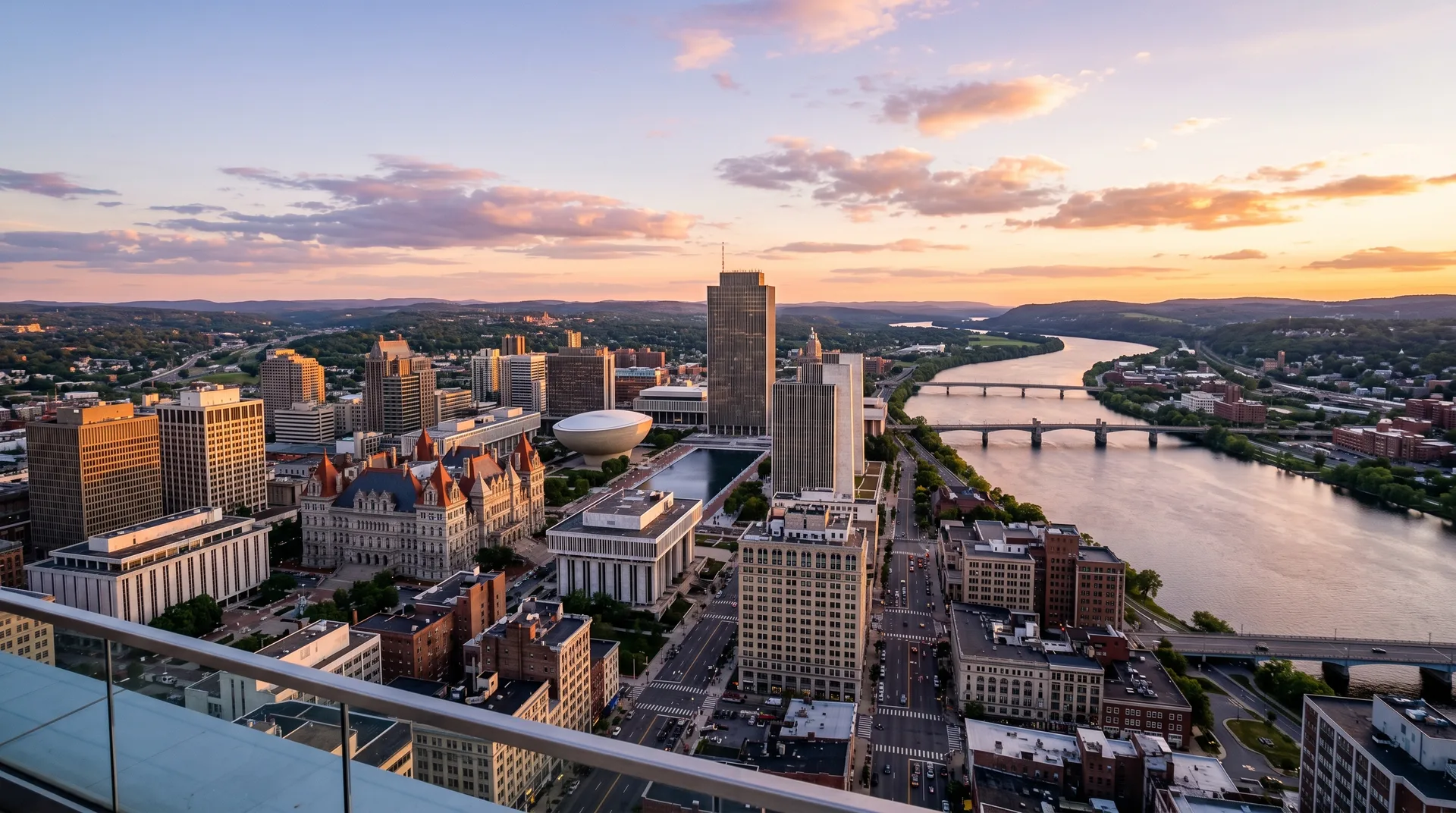 Origin
Albany
Albany, New York, serves as a strategic logistics hub in the northeastern United States. Located on the west bank of the Hudson River, Albany provides excellent access to major transportation networks, including I-90 and I-87. The city's position makes it an ideal origin point for freight distribution throughout the Northeast and beyond. Albany's proximity to the Adirondack Mountains and its connection to the Erie Canal system historically established it as a transportation center, a role it continues to fulfill today.
The region's economy is diverse, with strong representation in government services, healthcare, education, and technology. Albany has emerged as a growing tech hub, often referred to as part of the 'Tech Valley' initiative. The area also hosts significant nanotechnology research and manufacturing operations. Additionally, Albany's location within New York's agricultural heartland supports food processing and distribution industries, creating substantial freight transportation needs throughout the year.
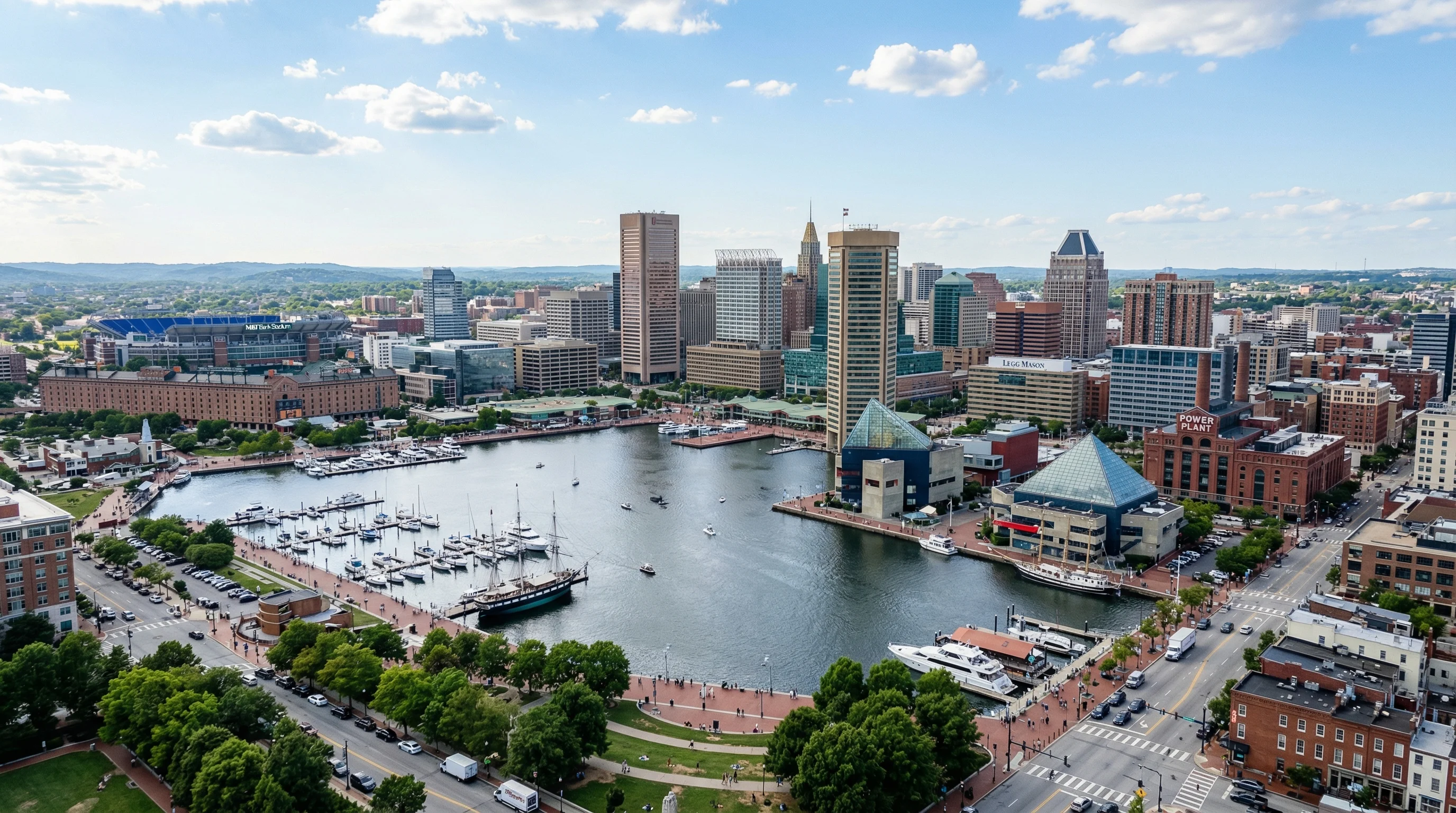 Destination
Baltimore
Baltimore, Maryland, stands as a major logistics and transportation center on the East Coast. The city's strategic location on the Chesapeake Bay provides direct access to international shipping routes through the Port of Baltimore, one of the busiest ports in the United States. Baltimore's extensive transportation infrastructure includes I-95, I-83, and I-70, creating a comprehensive network for ground freight movement. The city's rail connections through CSX and Norfolk Southern further enhance its logistics capabilities.
The Baltimore metropolitan area boasts a diverse industrial base, including advanced manufacturing, aerospace, defense, and healthcare sectors. The city is home to major institutions like Johns Hopkins University and Hospital, driving research and biotechnology industries. Baltimore's Inner Harbor area has transformed into a commercial and tourism center, while the surrounding region maintains strong automotive, steel, and food processing industries. This economic diversity creates consistent demand for full truckload freight services connecting Baltimore with other major markets.










