Acapulco to Denver
Denver → AcapulcoFTL freight transportation service between Acapulco and Denver. Reliable logistics solutions for your business.
Route Description
Everything you need to know about the corridor Acapulco - Denver
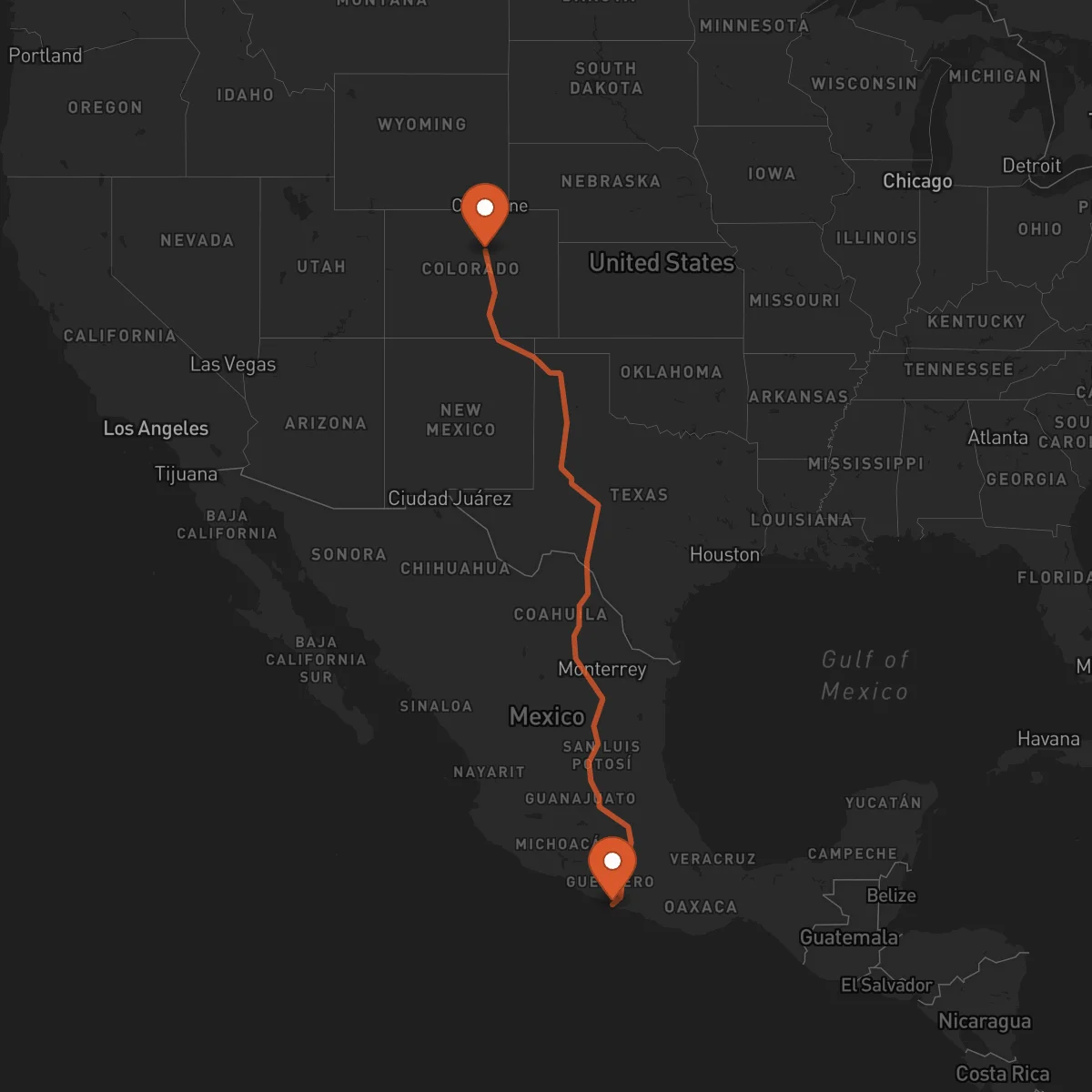
The Acapulco-Denver corridor represents a vital logistics link connecting the Pacific port of Acapulco, Guerrero, with the strategic inland hub of Denver, Colorado. This 2,591 km cross-border route traverses diverse terrain, from Mexico's Pacific coast through the central highlands and across the US border, ultimately reaching the Rocky Mountain region. The corridor serves as a critical artery for international trade, facilitating the movement of goods between Mexico's Pacific coast and the central United States.
The economic significance of this route is substantial, supporting industries on both sides of the border. Acapulco serves as a key maritime gateway for imports and exports, while Denver functions as a major distribution center for the Rocky Mountain region. The corridor is particularly important for industries such as automotive, electronics, agriculture, and manufacturing, with numerous companies relying on efficient transportation solutions to maintain their supply chains.
Key transportation infrastructure along this route includes Mexico's Federal Highway 95D connecting Acapulco to Mexico City, and major US interstates including I-25 and I-70 leading into Denver. The primary border crossing utilized is typically Laredo or El Paso, depending on specific routing requirements. Control Terrestre leverages its expertise in cross-border operations to navigate the complexities of customs procedures, documentation requirements, and regulatory compliance, ensuring seamless freight movement across international boundaries.
Services for this Route
Available services for the corridor Acapulco - Denver
 Origin
Acapulco, located on Mexico's Pacific coast in Guerrero state, serves as a strategic maritime gateway with significant logistics capabilities. The city's port facilities handle substantial cargo volumes, connecting Pacific trade routes with inland distribution networks. Acapulco's economy is diversified, with strong sectors in tourism, agriculture, and manufacturing. The region is known for producing tropical fruits, fish products, and various agricultural commodities that require specialized transportation solutions. The city's transportation infrastructure includes the port of Acapulco, an international airport, and well-developed highway connections to Mexico's central region via Federal Highway 95D and other arterial routes.
 Destination
Denver
Denver, Colorado stands as a major inland logistics hub in the United States, strategically positioned at the intersection of key transportation corridors in the Rocky Mountain region. The city's location provides unique advantages for distribution, serving as a gateway to the western United States and offering connectivity to both east-west and north-south freight routes. Denver's economy is robust and diversified, with strong presence in aerospace, telecommunications, energy, healthcare, and technology sectors. The metropolitan area hosts numerous warehouses, distribution centers, and logistics facilities. Transportation infrastructure is extensive, including Denver International Airport (one of the busiest in the US), an extensive rail network operated by Union Pacific and BNSF, and major interstate highways including I-70, I-25, and I-76.










