Acapulco to Arlington
Arlington → AcapulcoFTL freight transportation service between Acapulco and Arlington. Reliable logistics solutions for your business.
Route Description
Everything you need to know about the corridor Acapulco - Arlington
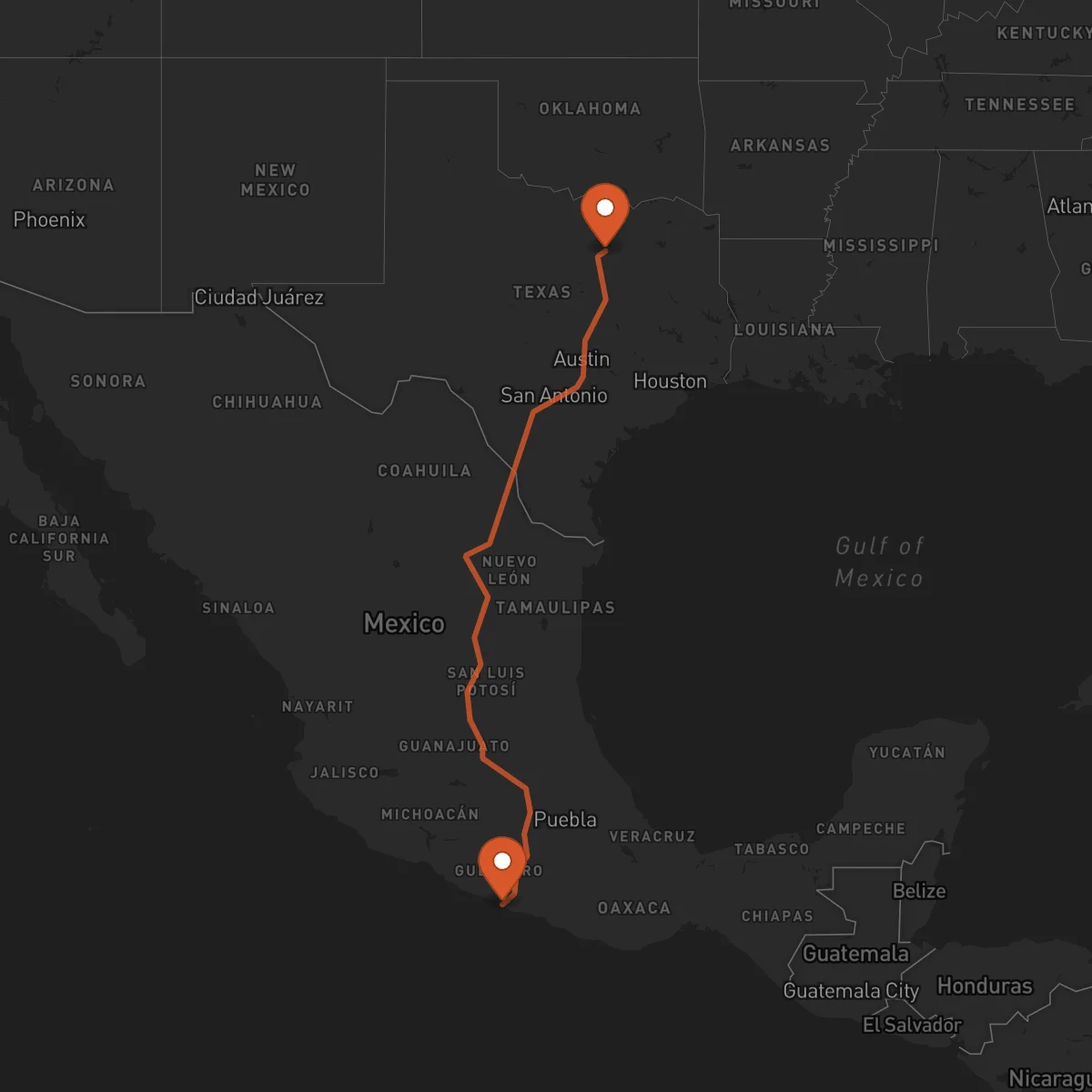
The Acapulco-Arlington corridor represents a vital logistics connection between the Pacific coast of Mexico and the heart of Texas. This strategic route spans approximately 1,787 kilometers, connecting one of Mexico's most important Pacific ports with a key industrial hub in the United States. The corridor facilitates the movement of diverse cargo types, from agricultural products and manufactured goods to automotive components and consumer products. Control Terrestre specializes in managing cross-border operations along this route, ensuring seamless transportation through our network of certified carriers and experienced logistics professionals.
Services for this Route
Available services for the corridor Acapulco - Arlington
 Origin
Acapulco, located on Mexico's Pacific coast in Guerrero state, serves as a crucial maritime gateway for international trade. The city's port handles significant volumes of cargo, particularly agricultural products, seafood, and manufactured goods destined for U.S. markets. Acapulco's strategic position allows for efficient consolidation of freight from southern and central Mexico, making it an ideal origin point for cross-border shipments. The region's transportation infrastructure includes well-maintained highways connecting to Mexico's interior and major ports equipped to handle containerized and bulk cargo.
 Destination
Arlington
Arlington, Texas, is strategically positioned in the Dallas-Fort Worth metropolitan area, one of the most dynamic economic regions in the United States. This location provides excellent access to major highways, rail connections, and distribution networks serving the central and southern U.S. markets. Arlington's proximity to major industrial centers, manufacturing facilities, and consumer markets makes it an ideal destination for cross-border freight. The area's robust logistics infrastructure supports efficient cargo distribution throughout Texas and beyond, making it a key node in North American supply chains.










