Until recently, tracking a shipment was limited to knowing where the truck was on the map. But in an ecosystem where Nearshoring has accelerated demand and precision is measured in seconds, knowing the location is no longer enough.
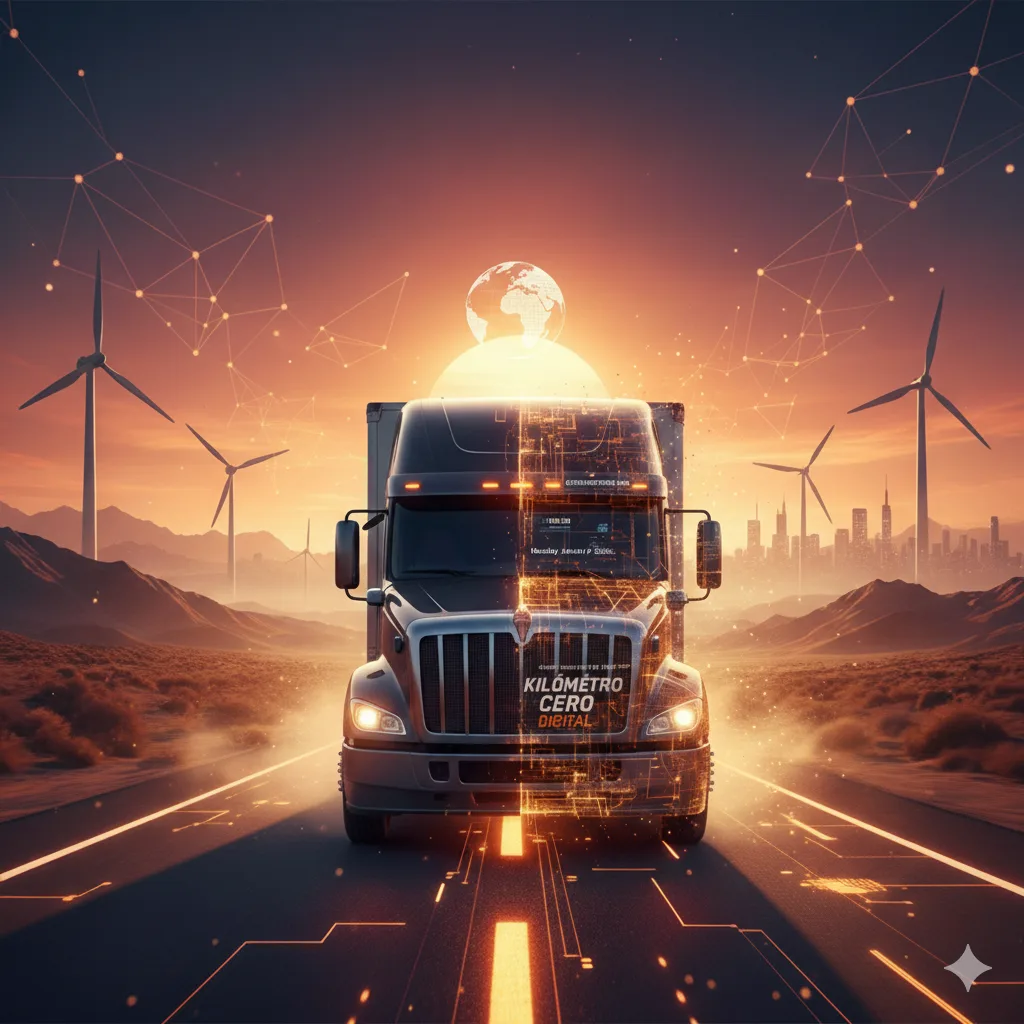
Today, the real challenge is total visibility before the engine starts. Welcome to the era of the Digital Kilometer Zero, a paradigm where cargo begins its journey in a virtual environment long before hitting the road.
1. WHAT IS A CARGO DIGITAL TWIN?
This isn't just an advanced GPS. A Digital Twin is an exact virtual replica of the goods, the container, and the planned route. In this technological evolution, we no longer just monitor the vehicle, but simulate critical variables such as:
Route Microclimates: Prediction of temperature changes affecting sensitive products.
Vibration Simulation: Damage prevention based on the actual pavement condition.
Intelligent Wait Times: Real-time analysis of flows in ports and customs.
This means we can predict a bottleneck on the Laredo or Ciudad Juárez border hours before it occurs, allowing for automated calculation of alternative routes.
2. PREDICTIVE EFFICIENCY: BEYOND REACTION
Traditional logistics has always been reactive: "the truck stopped, let's find out why." The Digital Kilometer Zero shifts the narrative towards proactivity. By integrating IoT sensors with predictive models, we achieve:
VIRTUAL LOAD OPTIMIZATION: Before loading the first pallet, the system determines the ideal distribution to improve aerodynamics and reduce fuel consumption.
PRE-CUSTOMS VALIDATION: Digital documentation is linked to the cargo twin, allowing procedures to be streamlined through remote validations before physical arrival at the control point.
3. THE HUMAN FACTOR: LESS STRESS FOR THE OPERATOR
In our vision of being the most human company in transportation, we understand that technology must serve people. The Digital Kilometer Zero doesn't seek to replace the operator, but to protect them.
By eliminating route uncertainties through prior simulations, we drastically reduce mental fatigue and driver stress. An operator who knows exactly what to expect on every kilometer and has the support of a digitally optimized route is an operator who travels safer and returns home well.
4. SUSTAINABILITY OF PRECISION AND "ZERO EMPTY MILES"
Every kilometer traveled without a load is a negative impact on the planet and an unnecessary cost. Digital Twins allow us to achieve the goal of green logistics. By synchronizing supply and demand on a global virtual map, we ensure that every return trip is a business opportunity, maximizing energy efficiency and reducing the carbon footprint of our customers.
WHAT TO CONSIDER?
In 2026, logistical excellence will not be measured only by the power of the engines, but by the quality and depth of the data. At Control Terrestre, we continue to drive intelligent logistics that is born in code and materialized in perfect delivery. Because the future of transportation is not only in the hands of those who drive, but in the vision of those who anticipate the road.