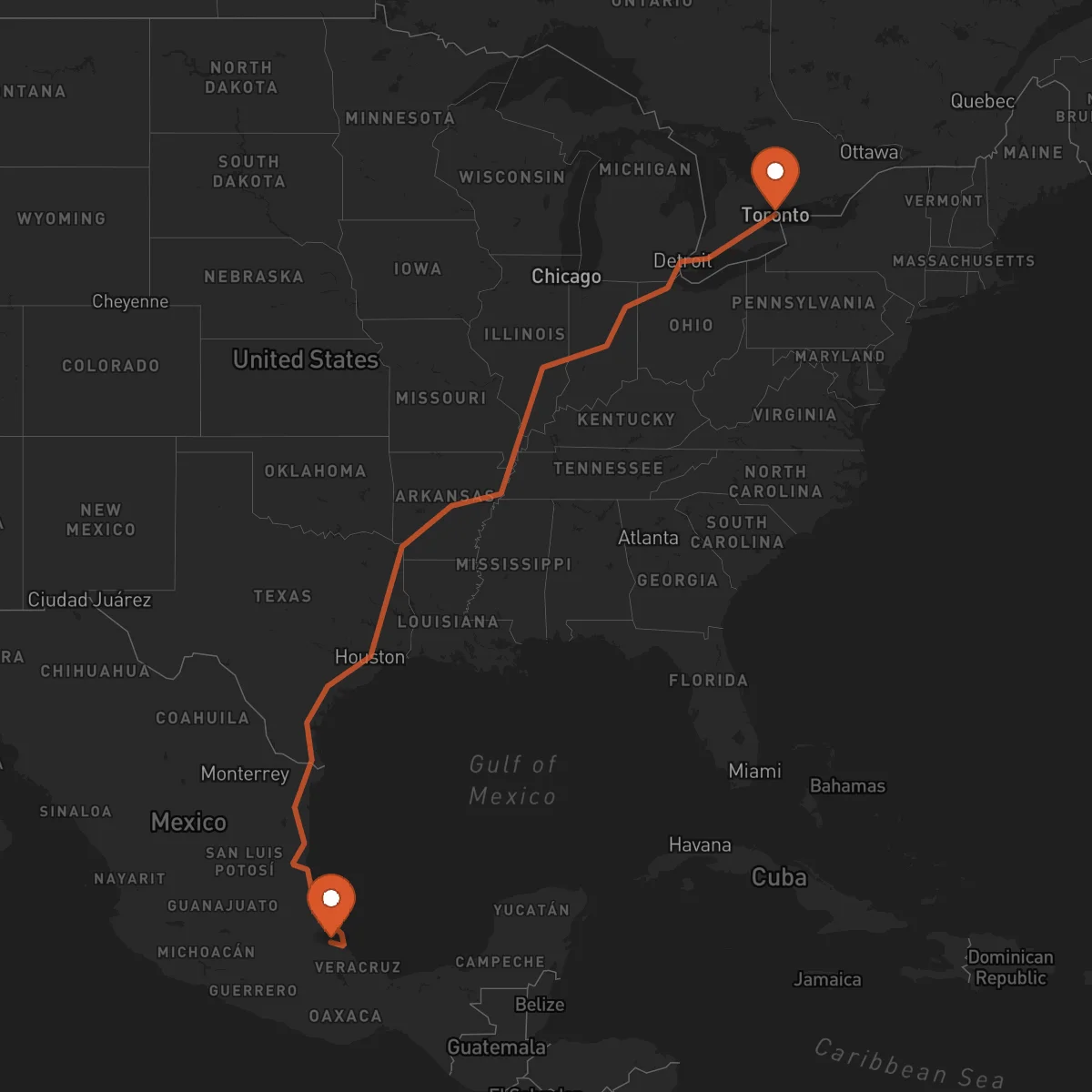
Xalapa to Toronto
Toronto → XalapaFTL freight transportation service between Xalapa and Toronto. Reliable logistics solutions for your business.
Route Description
Everything you need to know about the corridor Xalapa - Toronto
The Xalapa-Toronto corridor represents a vital trade connection between Mexico's Gulf Coast and Canada's economic powerhouse. This 3,138 km cross-border route links Veracruz's industrial corridor with Toronto's manufacturing and distribution hubs, facilitating the movement of goods between North America's three major economies. The corridor traverses diverse terrain and crosses multiple state and provincial lines, making it essential for companies engaged in international trade between Mexico, the United States, and Canada.
The economic significance of this route cannot be overstated. Xalapa and the surrounding Veracruz region serve as gateways to Mexico's manufacturing sector, particularly in automotive, electronics, and food processing industries. Meanwhile, Toronto stands as Canada's financial and industrial capital, hosting major automotive manufacturers, technology companies, and consumer goods distributors. This complementary economic relationship drives substantial freight volume along the corridor, with businesses requiring reliable transportation solutions to maintain their supply chains.
Key transportation infrastructure along this route includes Mexico's Federal Highway 180 connecting Xalapa to the U.S. border, major interstate highways through the United States, and Ontario's 400-series highways leading to Toronto. The corridor typically crosses at Laredo/Nuevo Laredo or El Paso/Juárez, depending on specific routing requirements. Control Terrestre's expertise in cross-border operations ensures seamless customs clearance and compliance with all regulatory requirements, minimizing delays and optimizing transit times for our clients' shipments.
Services for this Route
Available services for the corridor Xalapa - Toronto
 Origin
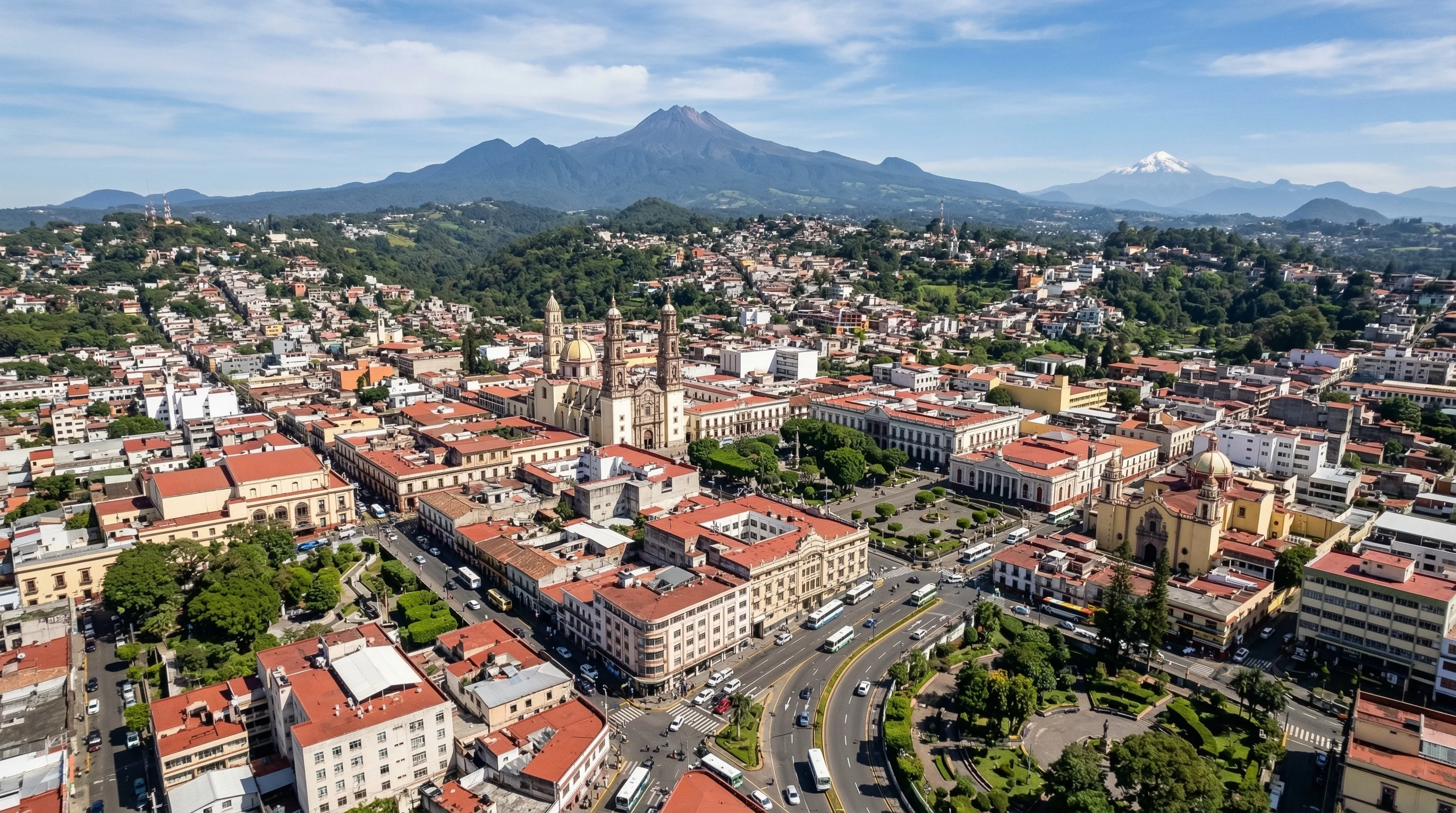
Xalapa, the capital of Veracruz state, occupies a strategic position in Mexico's logistics network. Located in the central-eastern region of the country, it serves as a gateway to Mexico's Gulf Coast ports, particularly Veracruz and Coatzacoalcos. The city benefits from its proximity to major industrial centers and its connection to key transportation corridors that link central Mexico with international markets. Xalapa's elevation and climate make it an ideal distribution point for temperature-sensitive goods requiring careful handling.
The region surrounding Xalapa hosts diverse economic activities, with particular strength in automotive manufacturing, electronics production, and food processing. Major industrial parks in nearby Veracruz and Córdoba attract multinational corporations, creating substantial freight demand. The area's agricultural sector, including coffee and tropical fruit production, also generates significant cargo volumes. Transportation infrastructure includes access to Federal Highway 180, connections to Mexico's rail network, and proximity to Veracruz's port facilities, providing multiple options for freight movement.
 Destination
Toronto stands as Canada's premier logistics and distribution center, offering unparalleled connectivity within North America. Located in southern Ontario, the city provides direct access to major U.S. markets via the Windsor-Detroit corridor and serves as a critical node in Canada's transportation network. Toronto's Pearson International Airport, extensive highway system including the 401 and 407 expressways, and rail connections to both coasts make it an ideal destination for freight distribution. The city's strategic location allows for efficient distribution throughout Ontario and beyond.
The Toronto metropolitan area hosts a diverse industrial base, with automotive manufacturing leading the way through major facilities operated by Ford, GM, and Stellantis. The region also excels in technology, aerospace, pharmaceuticals, and consumer goods production. Toronto's role as Canada's financial capital attracts numerous corporate headquarters, creating substantial business-to-business freight demand. The city's robust warehousing and distribution infrastructure, including numerous cross-dock facilities and temperature-controlled warehouses, supports efficient freight handling and last-mile delivery operations.










