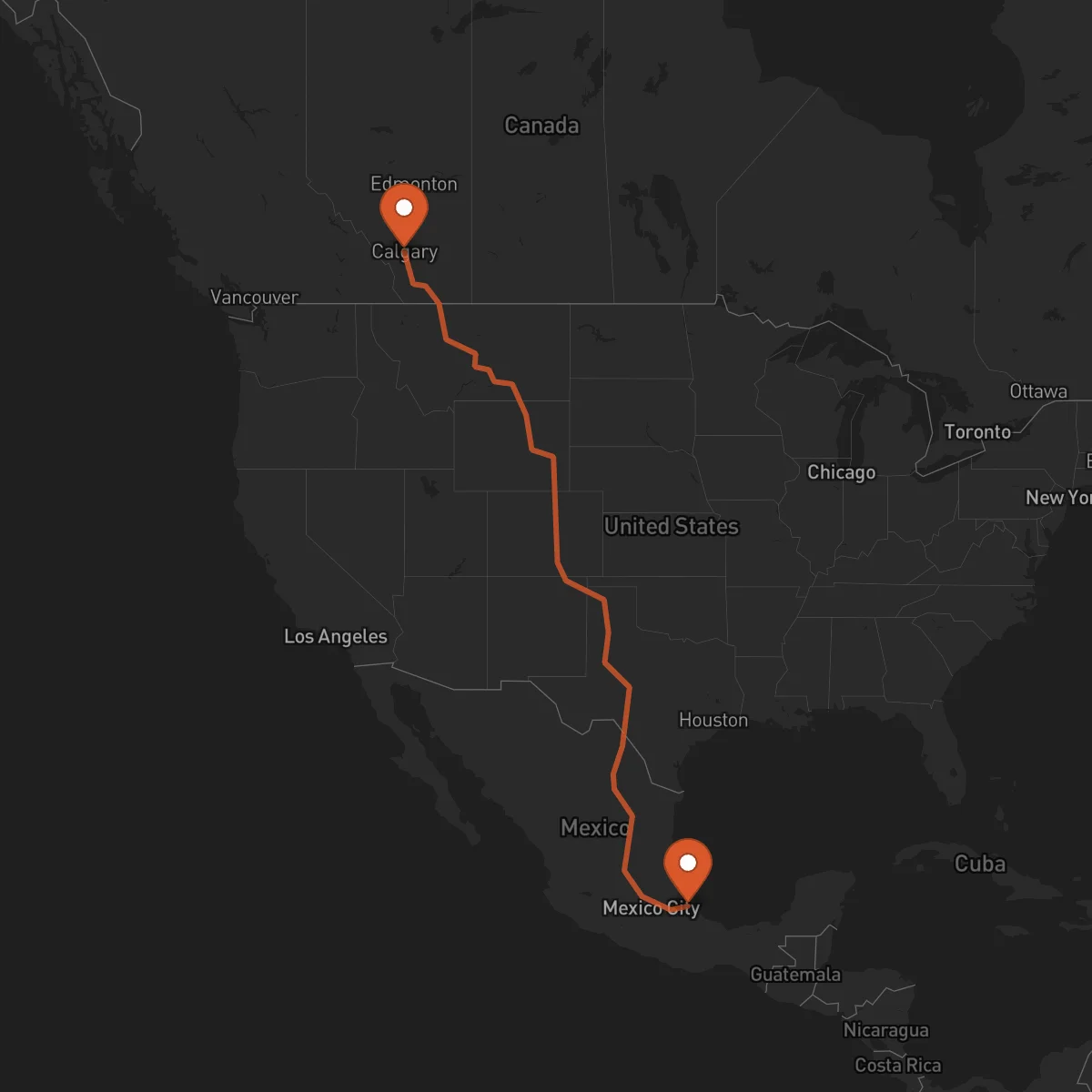
Xalapa to Calgary
Calgary → XalapaFTL freight transportation service between Xalapa and Calgary. Reliable logistics solutions for your business.
Route Description
Everything you need to know about the corridor Xalapa - Calgary
The logistics corridor connecting Xalapa, Veracruz, to Calgary, Alberta, represents a vital cross-border freight transportation route spanning approximately 3,812 kilometers. This corridor links Mexico's strategic Gulf Coast to Canada's energy and industrial heartland, facilitating essential trade flows between North American partners. The route traverses diverse terrain and crosses multiple international borders, requiring specialized expertise in cross-border logistics and regulatory compliance.
The economic significance of this corridor cannot be overstated. Xalapa serves as a crucial node in Mexico's export network, particularly for automotive parts, electronics, and agricultural products destined for Canadian markets. Meanwhile, Calgary's robust economy, centered on energy, technology, and manufacturing sectors, creates substantial demand for imports from Mexico. The corridor supports just-in-time supply chains that are critical for both economies, enabling manufacturers to maintain lean inventory while ensuring reliable product delivery.
Key industries utilizing this transportation corridor include automotive manufacturing, where components flow between Mexican production facilities and Canadian assembly plants; energy sector equipment moving between Calgary's oil and gas companies and their Mexican suppliers; and agricultural products where Mexican produce reaches Canadian markets. The route primarily follows major highways including Mexico's Federal Highway 180, connecting to US Interstate systems, and Canadian Highway networks leading into Calgary.
Control Terrestre specializes in managing the complexities of this cross-border corridor. Our C-TPAT and FAST certified carriers ensure expedited customs clearance at border crossings such as Laredo/Nuevo Laredo and Coutts/International Peace Garden. We provide end-to-end visibility, temperature-controlled options for perishables, and dedicated full truckload services that maintain the integrity of time-sensitive shipments throughout the journey.
Services for this Route
Available services for the corridor Xalapa - Calgary
 Origin
Xalapa, the capital of Veracruz state, occupies a strategic position in Mexico's logistics network. Located in the central-eastern region of Mexico, Xalapa benefits from proximity to the Port of Veracruz, one of the country's busiest maritime gateways. This advantageous location provides seamless connectivity between ocean freight and overland transportation, making it an ideal origin point for cross-border shipments. The city's elevation and climate create unique considerations for freight handling, particularly for temperature-sensitive cargo.
The region surrounding Xalapa hosts diverse economic activities including coffee production, tropical fruit cultivation, and increasingly, advanced manufacturing. The presence of several universities and research institutions has fostered a growing technology sector, while traditional industries such as textiles and furniture manufacturing continue to thrive. Transportation infrastructure includes access to Federal Highway 180, connecting to major north-south routes, and proximity to Mexico's extensive rail network, providing multiple modal options for freight consolidation.
 Destination
Calgary stands as a major logistics hub in Western Canada, strategically positioned at the crossroads of national transportation networks. Located in Alberta's prairie region, Calgary offers direct access to the Trans-Canada Highway and proximity to the US border, making it an ideal gateway for international trade. The city's elevation and continental climate create specific freight handling requirements, particularly for temperature-controlled shipments during harsh winter months.
The Calgary metropolitan area drives one of Canada's strongest regional economies, with energy (particularly oil and gas), technology, manufacturing, and agriculture as key sectors. The presence of major corporate headquarters and a skilled workforce has attracted substantial investment in advanced manufacturing and research facilities. Calgary's transportation infrastructure includes Calgary International Airport, extensive rail connections via Canadian Pacific Railway, and a well-developed highway network that facilitates efficient distribution throughout Western Canada and into the United States.










