Xalapa to Chicago
Chicago → XalapaFTL freight transportation service between Xalapa and Chicago. Reliable logistics solutions for your business.
Route Description
Everything you need to know about the corridor Xalapa - Chicago
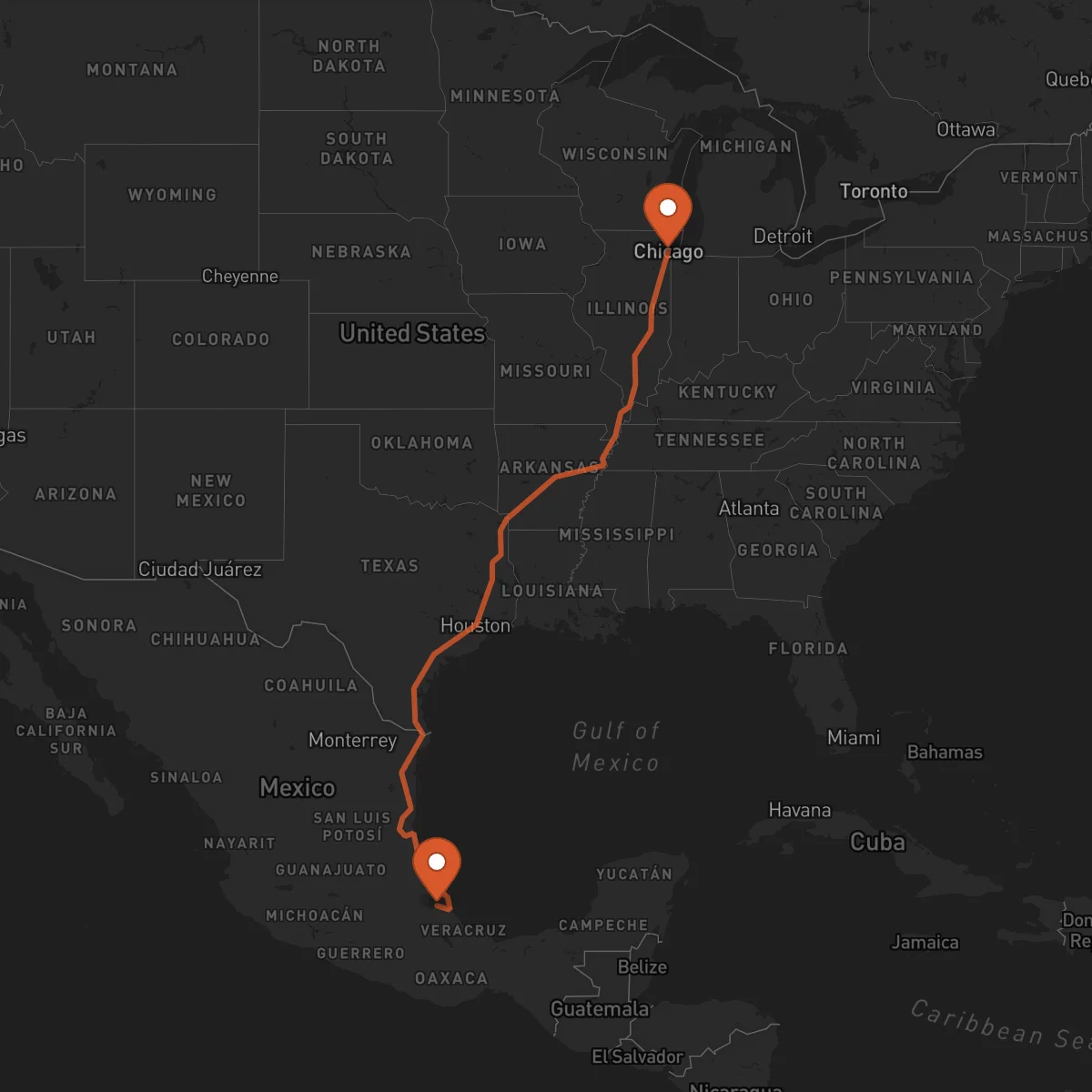
The logistics corridor between Xalapa, Veracruz and Chicago, Illinois represents a vital commercial artery connecting Mexico's southeastern industrial hub with the United States' third-largest metropolitan area. This cross-border route spans approximately 2,634 kilometers, traversing diverse terrain and economic zones that facilitate the movement of critical goods between North American markets. The corridor serves as a strategic link between Mexico's automotive and manufacturing sectors with Chicago's vast distribution networks and industrial base.
The route follows major transportation infrastructure including Mexico's Federal Highway 180 and Federal Highway 190, connecting through key border crossings such as Laredo or Nuevo Laredo. From there, interstate highways 35 and 55 provide direct access to Chicago's metropolitan area. This corridor is particularly significant for industries including automotive parts, electronics, agricultural products, and manufactured goods, supporting the integrated supply chains that characterize North American trade.
Control Terrestre facilitates seamless operations along this corridor through our specialized cross-border expertise and certified transportation partners. Our C-TPAT-certified carriers ensure expedited customs processing, while our experience with cross-border documentation and regulatory compliance minimizes delays. We provide dedicated full truckload services with real-time tracking capabilities, ensuring your cargo moves efficiently from origin to destination while maintaining the highest standards of security and reliability.
Services for this Route
Available services for the corridor Xalapa - Chicago
 Origin
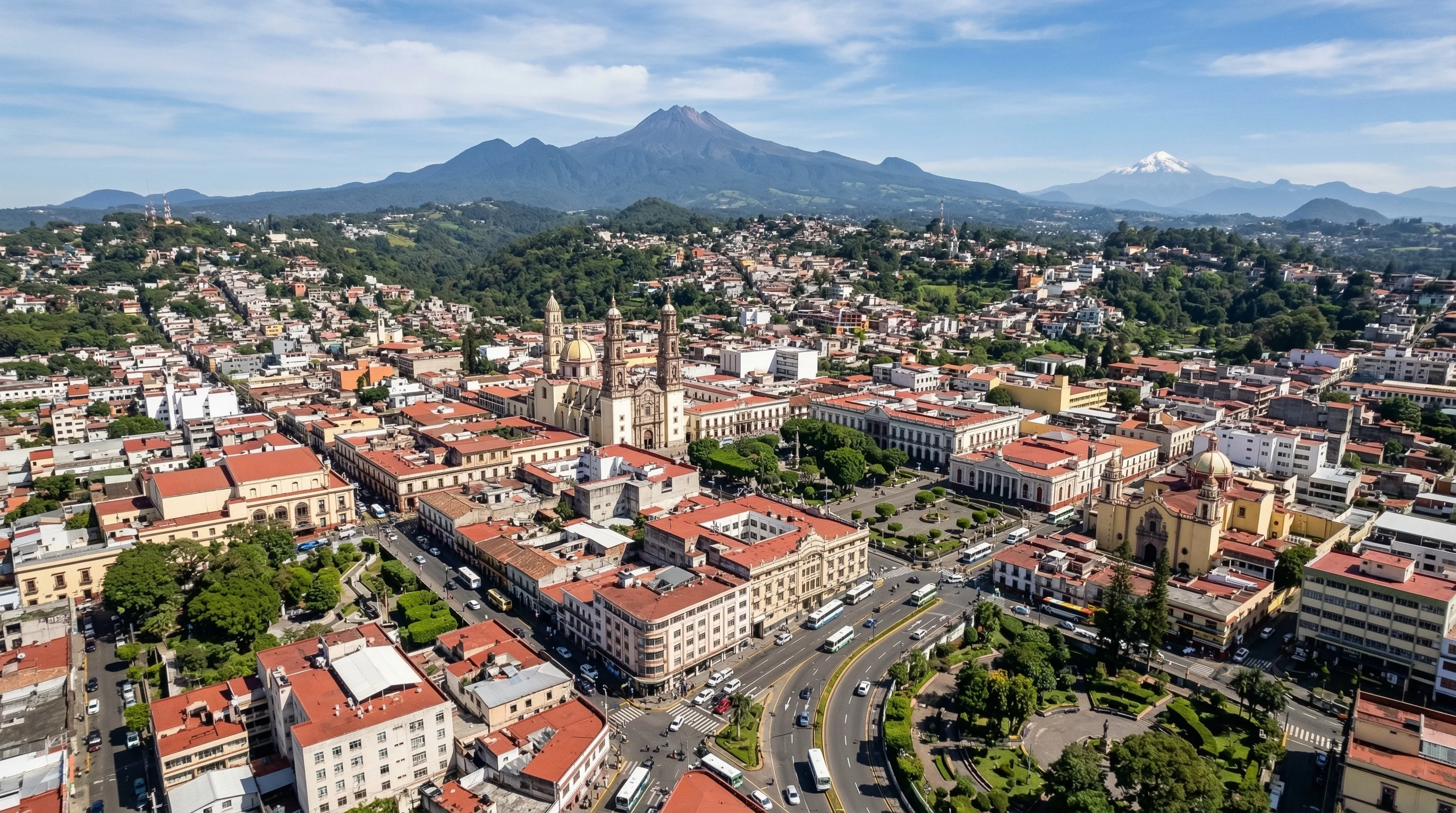
Xalapa, the capital of Veracruz state, serves as a strategic logistics hub in southeastern Mexico with its advantageous geographic position and robust infrastructure. Located in the highlands of the region, Xalapa provides access to major industrial centers including Veracruz port, Coatzacoalcos, and Puebla, creating a network of distribution opportunities. The city's economy is characterized by diverse sectors including education, services, and manufacturing, with particular strength in the automotive, electronics, and agricultural industries.
The transportation infrastructure around Xalapa includes access to Federal Highways 180 and 190, connecting to major ports and industrial corridors. The proximity to Veracruz port, one of Mexico's busiest maritime terminals, enhances Xalapa's role in international trade. The region's manufacturing parks and industrial zones produce a variety of goods destined for both domestic and international markets, making efficient ground transportation essential for maintaining competitive supply chains.
 Destination
Chicago
Chicago stands as a premier logistics and transportation hub in North America, strategically positioned to serve as a gateway to the U.S. Midwest and beyond. The city's geographic location at the intersection of major rail lines, interstate highways, and proximity to the Great Lakes creates unparalleled distribution capabilities. Chicago's economy is diverse and robust, with dominant sectors including manufacturing, finance, technology, and professional services, supported by one of the world's largest transportation and logistics networks.
The metropolitan area boasts extensive transportation infrastructure including O'Hare International Airport, multiple Class I rail yards, and a comprehensive highway system with direct access to interstates 55, 57, 65, 88, and 94. Chicago's intermodal facilities and warehousing districts make it an ideal destination for cross-border freight, with the capacity to handle large volumes of goods efficiently. The city's role as a major distribution center for the entire Midwest region ensures that cargo arriving from Mexico can be quickly integrated into broader U.S. supply chains.










