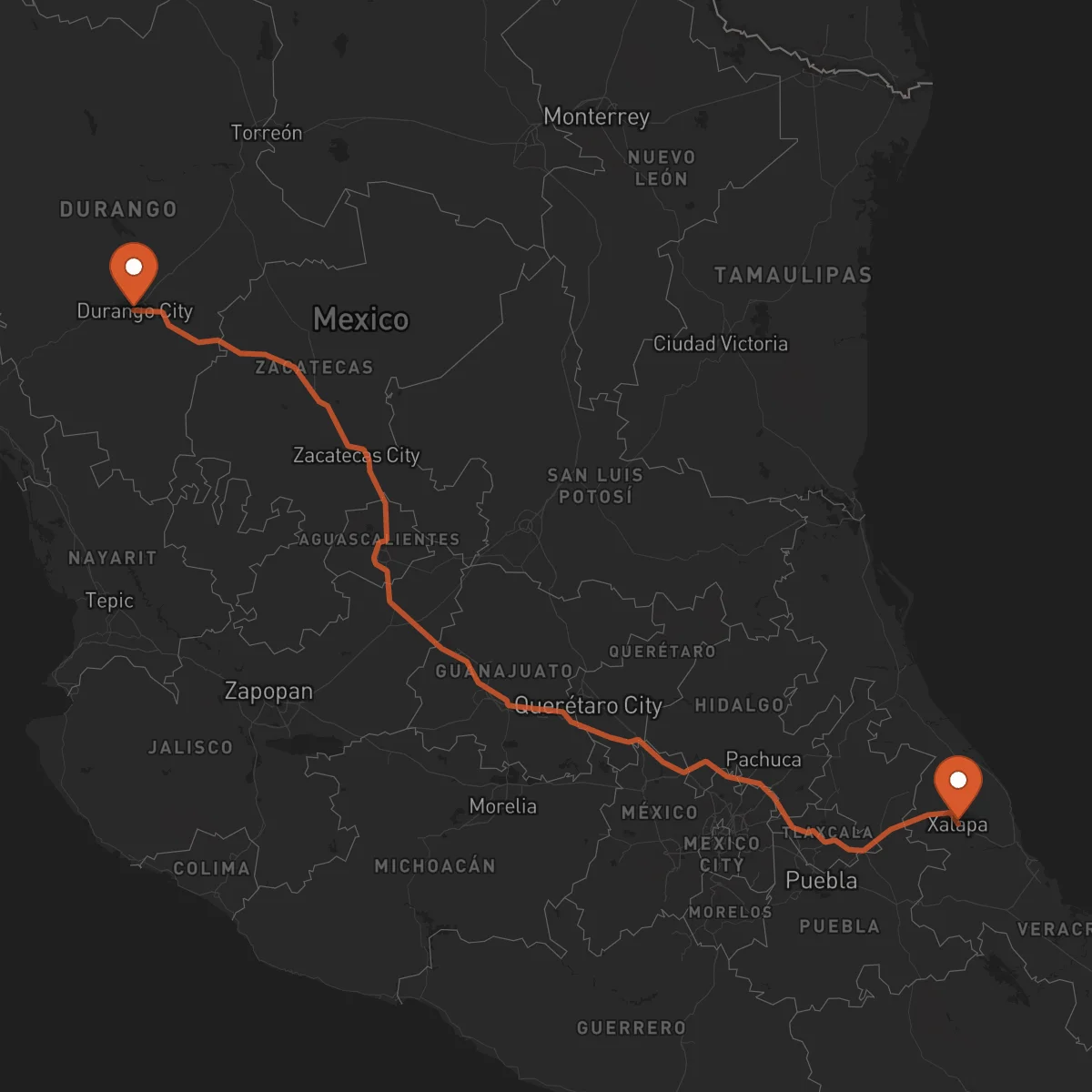
Xalapa to Durango
Durango → XalapaFTL freight transportation service between Xalapa and Durango. Reliable logistics solutions for your business.
Route Description
Everything you need to know about the corridor Xalapa - Durango
The logistics corridor connecting Xalapa, Veracruz to Durango, Durango represents a vital transportation route spanning approximately 942 kilometers across central Mexico. This domestic corridor links the Gulf Coast region with the Sierra Madre Occidental, facilitating the movement of goods between two economically significant regions. The route traverses diverse terrain, from the tropical highlands of Veracruz through the central plateau to the mountainous areas of Durango, making it a strategic link for national commerce.
The corridor serves as a crucial artery for industries including automotive, mining, agriculture, and manufacturing. Xalapa, as the capital of Veracruz, is a hub for agricultural products, coffee, and flowers, while Durango is known for its mining operations, particularly silver and gold extraction, as well as agricultural production including livestock and dairy. The route connects these complementary economic activities, enabling the efficient flow of raw materials to manufacturing centers and finished products to markets.
Key transportation infrastructure along this corridor includes federal highways such as the México-Tuxpan and México-Laredo routes, which provide reliable connections between these cities. Control Terrestre leverages this infrastructure to offer specialized FTL transportation services, ensuring that cargo moves efficiently and securely across this challenging terrain. Our experienced network of carriers understands the specific requirements of this route, from navigating mountain passes to managing weather conditions that can affect transit times.
Services for this Route
Available services for the corridor Xalapa - Durango
 Origin
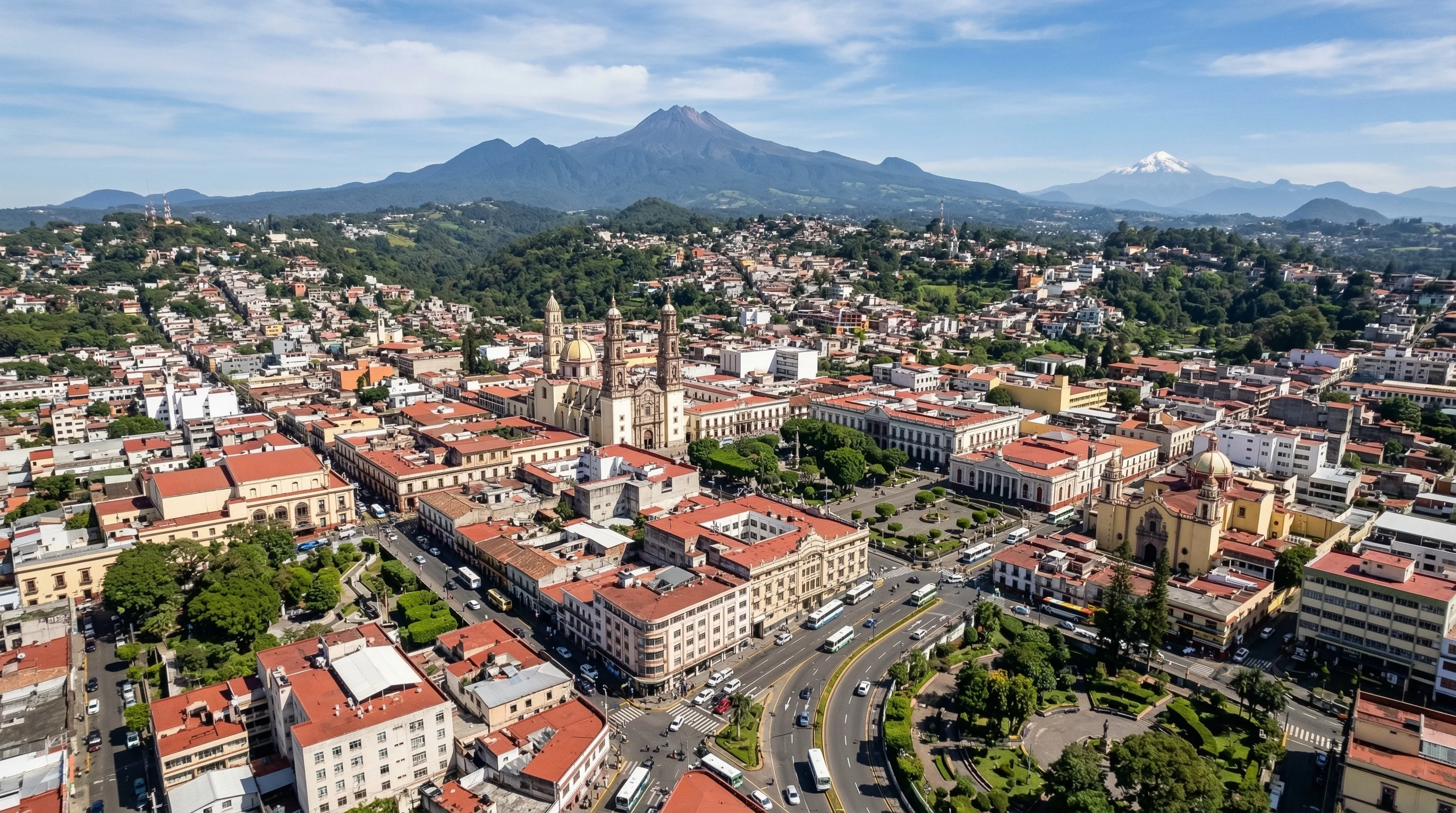
Xalapa, the capital city of Veracruz, is strategically positioned in the tropical highlands of eastern Mexico, approximately 500 kilometers from Mexico City. This location provides excellent connectivity to both the Gulf Coast ports and the central highlands, making it a crucial node in Mexico's logistics network. The city benefits from proximity to major port facilities in Veracruz and Coatzacoalcos, facilitating efficient import and export operations. Xalapa's elevation and climate create ideal conditions for agriculture, particularly coffee cultivation and flower production, which are significant contributors to the local economy.
The transportation infrastructure in Xalapa includes well-maintained federal highways connecting to major cities and ports. The city is served by the Veracruz international airport and has access to the extensive rail network operated by Ferromex. These multimodal transportation options make Xalapa an attractive origin point for freight operations, particularly for time-sensitive cargo that requires efficient ground transportation to northern destinations.
 Destination
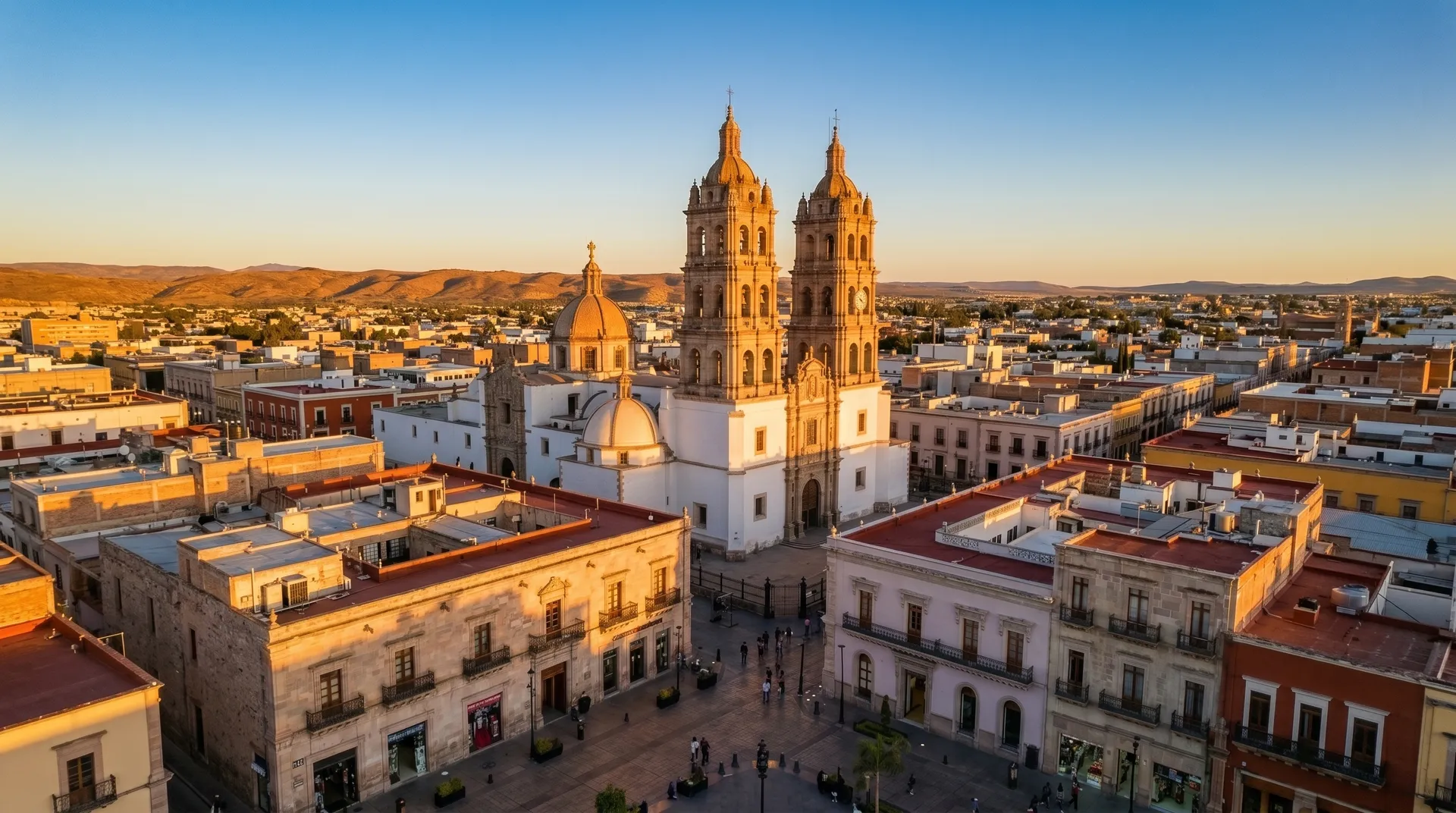
Durango, the capital of Durango state, is strategically located in the Sierra Madre Occidental, serving as a gateway to Mexico's northern mining and agricultural regions. The city's position in the central-western part of the country provides excellent connectivity to both Pacific ports and northern border crossings. Durango is renowned for its mining industry, particularly silver, gold, and zinc extraction, as well as its agricultural sector, which includes extensive livestock operations and dairy production. The region's economic importance is complemented by growing manufacturing and industrial activities.
The city benefits from a robust transportation infrastructure, including the Durango-Mazatlán highway, which connects to the Pacific coast, and federal routes linking to northern industrial centers. Durango's airport provides air cargo services, while the surrounding region is served by rail connections through Ferromex's network. This comprehensive transportation system makes Durango an ideal destination for FTL freight services, supporting the movement of both raw materials and finished products to and from this economically vital region.










