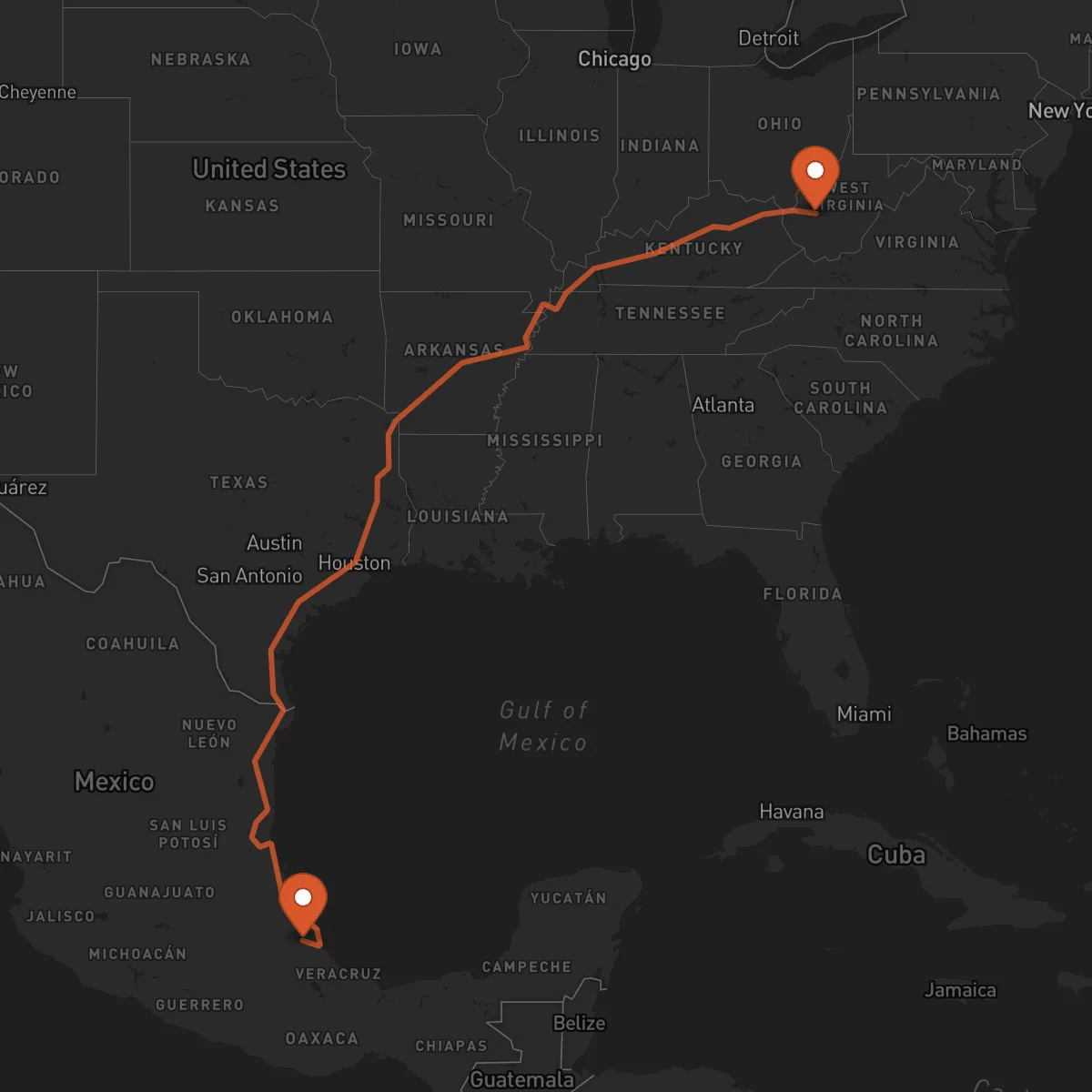
Xalapa to Charleston
Charleston → XalapaFTL freight transportation service between Xalapa and Charleston. Reliable logistics solutions for your business.
Route Description
Everything you need to know about the corridor Xalapa - Charleston
The Xalapa-Charleston corridor represents a strategic connection between the vibrant industrial hub of Veracruz and the key logistics center in West Virginia. This cross-border route spans approximately 2,558 km, traversing diverse landscapes and economic zones that make it essential for companies seeking efficient freight transportation between Mexico and the United States. The corridor facilitates the movement of goods through major transportation arteries, connecting the Gulf of Mexico's port infrastructure with the industrial heartland of the Appalachian region.
The economic significance of this corridor lies in its ability to link manufacturing centers in Veracruz with distribution networks throughout the eastern United States. Veracruz's industrial base, particularly in automotive, electronics, and agricultural products, finds a natural market in West Virginia's manufacturing and distribution sectors. The route serves as a vital supply chain link for companies operating in both countries, enabling just-in-time delivery and maintaining competitive advantage in today's fast-paced market environment.
Control Terrestre specializes in managing the complexities of this cross-border corridor, ensuring seamless freight movement from origin to destination. Our expertise in handling customs documentation, regulatory compliance, and specialized cargo requirements makes us the ideal partner for companies operating on this route. We maintain strategic partnerships with certified carriers who understand the unique challenges of cross-border transportation, providing reliable door-to-door service that keeps your supply chain running smoothly.
Services for this Route
Available services for the corridor Xalapa - Charleston
 Origin
Xalapa, the capital city of Veracruz, serves as a strategic logistics hub in eastern Mexico, offering excellent connectivity to major ports and industrial centers. The city's location provides access to the Port of Veracruz, one of Mexico's busiest maritime terminals, facilitating efficient international trade operations. Xalapa's surrounding region is characterized by a strong industrial base, particularly in automotive manufacturing, electronics production, and agricultural processing, making it a crucial origin point for diverse freight movements.
The transportation infrastructure in and around Xalapa includes modern highways connecting to Mexico's federal road network, ensuring reliable access to border crossings and major distribution centers. The region benefits from proximity to industrial parks and manufacturing facilities that generate substantial freight volume, particularly for companies engaged in export activities to the United States. This infrastructure, combined with the area's economic diversity, positions Xalapa as an ideal starting point for cross-border freight operations.
 Destination
Charleston
Charleston, West Virginia, stands as a strategic logistics center in the eastern United States, offering excellent connectivity to major markets along the East Coast and Midwest. The city's location provides access to an extensive network of interstate highways, rail connections, and proximity to major distribution hubs, making it an ideal destination for freight operations. Charleston's economic landscape includes strong manufacturing, healthcare, and retail sectors, creating consistent demand for reliable freight transportation services.
The region's transportation infrastructure supports efficient freight movement through well-maintained highways and proximity to major logistics centers in neighboring states. Charleston's industrial base, particularly in manufacturing and distribution, generates substantial freight volume that requires specialized handling and timely delivery. The city's strategic position within the Appalachian region makes it a crucial node in the supply chain for companies operating throughout the eastern United States, especially those requiring cross-border freight services from Mexico.










