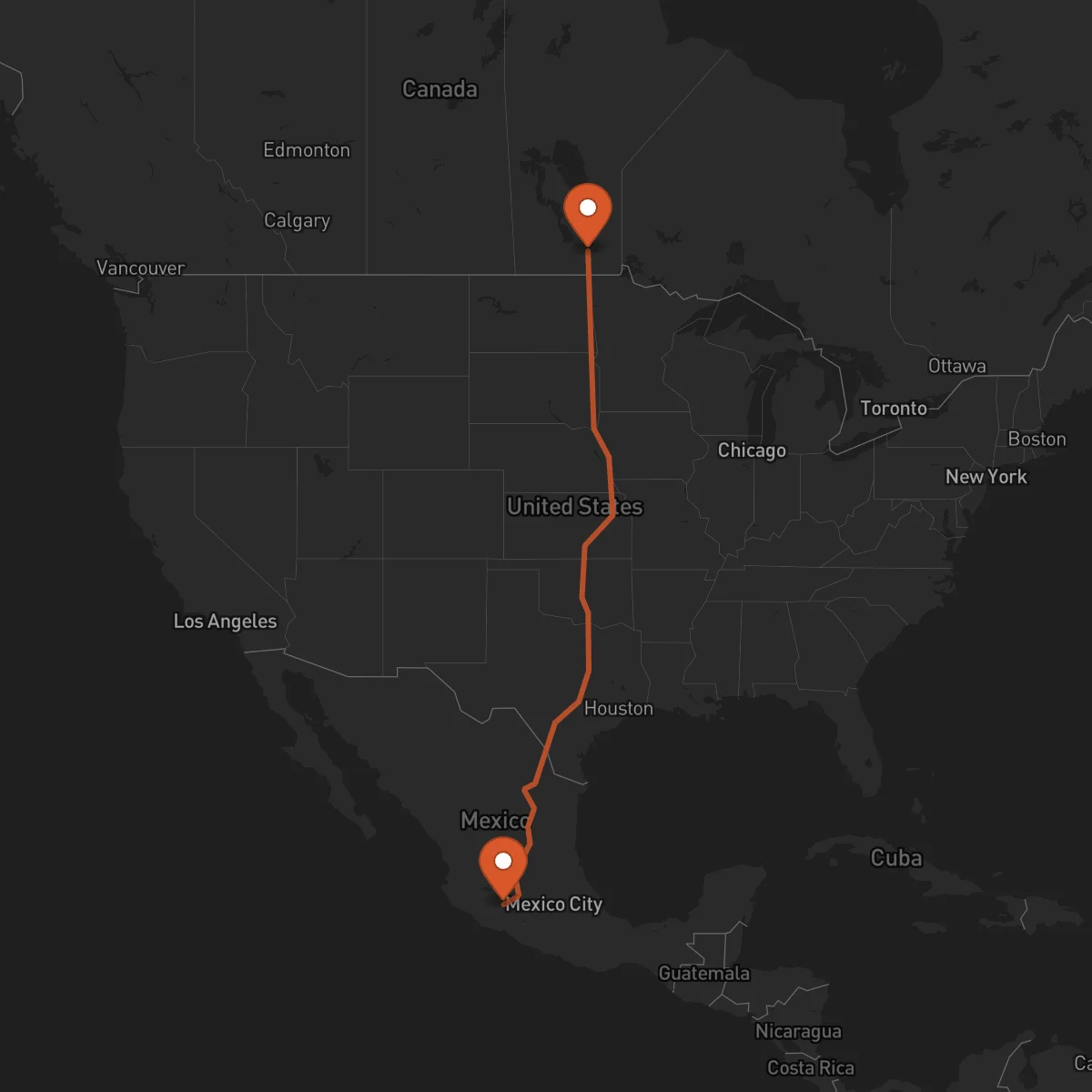
Winnipeg to Uruapan
Uruapan → WinnipegFTL freight transportation service between Winnipeg and Uruapan. Reliable logistics solutions for your business.
Route Description
Everything you need to know about the corridor Winnipeg - Uruapan
The Winnipeg to Uruapan corridor represents a vital trade connection between Canada and Mexico, spanning approximately 3,418 kilometers through the heart of North America. This cross-border route links Manitoba's capital with one of Michoacán's most important industrial cities, facilitating the movement of goods between two distinct economic regions. The corridor traverses diverse landscapes and crosses multiple jurisdictions, making it a complex yet essential trade artery for companies operating between Canada and Mexico.
The economic significance of this route extends beyond its geographic span. Winnipeg serves as a major distribution hub for Western Canada, while Uruapan is a key industrial center in central Mexico, known for its agricultural processing and manufacturing sectors. This complementary economic relationship creates substantial freight demand, with Canadian exports including machinery, agricultural products, and manufactured goods flowing south, while Mexican products such as processed foods, automotive components, and consumer goods move north.
Transportation along this corridor relies on a network of major highways, including the CANAMEX Corridor and Mexican Federal Highways. The primary border crossing at Laredo/Nuevo Laredo serves as the main gateway, where freight undergoes customs clearance and inspection. Control Terrestre's expertise in cross-border operations ensures seamless transitions through these critical checkpoints, with our C-TPAT and FAST certifications facilitating expedited processing. Our dedicated team manages all documentation requirements and coordinates with customs brokers to minimize delays and ensure compliance with both Canadian and Mexican regulations.
Services for this Route
Available services for the corridor Winnipeg - Uruapan
 Origin
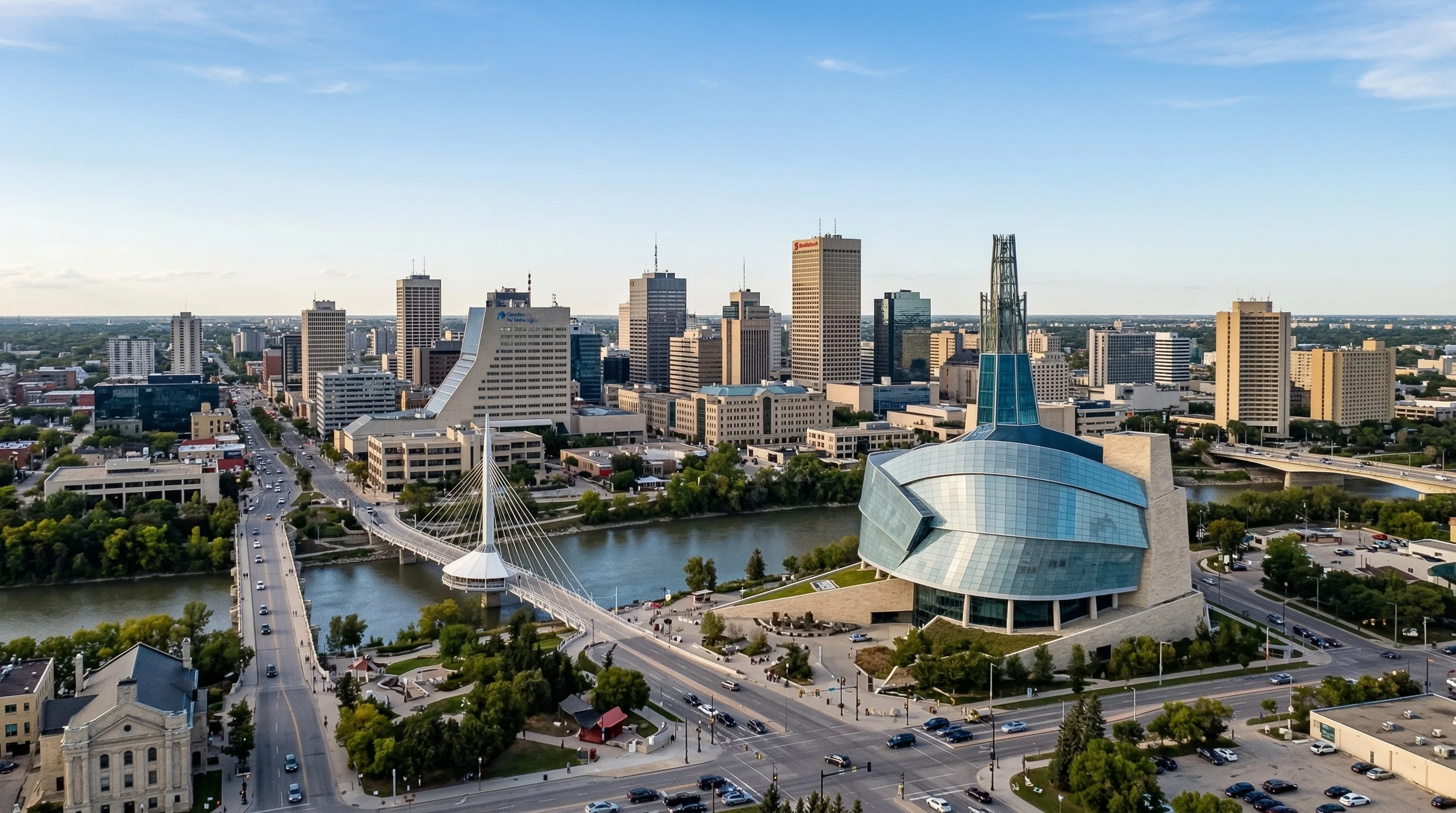
Winnipeg, Manitoba serves as a strategic logistics hub for Western Canada, positioned at the confluence of the Red and Assiniboine rivers. The city's central location in North America makes it an ideal distribution point, with excellent connectivity to major Canadian markets and US border crossings. Winnipeg's transportation infrastructure includes the Winnipeg James Armstrong Richardson International Airport, extensive rail connections through Canadian National and Canadian Pacific railways, and a well-developed highway network including the Trans-Canada Highway and Perimeter Highway.
The city's economy is diverse, with strong sectors in manufacturing, agriculture, aerospace, and technology. Winnipeg is home to major food processing facilities, including those of Maple Leaf Foods and Cargill, as well as growing advanced manufacturing and IT industries. The Port of Churchill provides unique access to Arctic shipping routes, while the city's central location makes it a natural consolidation point for freight moving between Western Canada and US or Mexican markets.
 Destination
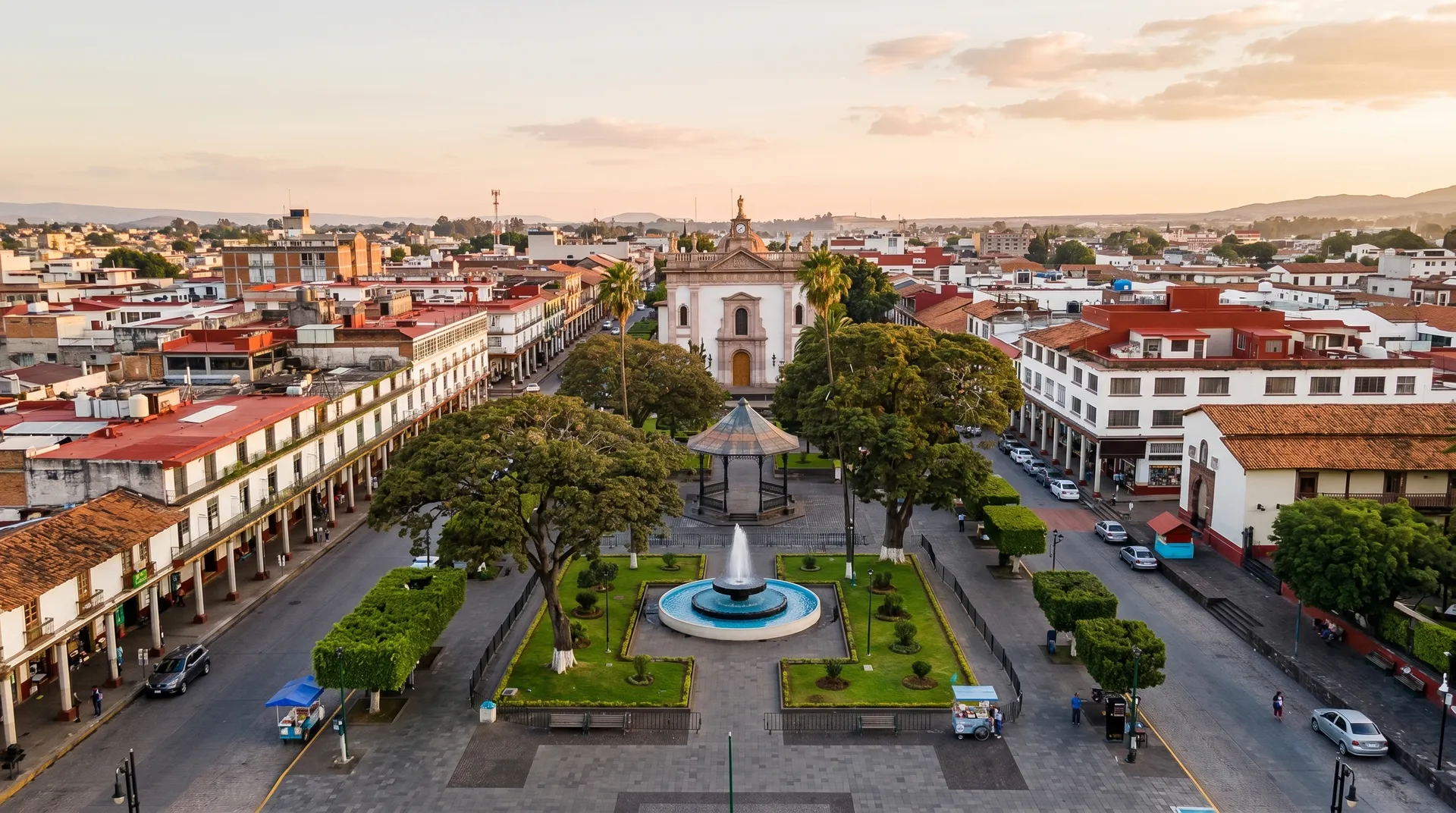
Uruapan, Michoacán is strategically located in central-western Mexico, serving as a key industrial and commercial center in the region. The city sits at the intersection of major transportation routes, including Mexican Federal Highway 15, which connects it to the Pacific coast and major inland cities. Uruapan's proximity to the Port of Lázaro Cárdenas, one of Mexico's most important cargo ports, provides efficient access to international maritime shipping, while its central location facilitates distribution throughout the Mexican market.
The local economy is characterized by a strong agricultural processing industry, with Uruapan known as the avocado capital of the world. The city hosts numerous food processing plants, packaging facilities, and agricultural export operations. Additionally, Uruapan has developed significant manufacturing capabilities, particularly in automotive components, textiles, and consumer goods production. The presence of industrial parks and a skilled workforce has attracted both domestic and international companies, creating a robust demand for reliable freight transportation services to and from the region.










