Winnipeg to Calgary
Calgary → WinnipegFTL freight transportation service between Winnipeg and Calgary. Reliable logistics solutions for your business.
Route Description
Everything you need to know about the corridor Winnipeg - Calgary
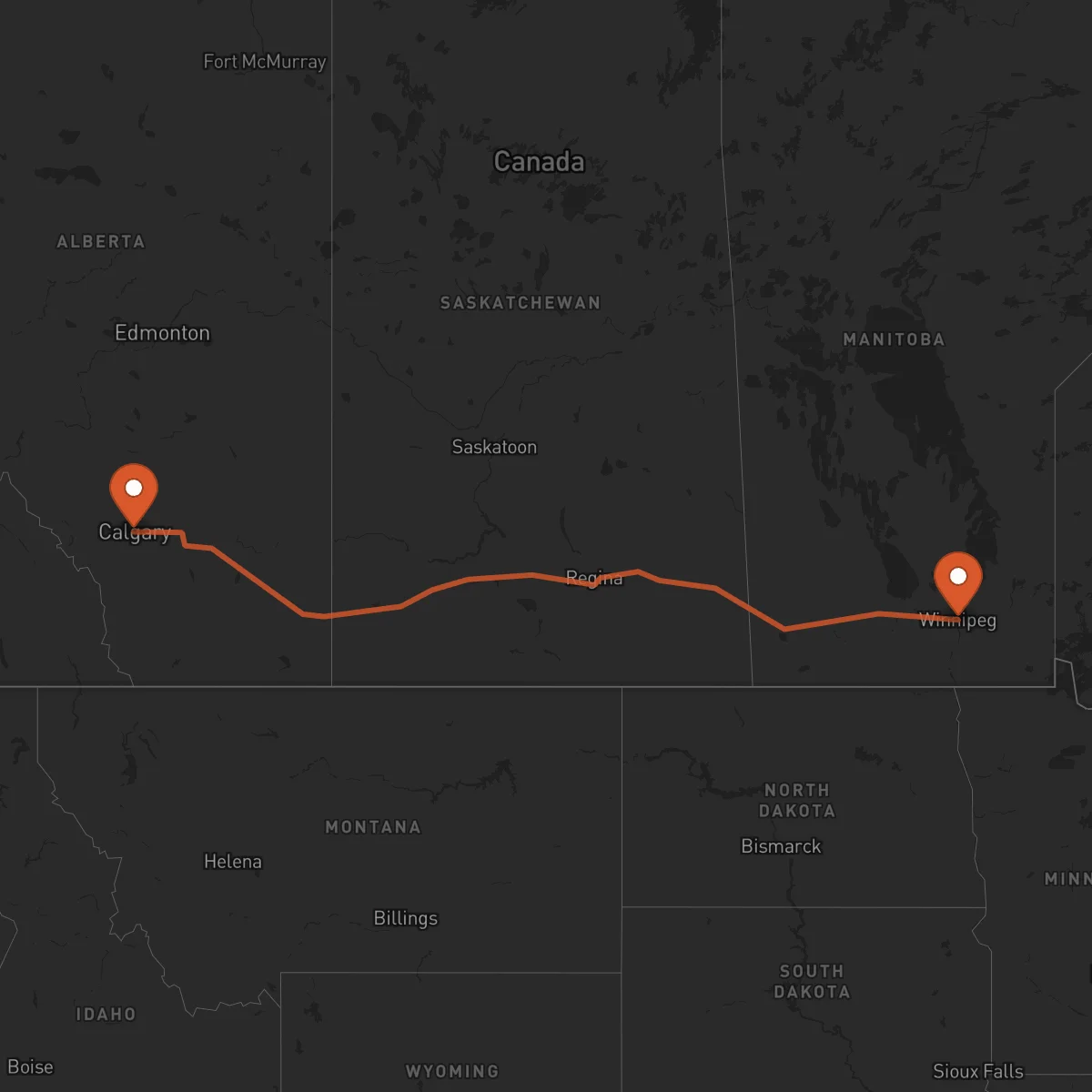
The Winnipeg to Calgary corridor represents one of Canada's most vital domestic freight routes, spanning approximately 1,203 kilometers across the heart of Western Canada. This strategic connection links Manitoba's capital with Alberta's economic powerhouse, creating a critical supply chain artery for the entire Prairie region. The corridor serves as a fundamental link between the agricultural heartland of Manitoba and the energy, technology, and industrial sectors of Alberta, facilitating the movement of goods that drive Canada's economy forward.
The transportation infrastructure along this route is robust and well-developed, primarily utilizing the Trans-Canada Highway (Highway 1) which provides reliable, year-round access. This major highway connects through key urban centers including Regina and Moose Jaw in Saskatchewan, ensuring multiple options for efficient freight movement. The route traverses diverse Canadian landscapes, from the fertile prairies of Manitoba and Saskatchewan to the foothills and plains of Alberta, presenting unique logistical considerations that our experienced team manages effectively.
This corridor serves a diverse range of industries including agriculture and food processing, energy and natural resources, manufacturing, retail distribution, and technology sectors. Winnipeg's strategic position as a transportation hub and Calgary's status as an energy and financial center create substantial freight volumes moving in both directions. Control Terrestre specializes in optimizing FTL transportation along this corridor, providing dedicated truckload solutions that ensure your cargo moves efficiently, securely, and on schedule between these two major Canadian cities.
Services for this Route
Available services for the corridor Winnipeg - Calgary
 Origin
Winnipeg stands as a strategic logistics hub in the center of Canada, offering exceptional connectivity for freight transportation. Located at the confluence of the Red and Assiniboine rivers, Winnipeg serves as the gateway to Western Canada and provides critical access to both national and international markets. The city's central geographic position makes it an ideal origin point for freight distribution across the Prairie provinces and beyond, with excellent connections to major transportation networks including railways, highways, and air cargo facilities.
The city's economy is diverse and robust, with key industries including manufacturing, aerospace, transportation and logistics, agribusiness, and information technology. Winnipeg is home to major food processing facilities, advanced manufacturing plants, and significant agricultural operations that generate substantial freight volumes. The city's infrastructure includes the Winnipeg James Armstrong Richardson International Airport, extensive rail networks operated by Canadian National Railway and Canadian Pacific Railway, and well-maintained highway systems that facilitate efficient cargo movement throughout the region.
 Destination
Calgary represents a dynamic economic center in Alberta, strategically positioned at the foothills of the Canadian Rockies. The city has evolved into a major logistics and distribution hub, particularly strong in energy, technology, and financial services sectors. Calgary's location provides excellent access to both the resource-rich regions of northern Alberta and the western provinces, making it a crucial destination for freight transportation. The city's infrastructure is designed to support substantial freight volumes, with modern warehousing facilities, advanced distribution centers, and efficient transportation networks.
The Calgary economy is anchored by the energy sector, including oil and gas, renewable energy, and related industries, but has diversified significantly into technology, finance, and manufacturing. The city hosts numerous corporate headquarters and major industrial operations that generate consistent freight demand. Calgary's transportation infrastructure includes the Calgary International Airport, extensive rail connections, and major highway access including the Trans-Canada Highway, Deerfoot Trail, and Stoney Trail ring road, providing multiple efficient routes for freight delivery and distribution throughout the region.










