Winnipeg to Tulsa
Tulsa → WinnipegFTL freight transportation service between Winnipeg and Tulsa. Reliable logistics solutions for your business.
Route Description
Everything you need to know about the corridor Winnipeg - Tulsa
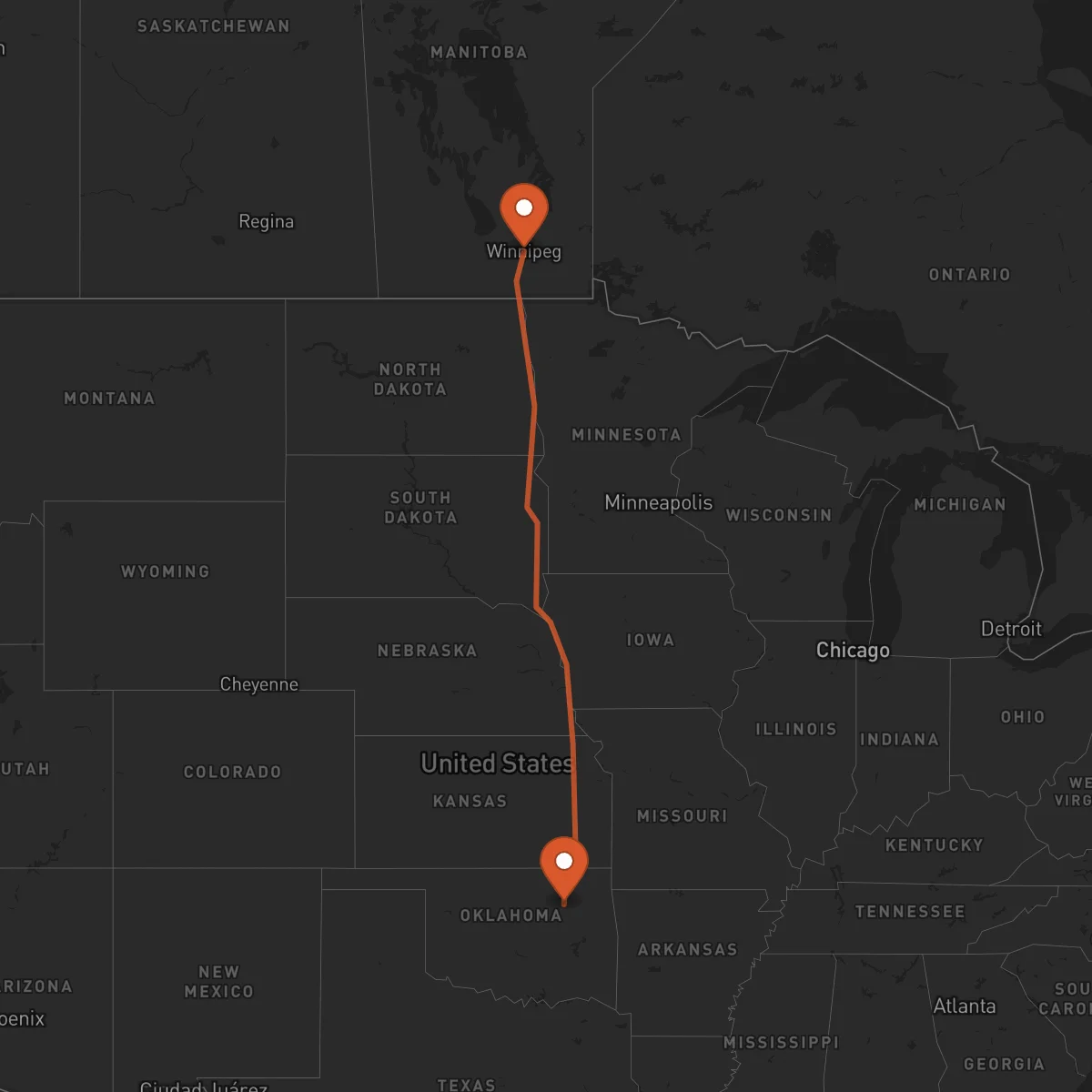
The Winnipeg-Tulsa corridor represents a vital cross-border logistics connection between Canada and the United States, spanning approximately 1,531 kilometers through the heart of North America. This strategic route links Manitoba's capital with Oklahoma's second-largest city, facilitating the movement of goods between two major economic regions. The corridor traverses diverse terrain and crosses the international border at key points, making it essential for companies engaged in cross-border trade between these two nations.
The economic significance of this corridor is substantial, connecting Winnipeg's strong manufacturing and agricultural sectors with Tulsa's energy industry and advanced manufacturing capabilities. Winnipeg serves as a critical distribution hub for Western Canada, while Tulsa has established itself as a major center for aerospace, telecommunications, and energy services. This complementary economic relationship drives consistent freight demand along the route, with industries such as automotive parts, agricultural products, industrial equipment, and consumer goods regularly moving between these markets.
Transportation infrastructure along the Winnipeg-Tulsa corridor includes major highways such as I-29, I-35, and various provincial and state routes that ensure efficient cargo movement. The route benefits from well-maintained roadways and established border crossing facilities, though customs procedures require careful coordination. Control Terrestre specializes in managing these cross-border complexities, providing full truckload (FTL) services that ensure seamless customs clearance, proper documentation, and timely delivery. Our expertise in handling the specific requirements of this corridor allows us to optimize transit times and maintain the reliability that businesses depend on for their supply chain operations.
Services for this Route
Available services for the corridor Winnipeg - Tulsa
 Origin
Winnipeg, Manitoba's capital and largest city, serves as a strategic logistics hub in Western Canada. Located at the confluence of the Red and Assiniboine rivers, Winnipeg's central geographic position makes it a natural distribution center for goods moving throughout the Prairie provinces and beyond. The city's economy is diverse, with strong sectors in manufacturing, agriculture, aerospace, and information technology. Winnipeg's transportation infrastructure includes the Port of Winnipeg, major rail connections through Canadian National and Canadian Pacific railways, and extensive highway networks including the Trans-Canada Highway. The city's proximity to the U.S. border and its role as a gateway to Western Canada make it an ideal origin point for cross-border freight movements, particularly for companies serving markets in the American Midwest and beyond.
 Destination
Tulsa
Tulsa, Oklahoma, strategically located in the northeastern part of the state, serves as a major logistics and distribution center in the south-central United States. Known historically as the "Oil Capital of the World," Tulsa has diversified its economy to include aerospace, telecommunications, and advanced manufacturing. The city's logistics advantages include its central location within the continental U.S., providing access to major markets within a day's drive. Tulsa's transportation infrastructure features extensive highway networks, including I-44 and I-244, a major international airport, and significant rail connections. The Tulsa Port of Catoosa, located nearby on the McClellan-Kerr Arkansas River Navigation System, provides waterway access to the Gulf of Mexico. This multimodal transportation capability, combined with Tulsa's skilled workforce and business-friendly environment, makes it an ideal destination for freight distribution and industrial operations.










