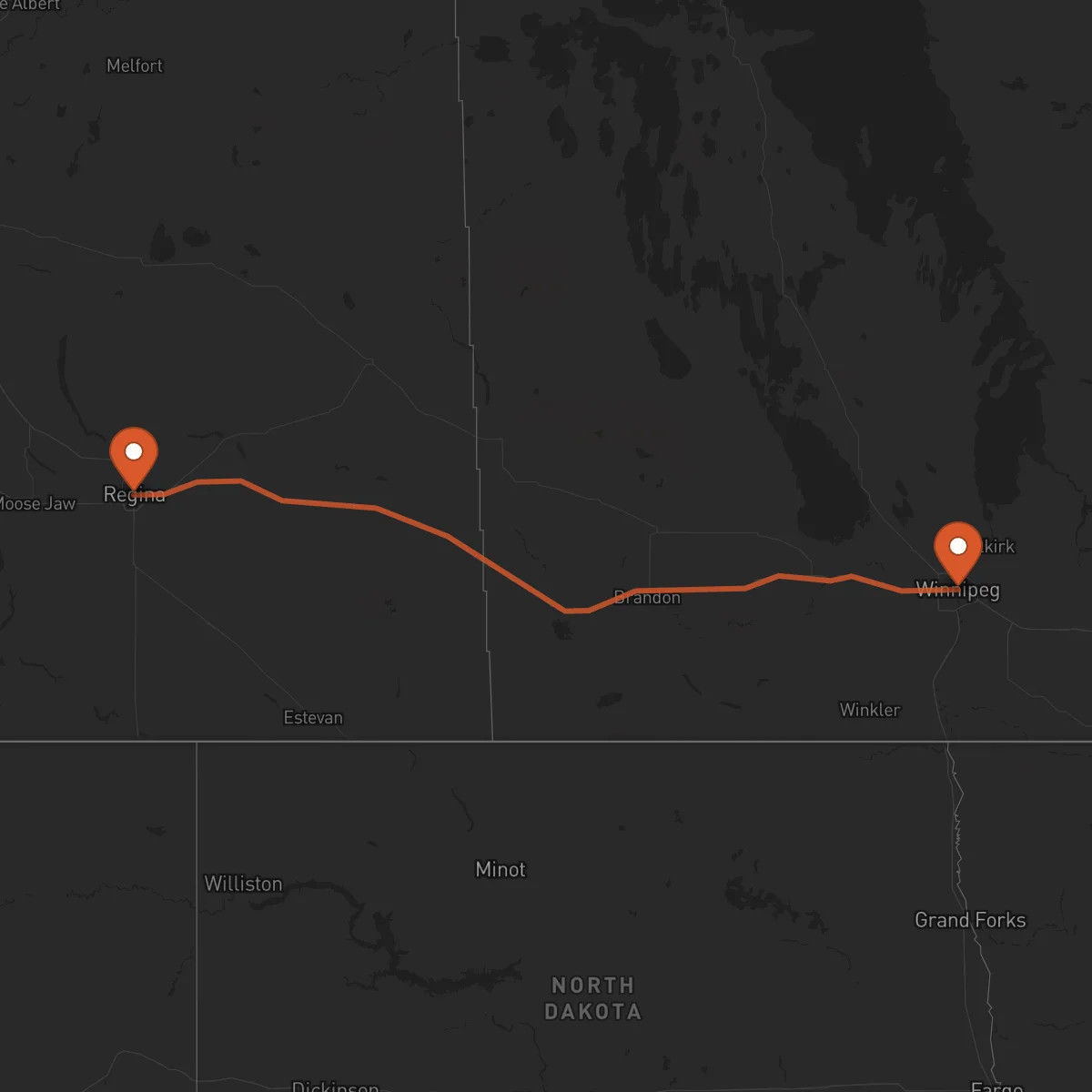
Winnipeg to Regina
Regina → WinnipegFTL freight transportation service between Winnipeg and Regina. Reliable logistics solutions for your business.
Route Description
Everything you need to know about the corridor Winnipeg - Regina
The Winnipeg to Regina corridor represents a vital link in Canada's prairie transportation network, connecting Manitoba's capital with Saskatchewan's capital across a distance of approximately 536 kilometers. This east-west route traverses the heart of Canada's agricultural and energy-producing regions, making it essential for the movement of bulk commodities, industrial equipment, and manufactured goods. The corridor follows the Trans-Canada Highway (Highway 1), providing reliable access through Saskatchewan's rolling plains and Manitoba's agricultural heartland.
The economic significance of this corridor cannot be overstated, as it serves as a critical artery for the agricultural, energy, and manufacturing sectors that dominate the prairie economy. Winnipeg's position as a major transportation hub and Regina's role as a provincial capital and economic center create substantial freight volumes moving in both directions. The route facilitates the export of Saskatchewan's potash, uranium, and agricultural products while supporting the import of manufactured goods and industrial equipment into both provinces.
Control Terrestre specializes in full truckload (FTL) freight transportation along this corridor, offering dedicated services that ensure your cargo moves efficiently and securely. Our extensive network of certified carriers provides consistent capacity and reliability for businesses operating between these two prairie cities. Whether you're shipping agricultural products from Winnipeg's processing facilities or industrial equipment to Regina's growing manufacturing sector, our team coordinates every aspect of your transportation needs with professional expertise and commitment to service excellence.
Services for this Route
Available services for the corridor Winnipeg - Regina
 Origin
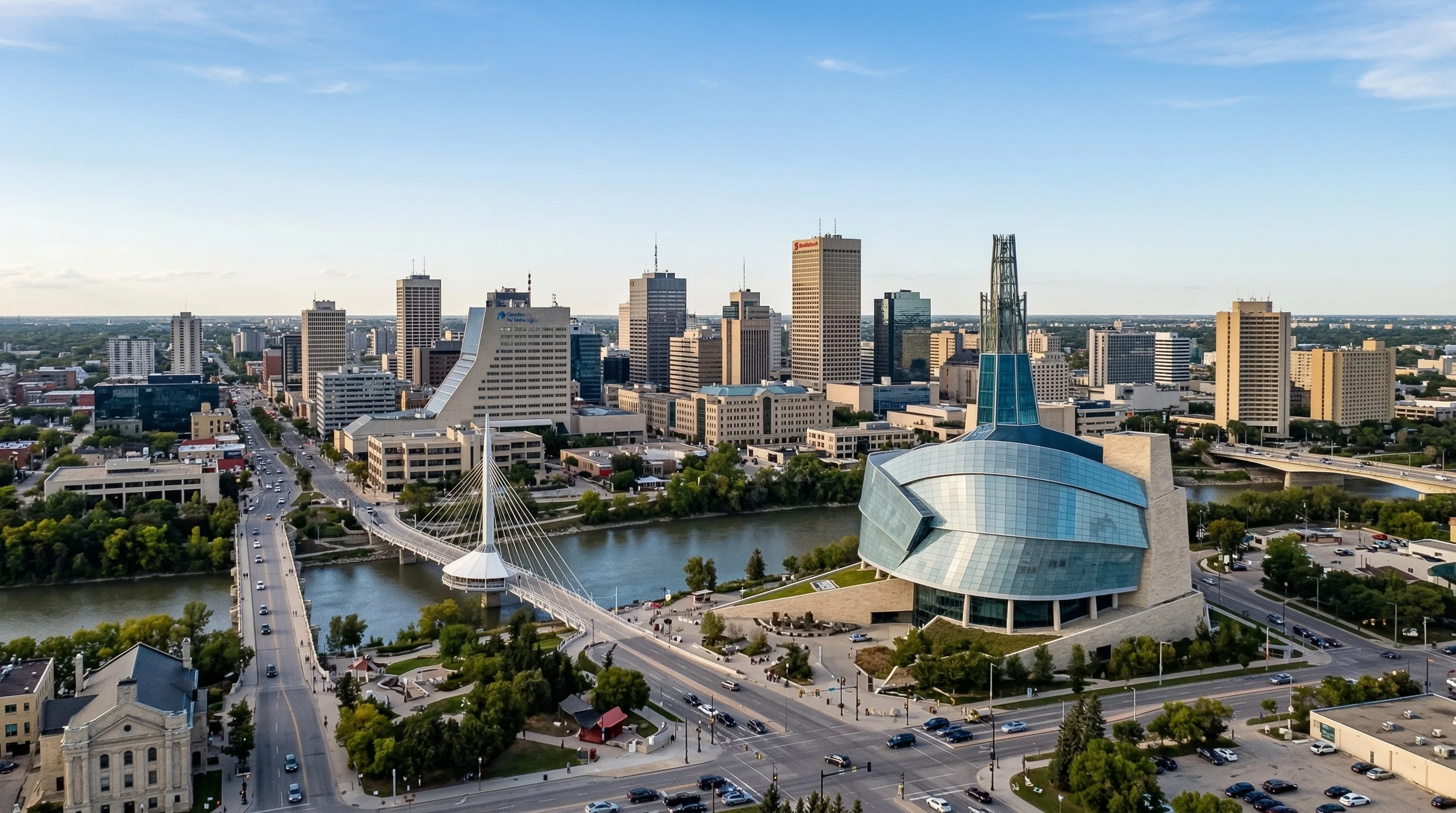
Winnipeg stands as a strategic logistics hub in Western Canada, positioned at the confluence of the Red and Assiniboine rivers and at the geographic center of North America. The city's location makes it a natural distribution point for goods moving throughout the prairie provinces and into the United States. Winnipeg's economy is diverse, with strong sectors in manufacturing, agriculture, aerospace, and information technology. The city hosts major transportation infrastructure including the Winnipeg James Armstrong Richardson International Airport, extensive rail networks operated by Canadian National and Canadian Pacific Railways, and a well-developed highway system that connects to all major prairie routes.
The city's industrial base includes food processing facilities, agricultural equipment manufacturers, and distribution centers that generate substantial freight volumes. Winnipeg's position as Manitoba's capital also means it serves as a regional administrative center, creating consistent demand for specialized freight services. The city's transportation infrastructure is designed to handle large volumes of freight efficiently, with dedicated freight corridors and modern warehousing facilities that support the movement of goods across Western Canada.
 Destination
Regina
Regina serves as Saskatchewan's capital and a major economic center in the prairie region, strategically positioned in the heart of Canada's breadbasket. The city's economy is anchored by government services, education, and a growing technology sector, but it also serves as a crucial hub for the province's agricultural and energy industries. Regina's location makes it an ideal distribution point for goods moving throughout Saskatchewan and into neighboring provinces. The city benefits from excellent transportation infrastructure, including the Regina International Airport, extensive rail connections through both CN and CP rail lines, and direct highway access to major prairie routes.
The surrounding region is characterized by vast agricultural operations producing grains, oilseeds, and livestock, as well as significant energy production including oil, natural gas, and potash mining. Regina's industrial sector includes manufacturing facilities, agricultural equipment suppliers, and energy service companies that generate consistent freight demand. The city's role as a provincial capital also creates specialized freight needs for government operations and services. Regina's transportation infrastructure is designed to support heavy industrial traffic and provides efficient connections to both domestic and international markets.










