Winnipeg to Ottawa
Ottawa → WinnipegFTL freight transportation service between Winnipeg and Ottawa. Reliable logistics solutions for your business.
Route Description
Everything you need to know about the corridor Winnipeg - Ottawa
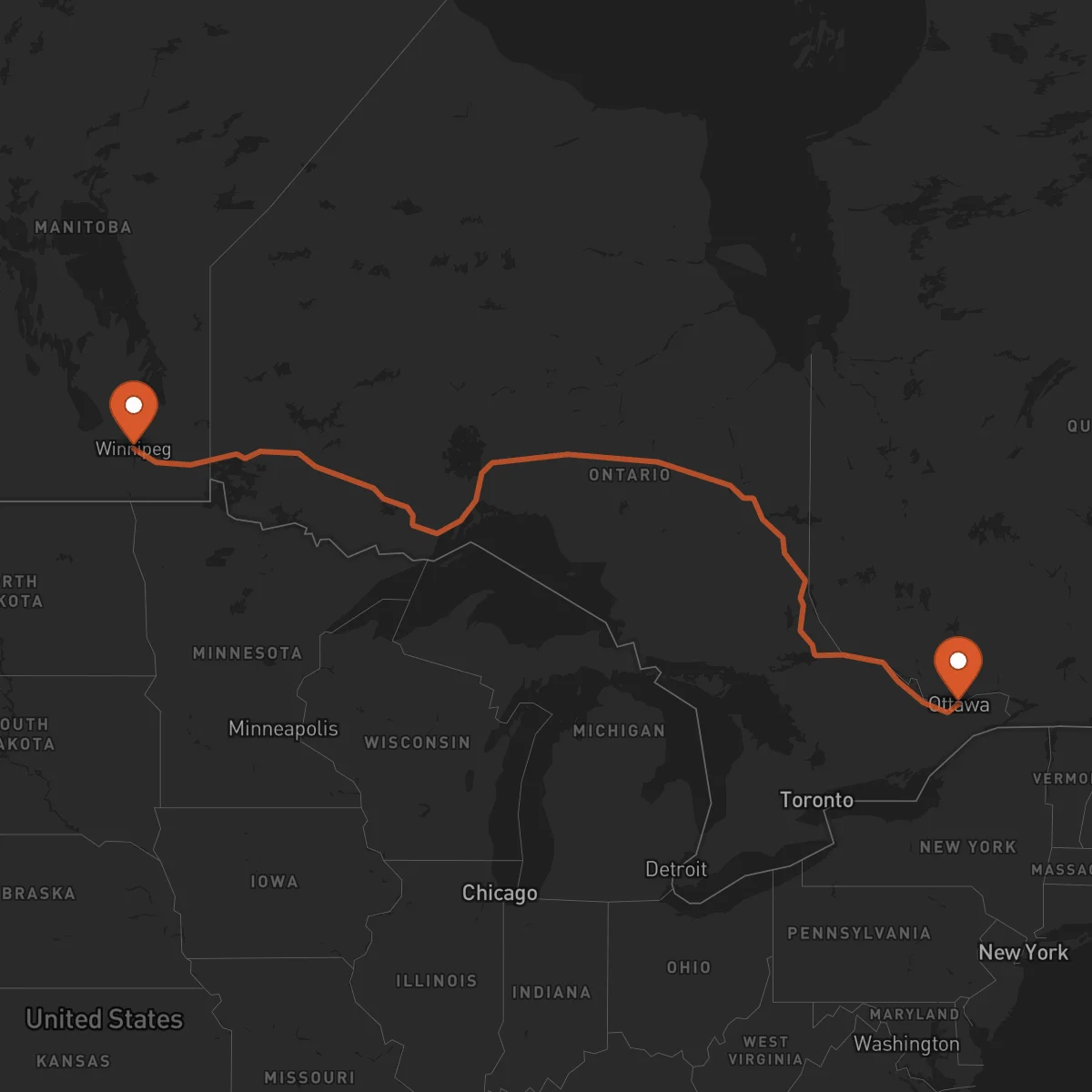
The Winnipeg to Ottawa corridor is a vital domestic logistics route in Canada, spanning approximately 1,674 kilometers across the heart of the country. This corridor connects Manitoba's capital with Canada's capital, facilitating the movement of goods between the Prairies and Central Canada. The route traverses diverse landscapes and crosses provincial boundaries, making it essential for national supply chains and economic integration.
The corridor serves a critical role in Canada's economic infrastructure, supporting the flow of goods between Manitoba's agricultural and manufacturing sectors and Ontario's diverse industrial base. Key industries utilizing this route include agricultural products, manufactured goods, automotive parts, and technology equipment. The corridor passes through major urban centers and rural communities, supporting both urban distribution networks and rural supply chains.
Control Terrestre provides comprehensive FTL (Full Truckload) transportation services along this corridor, leveraging our network of certified carriers and experienced drivers. We understand the unique challenges of cross-provincial transportation in Canada, including weather conditions, seasonal variations, and regulatory requirements. Our dedicated team ensures reliable, efficient transportation solutions that keep your supply chain moving smoothly from Winnipeg to Ottawa and beyond.
Services for this Route
Available services for the corridor Winnipeg - Ottawa
 Origin
Winnipeg, located at the longitudinal center of Canada, serves as a strategic logistics hub for the Prairies region. The city's position at the confluence of the Red and Assiniboine rivers has historically made it a transportation nexus, and this legacy continues in modern logistics operations. Winnipeg's economy is diverse, with strong sectors in manufacturing, agriculture, aerospace, and technology. The city hosts major distribution centers and warehouses, serving as a gateway for goods moving to and from Western Canada.
The transportation infrastructure in Winnipeg is robust, featuring major highways including the Trans-Canada Highway (Highway 1), which provides direct access to Eastern Canada. The city is also served by Winnipeg James Armstrong Richardson International Airport and the Port of Winnipeg, offering multimodal transportation options. The city's central location makes it an ideal starting point for cross-country freight movements, with excellent connectivity to both national and international markets.
 Destination
Ottawa, Canada's capital city, is strategically positioned in Eastern Ontario along the Ottawa River. The city's location at the Ontario-Quebec border makes it a crucial logistics point for both national and international freight movements. Ottawa's economy is characterized by its strong technology sector, known as Silicon Valley North, along with government services, healthcare, education, and tourism. The city's diverse economic base creates consistent demand for freight transportation services.
The transportation infrastructure in Ottawa is comprehensive, featuring multiple major highways including the 417 (Queensway), 416, and connections to Autoroute 40 in Quebec. The city is served by Ottawa International Airport and has access to the St. Lawrence Seaway via the Ottawa River. Ottawa's position within the Quebec City-Windsor Corridor, Canada's most densely populated and heavily industrialized region, makes it a critical node in the national logistics network. The city's infrastructure supports efficient distribution to both Eastern Canada and cross-border movements to the United States.










