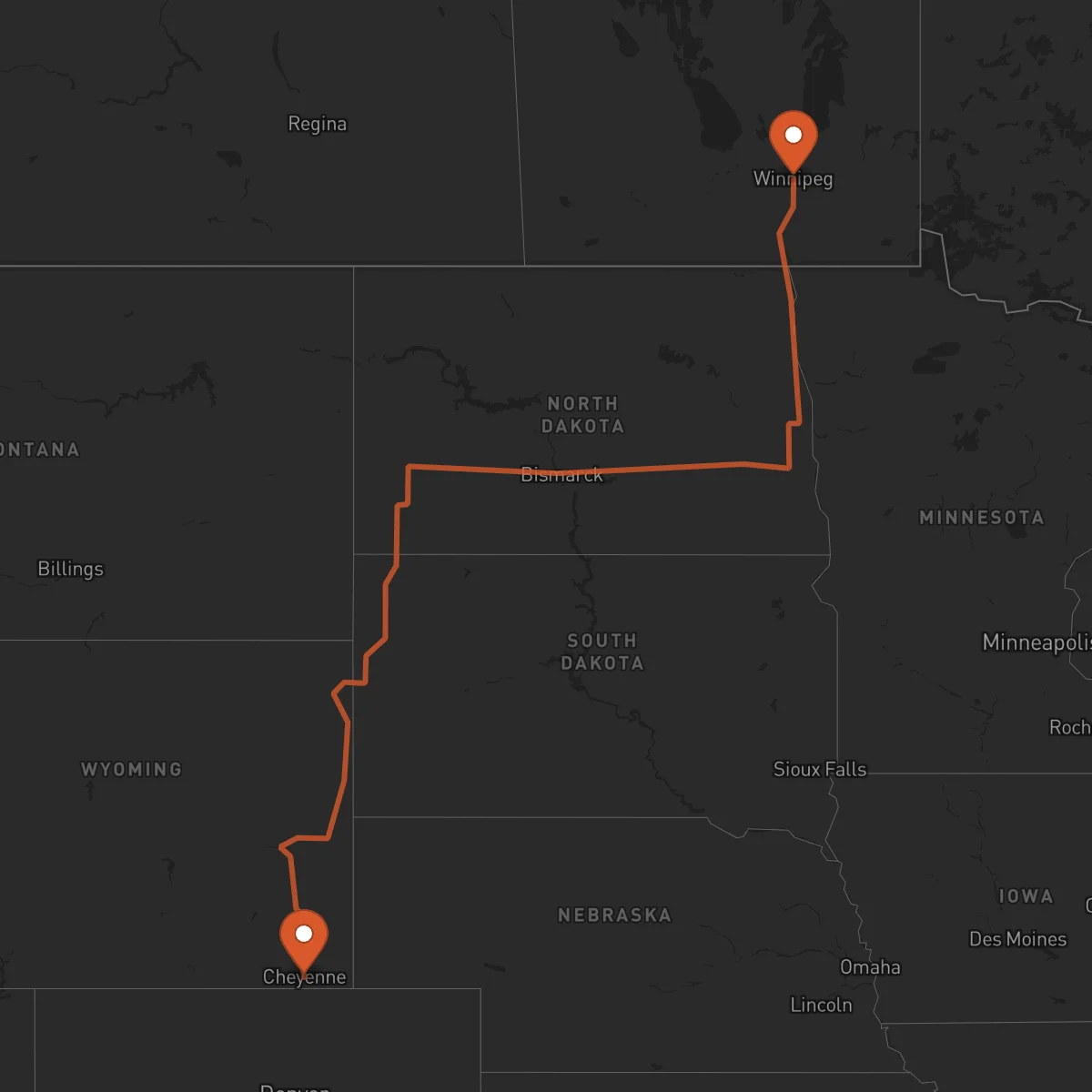
Winnipeg to Cheyenne
Cheyenne → WinnipegFTL freight transportation service between Winnipeg and Cheyenne. Reliable logistics solutions for your business.
Route Description
Everything you need to know about the corridor Winnipeg - Cheyenne
The Winnipeg-Cheyenne corridor represents a vital logistics connection between Canada and the United States, spanning approximately 1,142 kilometers through the heart of North America. This cross-border route serves as a crucial link between Manitoba's capital and Wyoming's capital, facilitating the movement of goods between two important economic regions. The corridor traverses the Canadian Prairies and the northern United States, connecting key agricultural, manufacturing, and energy sectors.
This route primarily utilizes major transportation infrastructure including the Trans-Canada Highway (Highway 1) through Manitoba and Saskatchewan, transitioning to Interstate 90 and Interstate 25 in the United States. The corridor passes through significant urban centers and agricultural regions, making it particularly important for the transportation of agricultural products, industrial equipment, and energy-related materials. The economic relationship between Winnipeg and Cheyenne is strengthened by this logistics corridor, supporting trade in sectors such as agriculture, mining, manufacturing, and energy production.
Control Terrestre specializes in managing cross-border operations along this corridor, ensuring seamless transportation between Winnipeg and Cheyenne. Our expertise in handling customs procedures, documentation requirements, and regulatory compliance makes us the ideal partner for companies requiring reliable full truckload (FTL) services on this route. We understand the unique challenges of cross-border transportation and provide comprehensive solutions that keep your supply chain moving efficiently between Canada and the United States.
Services for this Route
Available services for the corridor Winnipeg - Cheyenne
 Origin
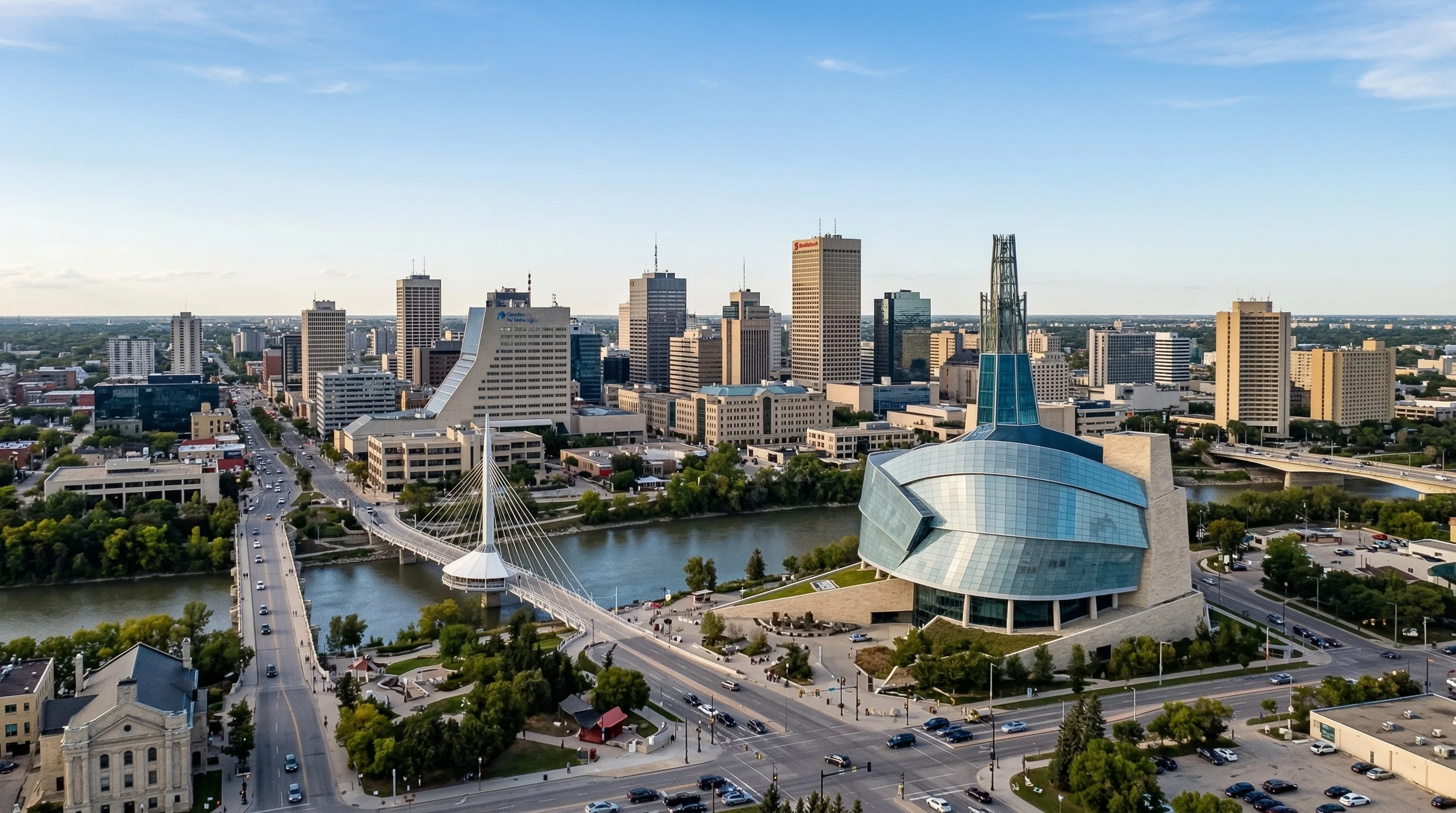
Winnipeg, the capital of Manitoba, serves as a strategic logistics hub in central Canada. Located at the confluence of the Red and Assiniboine Rivers, Winnipeg's position makes it a natural gateway for goods moving between eastern and western Canada, as well as to the United States. The city's economy is diverse, with strong sectors in agriculture, manufacturing, aerospace, and information technology. Winnipeg's transportation infrastructure includes the Winnipeg James Armstrong Richardson International Airport, extensive rail networks operated by CN and CP Rail, and major highways including the Trans-Canada Highway. The city's proximity to the U.S. border (approximately 110 kilometers from North Dakota) makes it an ideal origin point for cross-border freight movements.
 Destination
Cheyenne
Cheyenne, the capital of Wyoming, is strategically positioned as a logistics center in the Rocky Mountain region. Located at the intersection of major transportation routes, including Interstate 25 and Interstate 80, Cheyenne serves as a crucial distribution point for goods moving throughout the western United States. The city's economy is anchored by government, military, and energy sectors, with significant activity in oil, natural gas, and coal production. Cheyenne's transportation infrastructure includes the Cheyenne Regional Airport, extensive rail connections through Union Pacific Railroad, and major highway systems that provide access to Denver, Salt Lake City, and other regional markets. The city's location makes it an important hub for industrial equipment, energy products, and agricultural commodities moving throughout the region.










