Winnipeg to Charlotte
Charlotte → WinnipegFTL freight transportation service between Winnipeg and Charlotte. Reliable logistics solutions for your business.
Route Description
Everything you need to know about the corridor Winnipeg - Charlotte
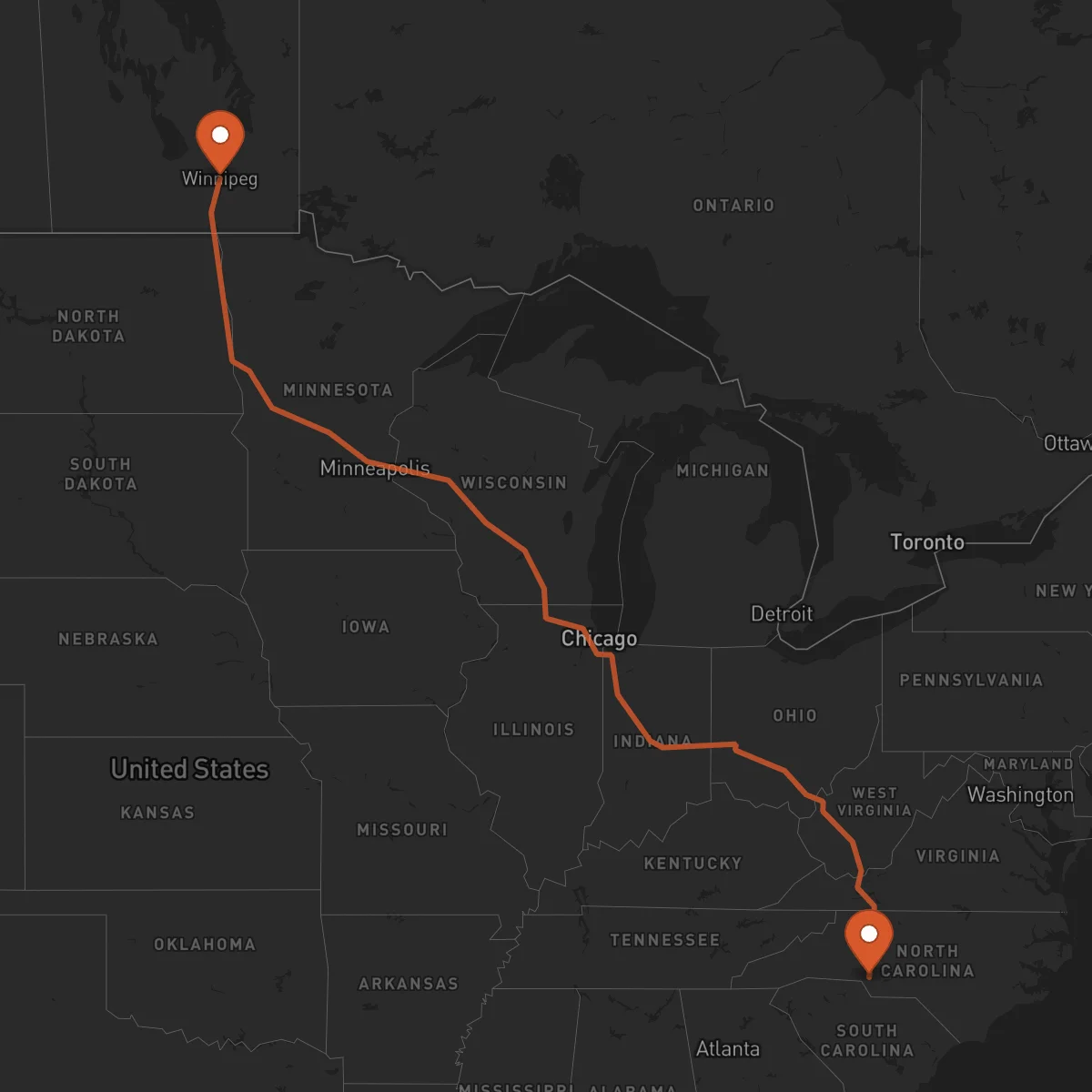
The Winnipeg-Charlotte corridor connects Manitoba, Canada with North Carolina, United States, spanning approximately 2,098 km across the North American continent. This strategic route facilitates cross-border freight transportation between Canada's prairie provinces and the southeastern United States, serving as a vital link for industries requiring reliable full truckload (FTL) services. The corridor traverses major economic regions, enabling seamless movement of goods between Canadian and American markets.
The economic significance of this corridor is substantial, connecting Winnipeg's agricultural and manufacturing base with Charlotte's growing financial and industrial sectors. Winnipeg serves as a major distribution hub for Canadian agricultural products, while Charlotte has emerged as a key logistics center in the southeastern United States, with strong presence in automotive, energy, and technology industries. This complementary economic relationship drives consistent freight volumes along this north-south route.
Key transportation infrastructure includes Interstate 29 and Interstate 35 connecting Winnipeg to major U.S. highways, with the Pembina-Noyes border crossing serving as the primary entry point. From there, freight moves through Minneapolis and Indianapolis before reaching Charlotte via I-77. Control Terrestre's expertise in cross-border operations ensures smooth customs clearance and compliance with all regulatory requirements, while our network of certified carriers provides reliable door-to-door FTL service throughout this important corridor.
Services for this Route
Available services for the corridor Winnipeg - Charlotte
 Origin
Winnipeg, Manitoba serves as a strategic logistics hub in Canada's prairie region, positioned at the confluence of the Red and Assiniboine rivers. The city's location makes it a natural distribution center for agricultural products from the surrounding provinces, with major industries including grain processing, food manufacturing, and agricultural equipment. Winnipeg's transportation infrastructure includes extensive rail connections through Canadian National Railway and Canadian Pacific Railway, complemented by Winnipeg James Armstrong Richardson International Airport and the Port of Churchill for Arctic shipping connections. The city's central location in Canada facilitates efficient distribution to both eastern and western markets, making it an ideal origin point for cross-border freight movements.
 Destination
Charlotte
Charlotte, North Carolina stands as a major logistics and financial center in the southeastern United States, strategically positioned to serve the growing markets of the region. The city hosts the second-largest financial center in the nation after New York, with Bank of America's headquarters and numerous other financial institutions driving economic activity. Charlotte's industrial base includes automotive manufacturing, with facilities from companies like Daimler Trucks, as well as energy sector operations and advanced manufacturing. The city's transportation infrastructure features Charlotte Douglas International Airport, one of the busiest in the world by aircraft movements, extensive highway networks including I-77 and I-85, and the Charlotte Inland Port providing intermodal connections. This robust infrastructure makes Charlotte an ideal destination for cross-border freight operations.










